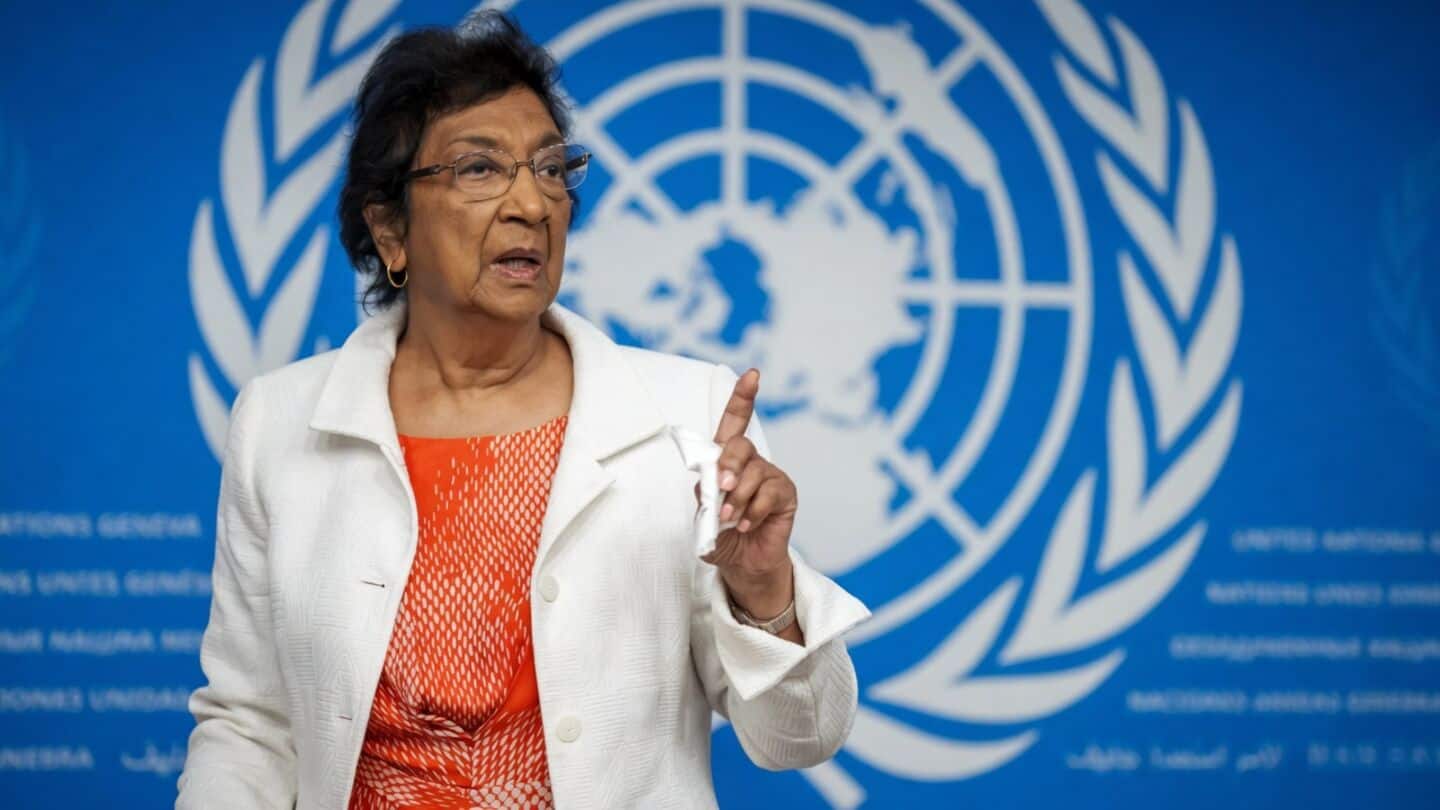
Who is this year's Nobel Peace Prize recipient, Navanethem Pillay?
What's the story
Former United Nations Human Rights Chief Navanethem "Navi" Pillay has been awarded the 2026 Nobel Peace Prize. The 85-year-old South African jurist of Indian origin was honored for her work in promoting peace and international law. Pillay's career includes fighting apartheid, landmark genocide prosecutions, and serving as the head of the UN's human-rights office for six years.
Early years
Education and early career
Pillay was born in 1941 in Durban, South Africa, to a family of Indian descent.
She studied at the University of Natal, earning a Bachelor of Arts degree in 1963 and a Bachelor of Laws degree in 1965.
Later on, she obtained postgraduate law degrees from Harvard University, including a doctorate in juridical science (SJD) in 1988.
Legal milestones
Firsts in her early career
In 1967, Pillay became the first woman to establish a law practice in Natal (now KwaZulu-Natal) and was also the first Black woman to be appointed as a judge of South Africa's High Court.
Her early career laid the groundwork for her later work in holding powerful institutions accountable and ensuring that victims of abuse were not excluded from legal proceedings.
Rwanda tribunal
Landmark rulings at the Rwanda tribunal
In 1995, Pillay was appointed a judge of the International Criminal Tribunal for Rwanda (ICTR) to prosecute those responsible for the 1994 genocide.
She served as the tribunal's president from 1999 to 2003.
One landmark case she participated in was that of Jean-Paul Akayesu, former mayor of Taba in Rwanda, who was convicted of genocide and crimes against humanity in September 1998.
In 2003, Pillay was elected as a judge of the International Criminal Court (ICC).
UN role
UN High Commissioner for Human Rights
In September 2008, Pillay became the United Nations High Commissioner for Human Rights after being appointed by the UN General Assembly.
She served until 2014, leading efforts to promote and protect human rights globally.
Her tenure placed her at the center of international debates over state accountability, discrimination, civil liberties, and protecting vulnerable communities.