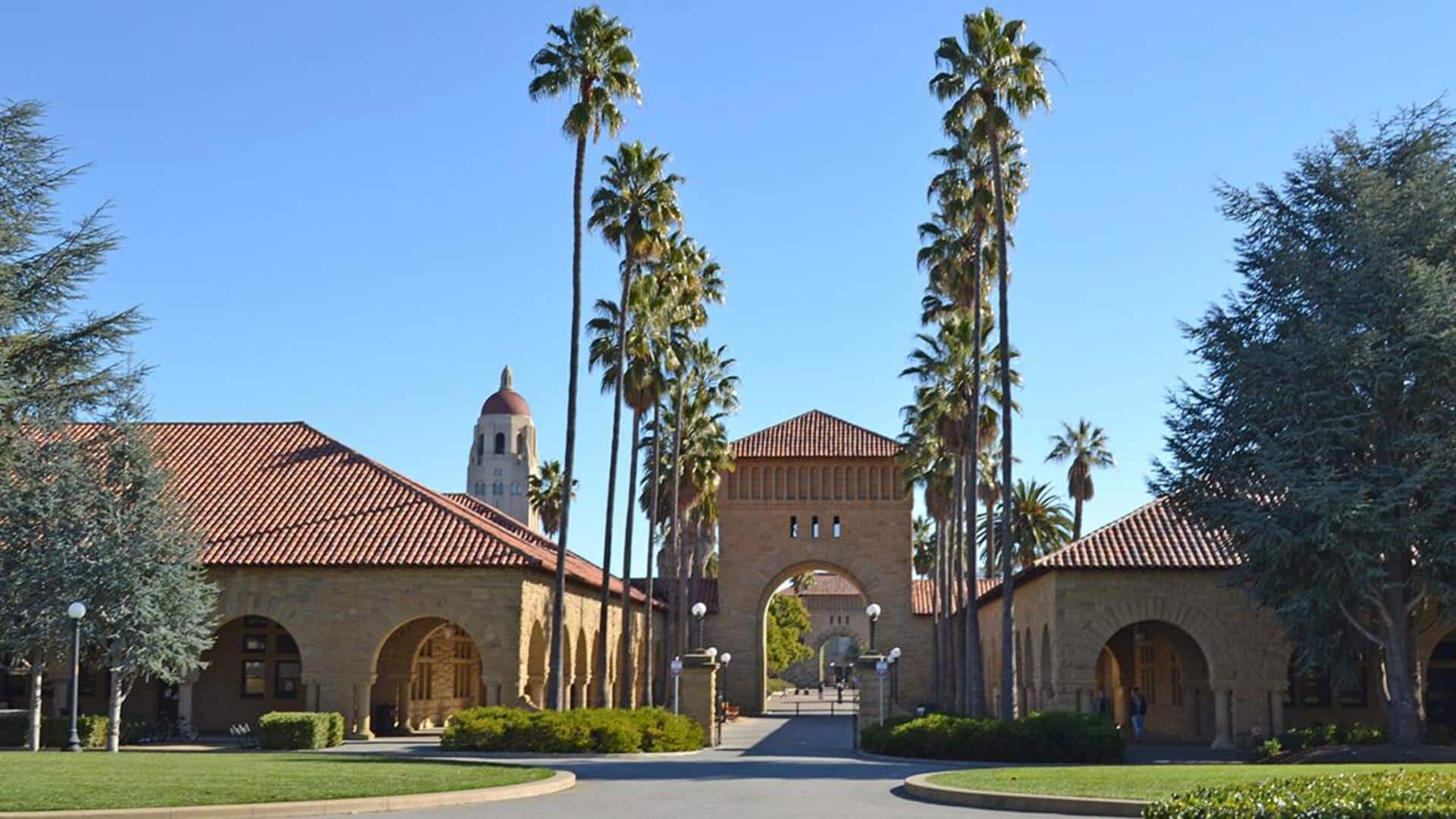
Stanford students fake Jain identity to escape costly meal plan
What's the story
An opinion piece by a Stanford University undergraduate has sparked a debate after alleging that some students falsely claim to be Jains to escape the university's mandatory meal plan. The plan costs $7,944 (approximately ₹7,17,587) for the 2025-26 academic year. The essay was written by Sebastian Connolly and published in The New York Times. It describes what Connolly calls a culture of "optimization" on campus, where students share tips on how to navigate or bypass university systems.
Policy loopholes
Students identify as Jains to get religious exemption
In the essay, Connolly claims to know students who identify as Jain to qualify for religious dietary exemptions.
He writes that these students then use their food allowances at off-campus grocery stores like Whole Foods, which they believe offer fresher or better options than campus dining halls.
Stanford requires most undergraduates living on campus to enroll in a meal plan but allows exemptions for documented religious or medical reasons when dietary needs can't be met by campus kitchens.
Dietary restrictions
What is Jainism and why does it matter?
Jainism is a faith with strict dietary principles based on non-violence toward all living beings.
Practicing Jains typically follow a strict vegetarian diet and avoid meat, fish, eggs, and root vegetables like onions and garlic.
Due to these restrictions, universities, including Stanford, often accommodate Jain dietary needs when campus dining can't reasonably meet them.
However, Stanford does not publicly disclose how many students seek religious dietary exemptions or if misuse is investigated.
Twitter Post
Excerpt from the essay
Students at Stanford are pretending to be Jains so they can spend their meal plan money at Whole Foods instead of the school cafeteria: pic.twitter.com/C8kDQmJiO3
— Steve McGuire (@sfmcguire79) February 2, 2026
Public debate
Essay ignites debate on meal plan costs, dining rules
Connolly's essay has sparked a wider debate over college meal plan costs, campus dining quality, and accommodation systems.
Some commentators see it as a reflection of student frustration with expensive and inflexible dining rules.
Others warn against confusing unverified allegations with actual religious practices.
Beyond Stanford, the issue highlights a broader strain across universities where students are facing rising costs and limited flexibility in dining options.