What is happening on day 11 of US-Israel-Iran war
What's the story
As many as 1,700 people have been killed in Iran, Lebanon and Israel as strikes continue across the Middle East for the 11th day. US President Donald Trump has said the conflict could end "pretty quickly" and framed the recent military action against Iran as a "little excursion" that was necessary to eliminate "some evil," but Iranian officials remain defiant. Foreign Minister Abbas Araghchi said Iran will continue fighting as long as necessary, contradicting Trump's claims of a quick resolution.
Escalating conflict
Over 10,000 injured in Iran; thousands rally in support of
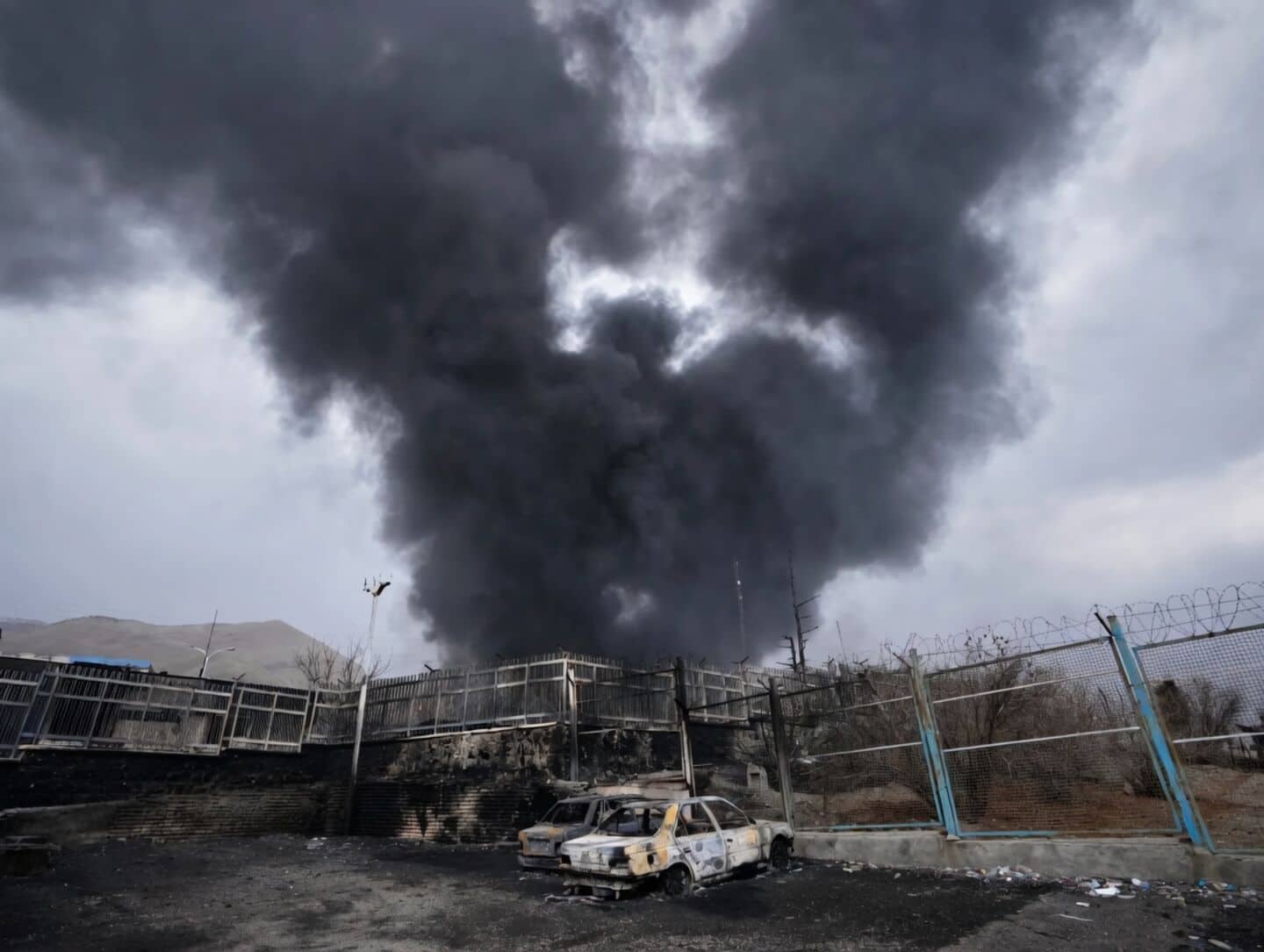
In Iran, at least 40 people were killed after an attack on residential buildings in eastern Tehran.
The Iranian government claims over 1,255 people have died and around 10,000 have been injured.
Iran's parliament speaker has promised a "harsh response" to these attacks.
Despite this, thousands of Iranians rallied in support of new Supreme Leader Mojtaba Khamenei, whom Iranian state TV referred to as "Jaanbaz [injured war veteran] of Ramadan," suggesting he's been wounded. No further details were offered.
Regional impact
Kuwait, UAE, Saudi Arabia, Bahrain intercept Iranian missiles, drones
In the Gulf region, Kuwait, the United Arab Emirates (UAE), Saudi Arabia, and Bahrain have intercepted Iranian missiles and drones.
Saudi Arabia's military destroyed a drone east of al-Kharj governorate, while Bahrain reported one death and eight injuries when a residential building in Manama was hit.
Six drones were intercepted in Kuwait on Tuesday, while Australia said it will deploy a military surveillance aircraft to the Middle East and send missiles to the UAE.
US stance
5 Iranian female footballers granted Australian visas
Australia has also granted humanitarian visas to five Iranian female football players who were branded "wartime traitors" for not singing their national anthem before an Asian Cup match.
Elsewhere, French President Emmanuel Macron said his country and its allies were preparing a mission to reopen the Strait of Hormuz, while Russian President Vladimir Putin said his country is ready to work again with European customers to deal with a global energy crisis.
Iraq
Iraqi airspace must not be used against neighbors: PM
The conflict has also spread to Iraq and Turkey, with Iraq's PM Mohammed Shia al-Sudani telling US Secretary of State Rubio that "Iraqi airspace, territory, and waters are not used for any military action targeting neighboring countries or the region."
Sudani rejects "any attempt to drag the country into ongoing conflicts."
Iraq shares a border with Iran, which the US and Israel began bombing on February 28. Iraq also borders the Gulf, which Iran has targeted with missiles and drones.
Economic fallout
Global oil and gas prices soar amid conflict
The bombing of Iranian oil infrastructure has pushed up global oil and gas prices, prompting G7 finance ministers to meet on Monday to discuss a release of reserves.
Crude prices fell to about $90 after Trump threatened intensified attacks on Iran if they stopped oil flow through the Strait of Hormuz.
Trump told CBS News he's considering taking over the strait and warned that Iran will pay an "incalculable" price if it does anything to stop oil shipments.