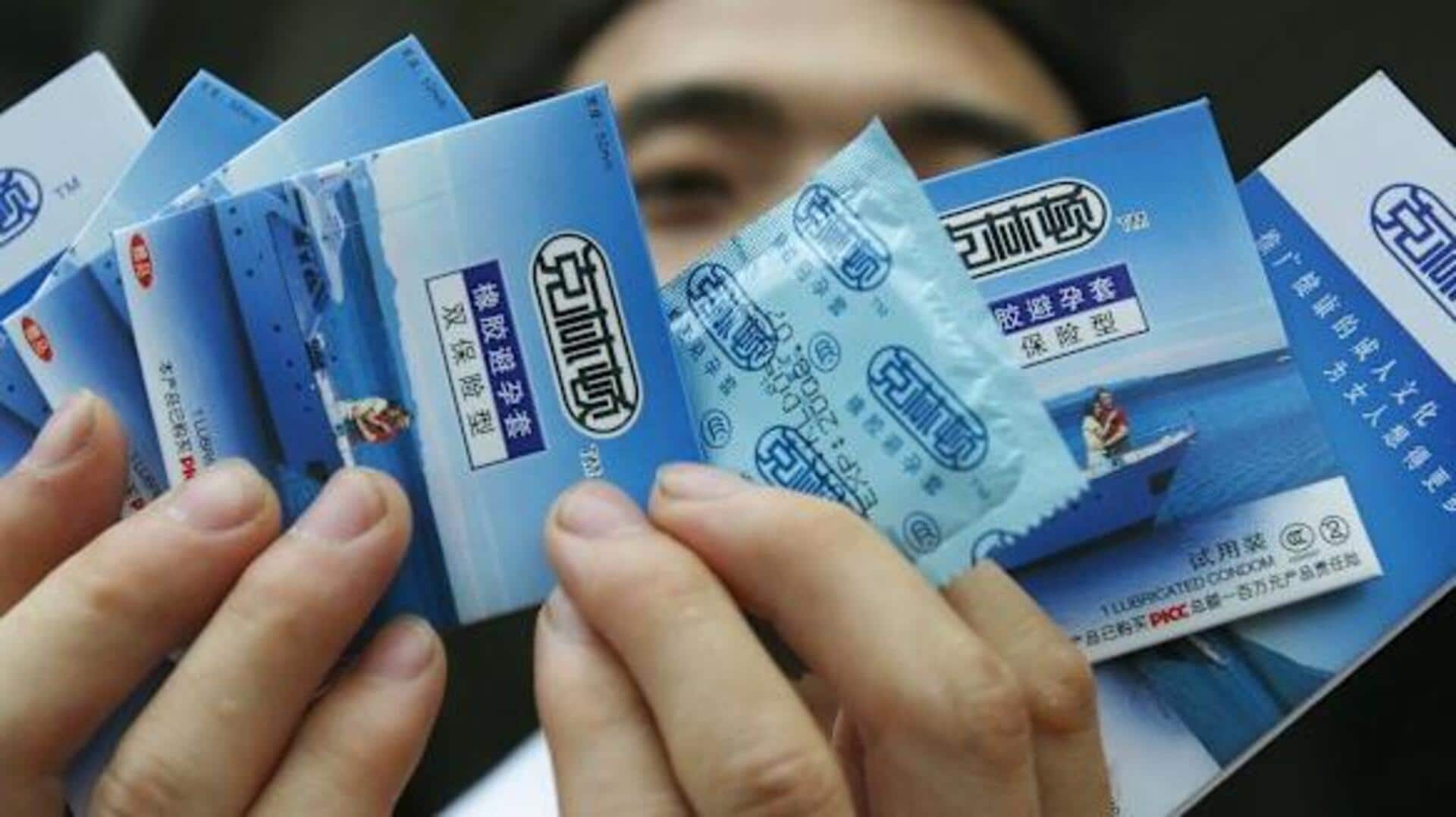
Why China is hiking tax on condoms and contraceptives
What's the story
China will impose a value-added tax (VAT) on condoms and contraceptives from January 1, 2026. The move, aimed at modernizing the country's tax system and boosting its declining birth rate, is the first of its kind in three decades. The new VAT law was passed in 2024 as part of efforts to update China's taxation framework, with VAT contributing nearly 40% of the country's total tax revenue.
Tax rationale
China's birth rate decline prompts new tax measures
The tax on condoms and contraceptives comes as part of China's efforts to increase its birth rate, which has been declining for years.
After decades of a strict one-child policy, the country has tried various incentives such as raising the child limit per couple to three and offering IVF discounts.
This year, the government also budgeted 90 billion yuan ($12.7 billion) for its first statewide childcare subsidy program, which provides 3,600 yuan per year for each kid under three.
Numbers
In 2024, the birthrate was 6.77 per 1,000 people
On Saturday, it announced intentions to expand its national healthcare insurance system to cover all childbirth-related costs.
The new tax law also includes a tax break for childcare and "marriage introduction services."
However, these measures have had little impact.
In 2024, the birthrate was 6.77 per 1,000 people, a modest rise over 2023 but still well below historical levels. China's population has been dropping for at least three years due to an ageing population and rising death rates.
Expert opinion
Experts weigh in on impact of contraceptive tax
He Yafu, an independent demographer from Guangdong province, said taxing contraceptives is reasonable now that China encourages births instead of contraception.
However, he added the measure is unlikely to significantly increase fertility rates.
Yun Zhou from the University of Michigan also weighed in saying while the new tax might not affect decision-making directly, it sends a message about "what desirable family behavior should be."
He said if access to contraception becomes difficult, "the brunt...will be borne...particularly by disadvantaged women."
Revenue impact
Tax on contraceptives expected to generate limited revenue
Despite being a part of China's plan to modernize its tax system, the new tax is not expected to generate significant revenue.
Lee Ding from Dezan Shira & Associates estimated that taxing contraceptives would add only 5 billion yuan (approximately $710 million) annually.
This amount pales in comparison to China's overall public budget revenue of 22 trillion yuan ($3.1 trillion).