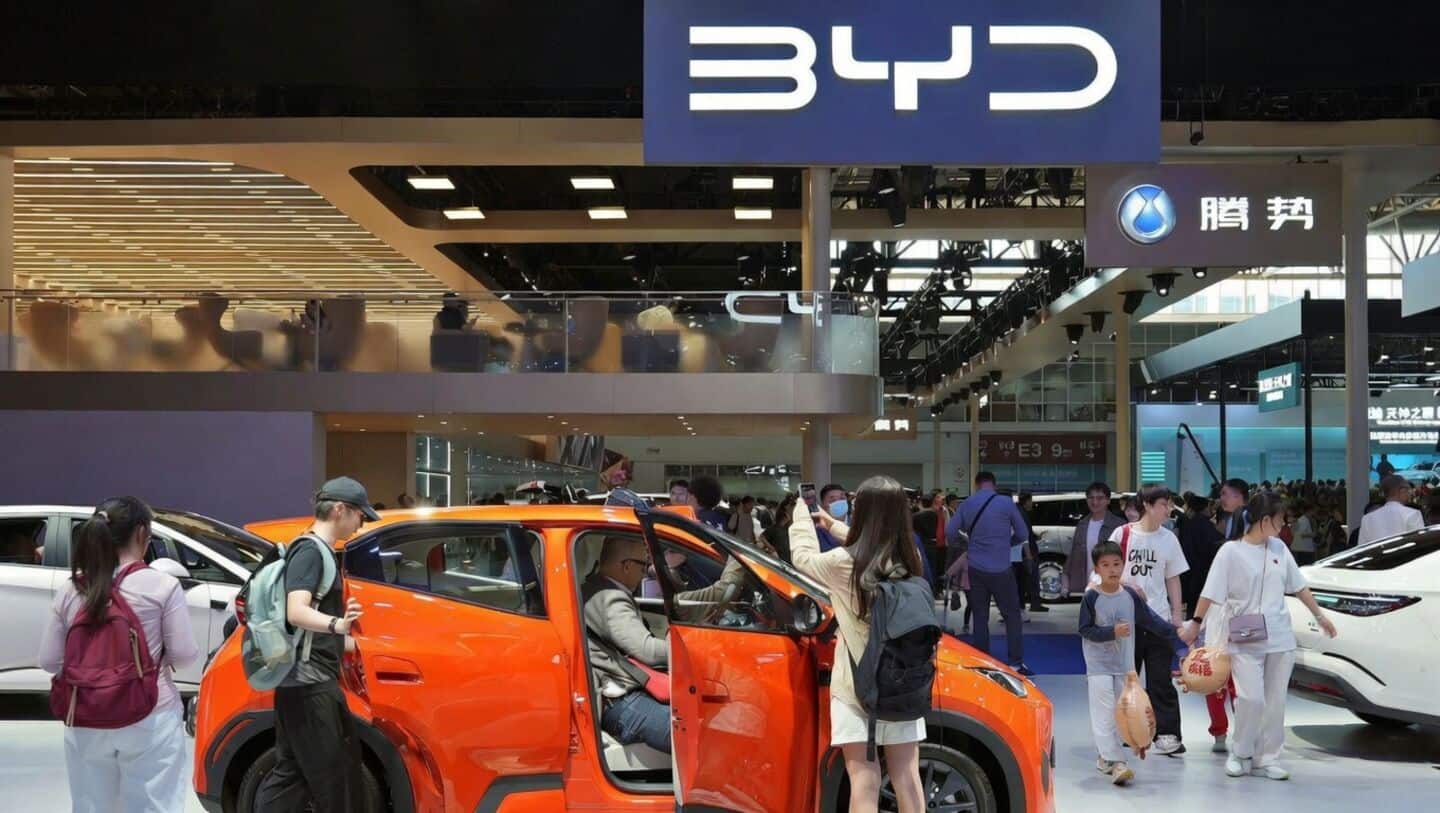
For 1st time, China exports more EVs than ICE cars
What's the story
For the first time ever, China has exported more electric vehicles (EVs) and plug-in hybrids than conventional gasoline or diesel cars. This historic shift was recorded in April, according to data from the China Passenger Car Association (CPCA). The move comes as automakers aggressively expand their operations overseas to counterbalance sluggish domestic demand.
Export statistics
NEVs account for over half of total exports
In April, China exported a total of 769,000 automobiles. Of these, new-energy vehicles (NEVs), a category that includes EVs and plug-in hybrids, accounted for an impressive 52.7% of the total exports.
This translates to around 406,000 units of NEVs exported in April alone.
The surge in NEV exports comes as the domestic market continues to struggle with weak consumption sentiment and rising oil prices, impacting traditional vehicle sales.
Market challenges
CPCA reports significant decline in domestic sales
The CPCA reported that retail sales of passenger cars in China fell by 21.5% year-on-year to 1.38 million units in April.
This is a 16% decline from March and comes as rising oil prices have affected demand for traditional gasoline-powered vehicles.
Consumers are increasingly opting for new-energy cars as a way to avoid higher fuel costs, further impacting domestic car sales.
Tesla's impact
Tesla's role in China's export boom
Tesla, one of the leading players in the EV market, has also contributed significantly to China's export boom.
The company exported 53,522 units from its Shanghai plant in April and sold 79,478 units to Chinese buyers.
This further highlights the growing dominance of EVs in China's automobile industry and its potential as an export powerhouse for these vehicles.
Market forecast
Future outlook for China's auto market
Looking ahead, the CPCA predicts that China's auto market will continue to face slowing demand due to weak consumption sentiment and rising oil prices.
These factors are likely to dampen buyers' willingness to purchase cars.
However, exports are expected to become the main growth driver for China's auto industry as leading automakers expand their operations in Europe and Latin America.