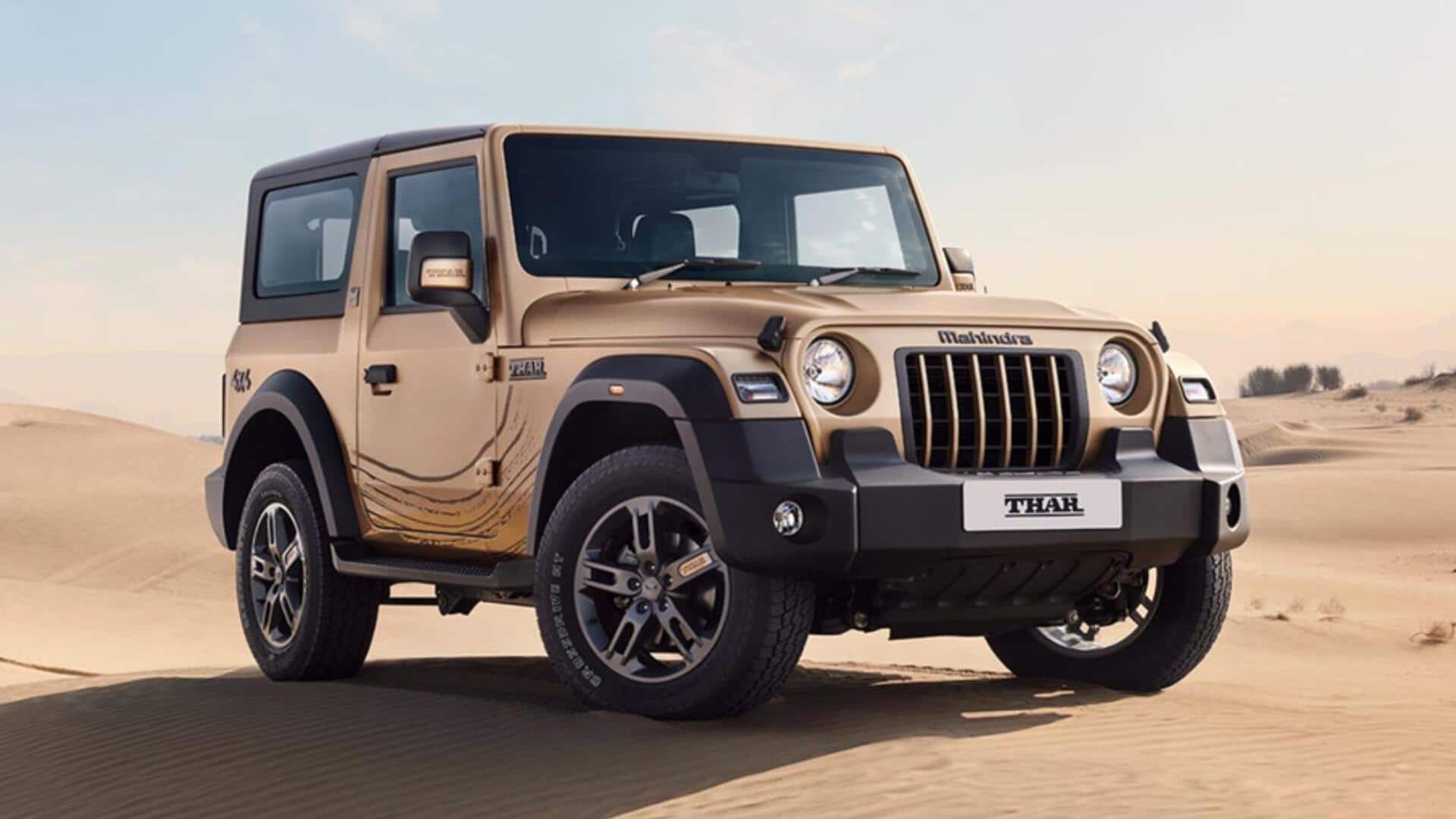
Why BS7 norms may bring diesel SUVs to an end
What's the story
Diesel engines have long been the preferred choice for sports utility vehicles (SUVs) enthusiasts, off-roaders, and long-distance travelers in India. The fuel's torque-heavy driving character, effortless cruising ability, and long-distance practicality make it a popular option among SUV owners. However, with the introduction of Bharat Stage 7 (BS7) emission norms, diesel's dominance in this segment could be challenged.
Market dynamics
Diesel's steady market share
Despite the shift toward petrol, CNG, and electric vehicles (EVs), diesel passenger vehicles (PVs) have maintained a steady market share of around 18% for the last three years.
This is a significant drop from its peak of 47% in 2012-13.
The stability can be attributed to the loyalty of SUV owners who still value torque and highway mileage over fuel type transitions.
Regulatory challenges
BS7 compliance costs could impact diesel's dominance
The upcoming BS7 emission standards are expected to significantly increase compliance costs for diesel vehicles.
This could change the economics of the segment, with industry estimates suggesting price hikes of ₹30,000 to over ₹1 lakh per vehicle.
For buyers in the ₹10-20 lakh SUV space, this could be a major turning point.
Strategic shifts
Automakers rethink their diesel strategies
The rising costs and regulatory risks have led automakers to rethink their diesel strategies.
Mahindra & Mahindra, a major player in the diesel SUV market with models like Scorpio, Thar, and Bolero, is now diversifying its portfolio across technologies.
Toyota has seen its diesel mix decline over three years as it focuses more on hybrids.
Tata Motors is also expanding into EVs and CNGs at the expense of diesel.
Luxury market
Luxury segment still favors diesel
In the luxury vehicle segment, where performance and cost of ownership are key factors, diesel models continue to be in high demand.
However, brands like Mercedes-Benz India are also diversifying into electric powertrains.
Santosh Iyer, MD and CEO at Mercedes-Benz India, said that over 50% of their sales last quarter came from diesel models.