8th Pay Commission: Staff body seeks ₹69,000 basic, 6% hike
What's the story
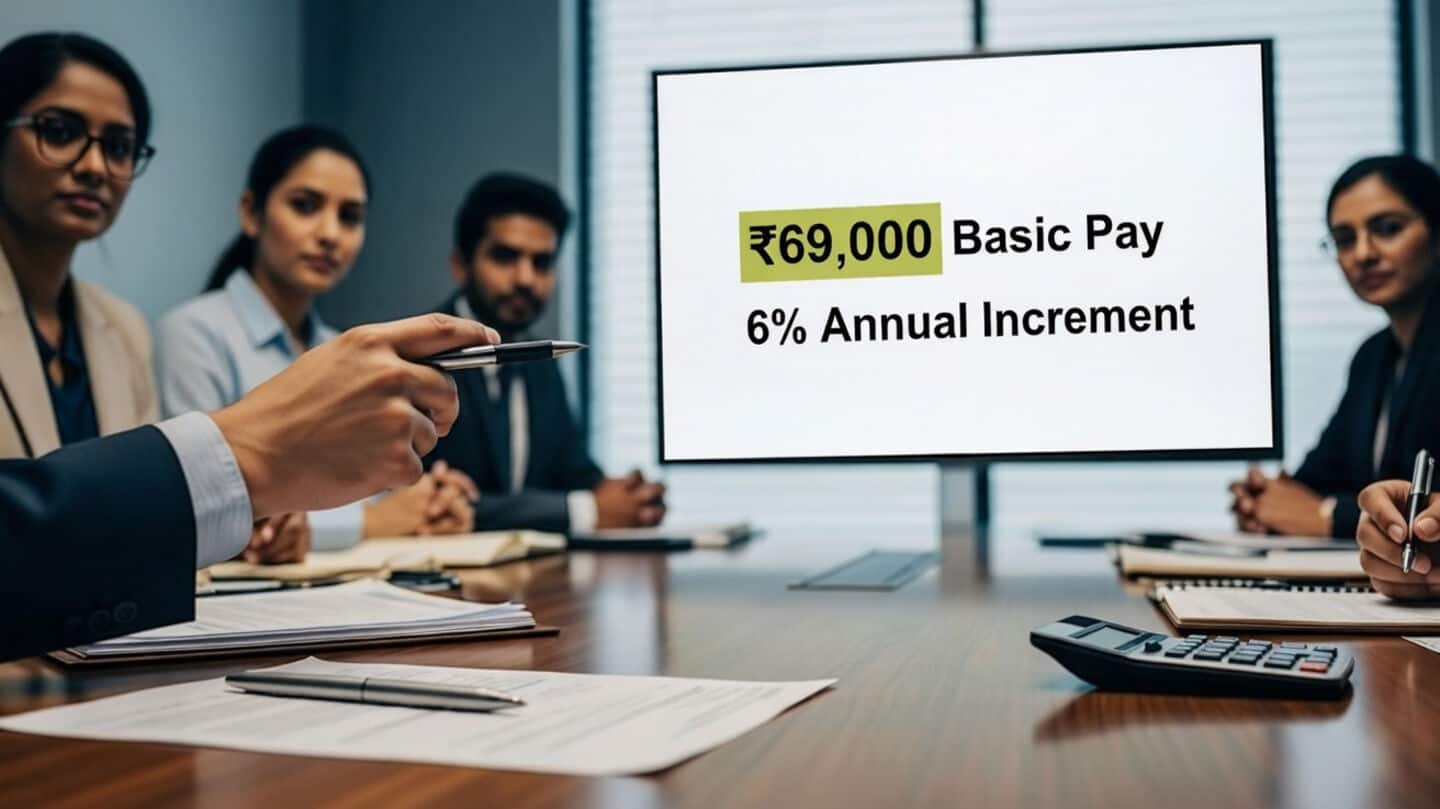
The staff side of the National Council-Joint Consultative Machinery (NC-JCM) has submitted a 51-page memorandum to the proposed 8th Central Pay Commission. The document proposes major changes in salaries, allowances, and pay structures for central government employees and pensioners. Among other things, it recommends a minimum basic pay of ₹69,000 based on a fitment factor of 3.833. NC-JCM is the apex negotiating body for central government employees in India.
Increment proposal
Doubling annual increment rate
The NC-JCM has also proposed doubling the annual increment rate from the current 3% to a higher 6%.
The body argues that this increase would better reflect inflation and rising living costs.
Further, it recommends rationalizing pay levels by merging certain lower and mid-level pay bands while keeping higher levels with adjustments based on the proposed fitment factor.
HRA revision
Revised House Rent Allowance structure
The NC-JCM has also proposed a revised House Rent Allowance (HRA) structure for different city categories.
For X category cities, it suggests 40% of basic pay; for Y category cities, 35%; and for Z category cities, 30%.
The body has also suggested linking HRA with Dearness Allowance (DA) to ensure automatic adjustments with inflation.
It wants city classifications to be reviewed every five years.
Benefits proposal
Additional allowances and compensations
The memorandum also includes provisions for a 10% additional allowance for employees who acquire qualifications beyond prescribed requirements.
It seeks overtime compensation for extra duty, including double rates where applicable under labor laws.
The NC-JCM has also sought enhanced consideration for employees working in high-risk and hardship roles such as defense production, healthcare, and laboratories.
Pay structure
Proposed restructuring of pay scales
The NC-JCM has proposed restructuring pay scales to reduce disparities, suggesting that the ratio between minimum and maximum pay should remain capped at 1:12.
It argues that a more balanced structure would improve equity, morale and the government's role as a model employer.
The recommendations will now be examined as part of broader consultations ahead of the formal constitution and deliberations of the 8th Pay Commission.