Aluminium prices surge past $3,000 as China caps production
What's the story
Aluminium prices have hit $3,000 a ton for the first time in over three years, Bloomberg reported. The spike comes from supply concerns and expectations of stable demand in the long term. Analysts previously indicated that the global aluminium market could be entering a tighter phase after years of comfortable supply levels.
Supply constraints
China's production cap and rising demand
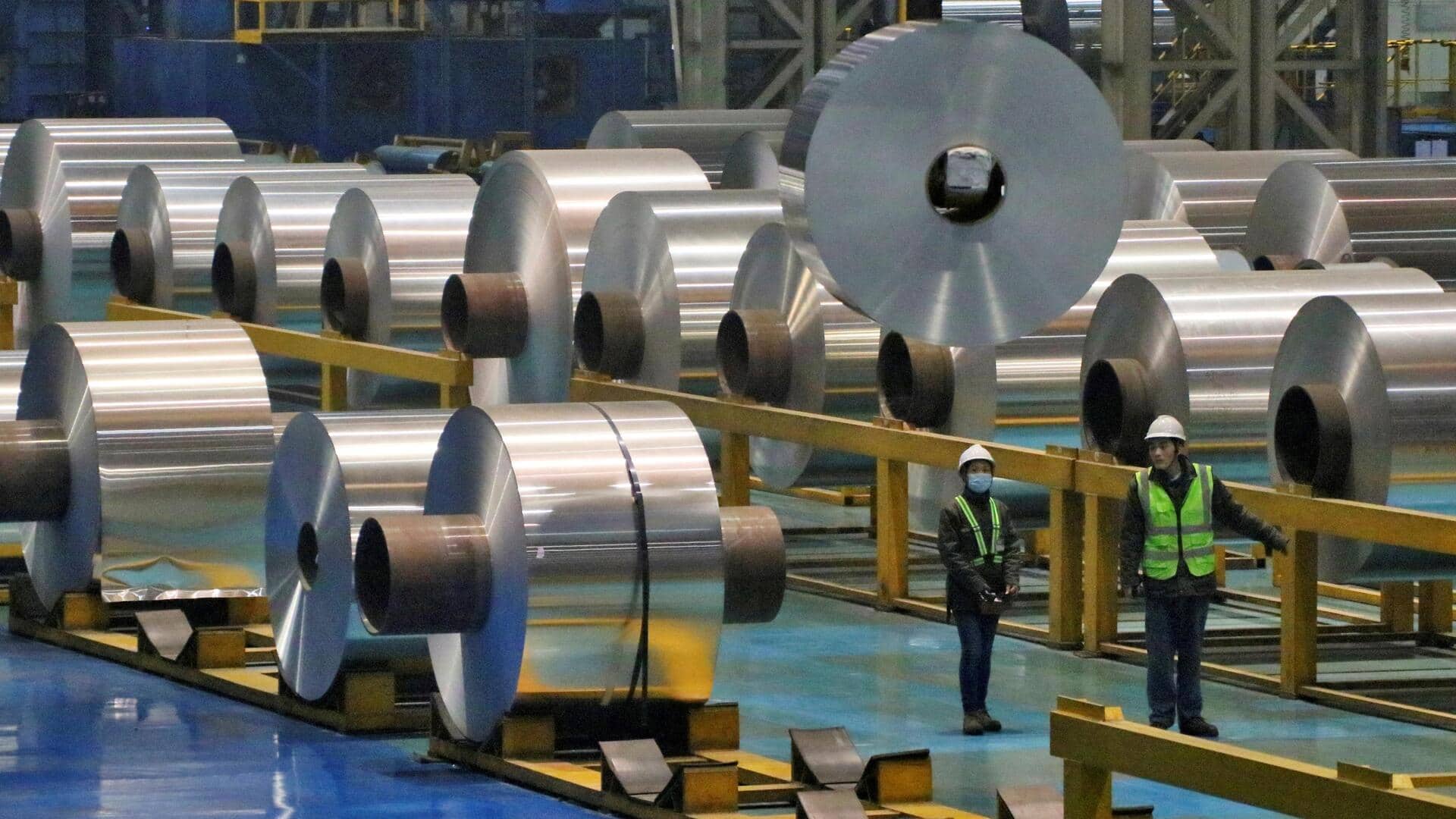
China, the world's largest aluminium producer, has imposed a cap on aluminium smelting capacity. The country has set an annual production limit of 45 million tons.
This restriction is expected to restrict new supply as demand for aluminium rises in sectors such as construction, power, transport, and electric vehicles.
The London Metal Exchange has seen aluminium prices rise for three consecutive trading sessions amid this tightening outlook.
Market response
India's aluminium market remains cautious amid global trends
In India, aluminium prices have also witnessed a slight increase on the Multi Commodity Exchange (MCX) today.
January delivery contracts saw a marginal rise of around ₹5.07 or 1.92% to trade near ₹297.20 per kg with over 1,210 lots traded.
However, market participants have remained cautious in the absence of any major global trigger and stepped in selectively when prices dip, keeping gains limited for now despite rising global prices.
Industry impact
Mining company shutdown adds to global supply concerns
Global supply concerns have also been heightened by recent developments in the mining and metals industry.
South32, a major Australia-based mining company, has announced plans to put its Mozal aluminium smelter in Mozambique under care and maintenance by March 2026.
The decision comes after the company failed to secure a new long-term power agreement and is expected to further reduce global aluminium supply, adding pressure on an already tight market.
Future outlook
China's control overcapacity could support aluminium prices
China's controlling of overcapacity is another key factor influencing the global aluminium market.
Authorities have indicated their intention to curb excess metal production to alleviate deflationary pressures on manufacturers.
While China may slightly exceed its 45 million ton cap this year, it is discouraging smelters from ramping up production in 2026.
This strategy is likely to keep supply growth in check and support aluminium prices in the medium term.