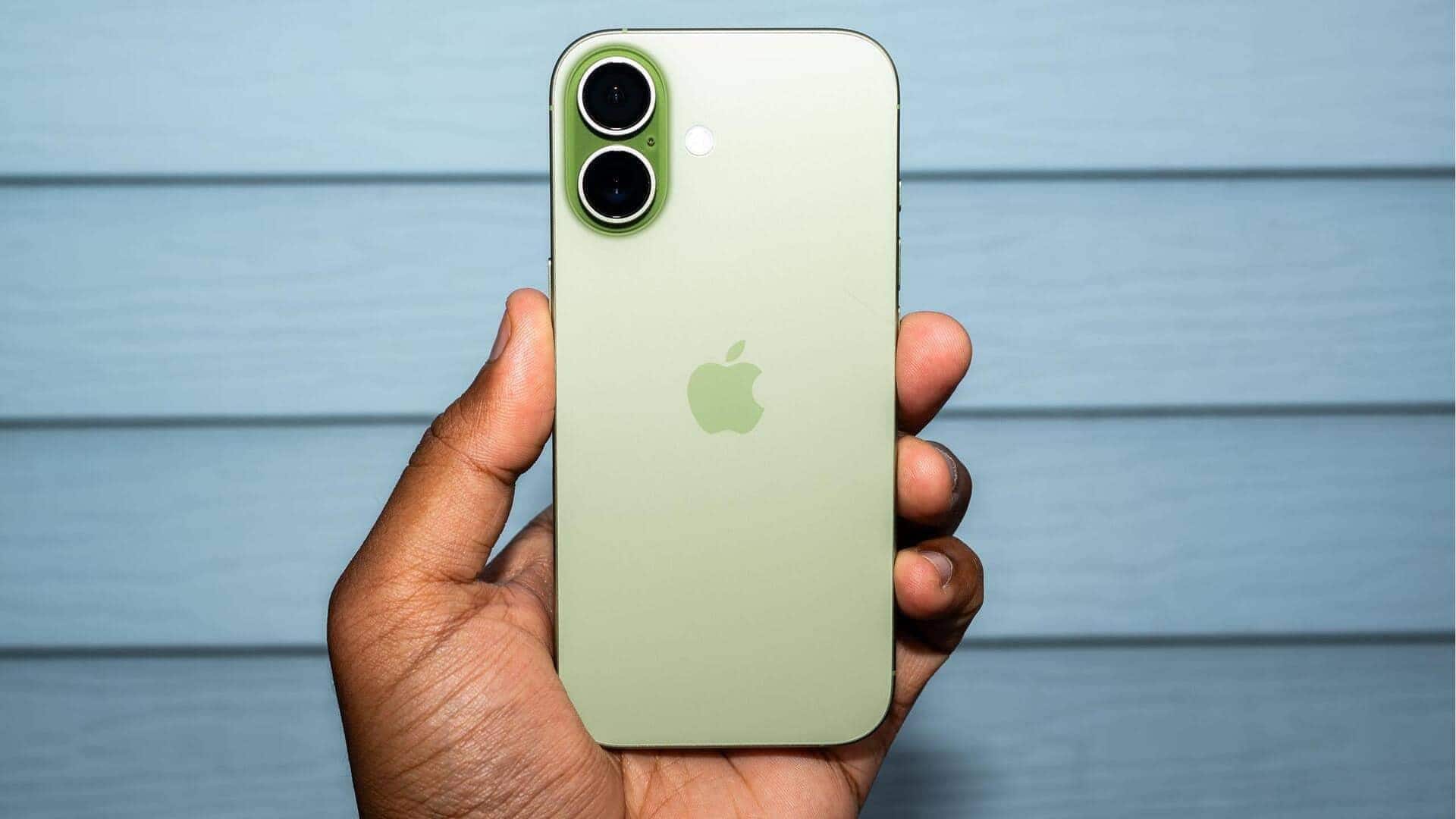
Apple dethrones Samsung as top smartphone brand after 14 years
What's the story
Apple has overtaken Samsung to become the world's leading smartphone brand in 2025, according to a report by Counterpoint Research. The Cupertino giant's market share now stands at 20%, thanks to the strong demand for its latest iPhone 17 series. This is the first time in 14 years that Apple has outsold its Korean rival.
Market dominance
Apple's impressive year-on-year growth and market performance
Apple has witnessed a 10% year-on-year growth, the highest among the top five brands.
This surge is largely attributed to the success of its iPhone 17 series launched in September 2025, and the popularity of iPhone 16 in India, Japan, and Southeast Asia.
Notably, iPhone 16 was India's best-selling phone last year.
In Q4 2025 alone, Apple captured a record one-fourth of global shipments.
Premium push
Apple's success linked to premium device demand
Apple's success is also tied to the growing demand for premium devices, with the global smartphone market expanding by 2%.
This trend was further fueled by an upgrade cycle from the COVID era, as millions of users were due for replacement.
A few months ago, analysts had predicted Apple's rise to the top spot in the smartphone market.
Market struggles
Samsung's performance and challenges in the market
Samsung, on the other hand, held a market share of 19%, just behind Apple.
The company saw a 5% year-on-year growth, thanks to its A series in the midrange segment and Galaxy S25 series along with Galaxy Z Fold 7 in the premium segment.
However, it faced challenges in Latin America and Western Europe which were partially offset by gains made in Japan and core markets.
Brand standings
Xiaomi, Vivo, and OPPO's performance in the smartphone market
Xiaomi retained its third position with a 13% market share, thanks to stable shipments through premiumization strategy and strong demand in emerging markets.
Vivo saw a 3% growth while OPPO declined by 4% overall despite some gains in India and MEA.
This decline was partly due to stiff competition faced in China and Asia-Pacific region.