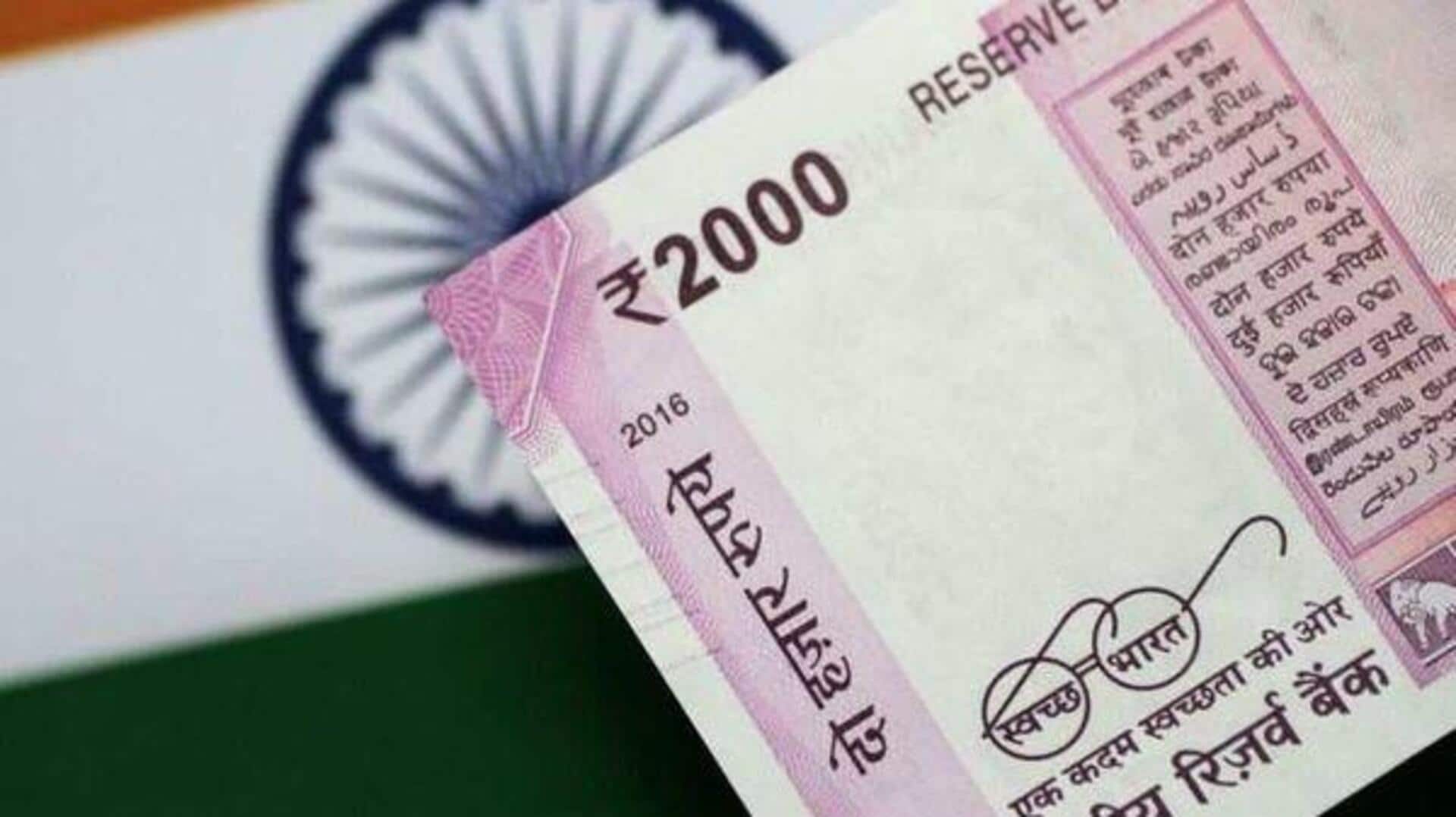
Can you still exchange ₹2,000 notes?
What's the story
The Reserve Bank of India (RBI) has phased out the ₹2,000 note from circulation. However, the currency is still legal tender. This means that you can use it for transactions, but exchanging or depositing it may be more difficult than before. The RBI stopped printing these notes in 2018-19 after the currency shortage was resolved.
Policy details
'Clean note policy' and ₹2,000 note withdrawal
Under its "Clean Note Policy," the RBI announced the withdrawal of ₹2,000 notes from circulation in May 2023.
The move was part of a broader strategy to maintain clean and high-quality currency in the economy.
Despite this, over 98% of ₹2,000 notes have been returned to the RBI with only ₹5,669 crore remaining outstanding.
Exchange options
Legal status and exchange facilities for ₹2,000 notes
As of 2026, ₹2,000 notes are still legal tender but their practical utility has diminished.
The RBI has already withdrawn them from circulation, making prolonged holding more inconvenient than illegal.
While the facility to exchange these notes at any regular bank branch in India ended on October 7, 2023, you can still exchange or deposit them through designated RBI Issue Offices across the country.
Office services
RBI issue offices: Locations and services
There are 19 RBI Issue Offices where you can still exchange your ₹2,000 note.
These are located in Ahmedabad, Bengaluru, Bhopal, Bhubaneswar, Chandigarh, Chennai, Guwahati, Hyderabad, Jaipur, Jammu, Kanpur, Kolkata, Lucknow, Mumbai, Nagpur, New Delhi, Patna, Thiruvananthapuram, and Belapur.
At these offices you can exchange them for other denominations (up to a limit of ₹20,000 at a time) or deposit the notes directly into a bank account in India for any amount.
Postal service
Alternative method: Sending ₹2,000 notes via India Post
If you can't visit an RBI Issue Office, you can send ₹2,000 banknotes through India Post from any post office in India to an RBI Issue Office for credit to your bank account.
This option is especially useful for people in remote areas or those with mobility challenges.
However, the exchange or deposit will be subject to submission of valid identity documents and due diligence as per RBI or government rules.
Required documents
Documentation for exchanging ₹2,000 notes
While the RBI or income-tax authorities haven't prescribed any specific documentation for exchange/deposit of ₹2,000 notes, individuals may benefit from maintaining an audit trail for each submission.
This includes keeping RBI or India Post acknowledgment receipts, bank statements showing credit, PAN/KYC documents, and copies of submitted forms, source documents showing how they got the cash (salary slips, ITRs, withdrawal records), and a simple note recording when and why they received the cash.