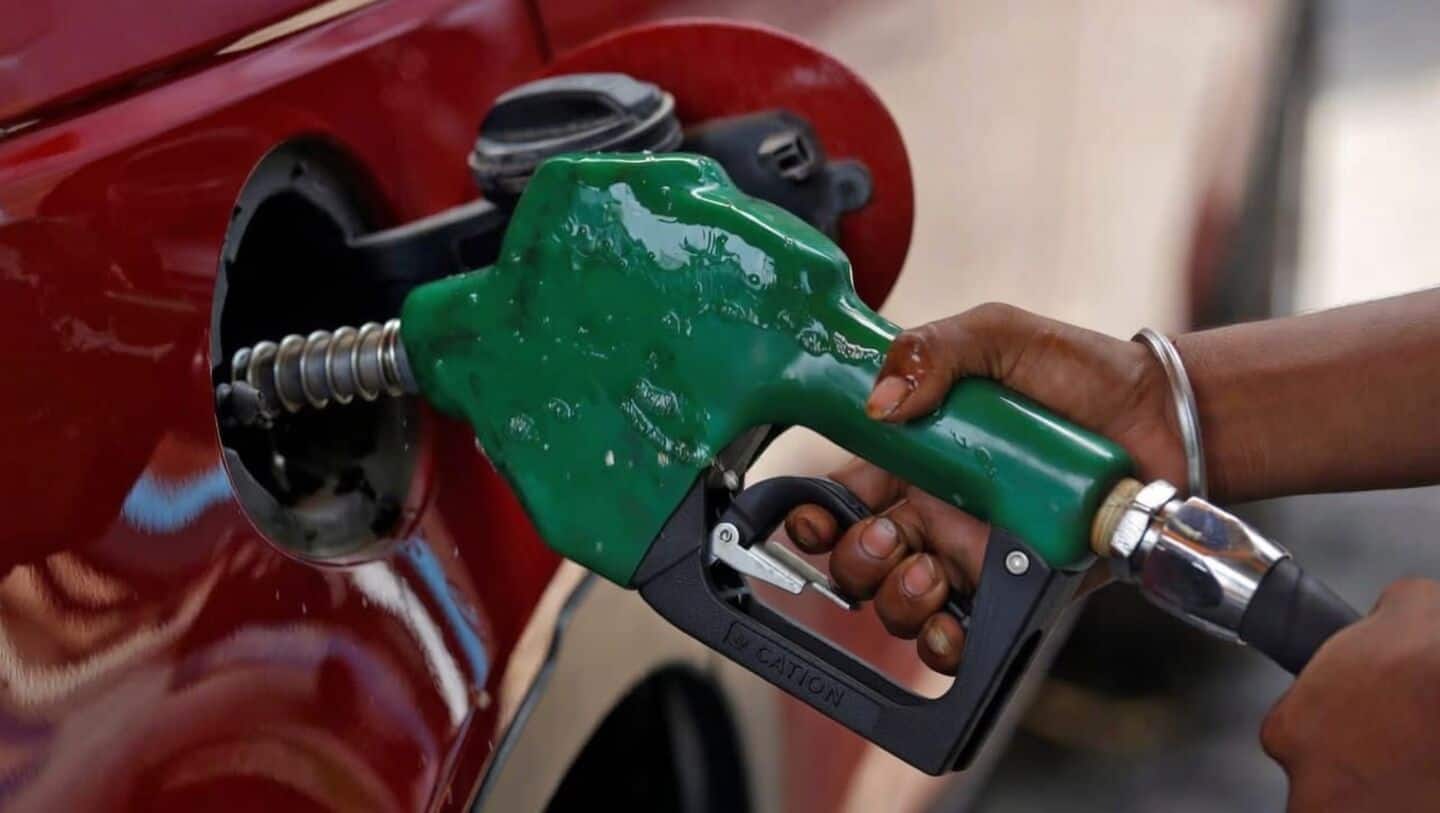
Centre faces ₹1 trillion revenue hit after fuel tax cuts
What's the story
The Indian government is likely to lose over ₹1 lakh crore in tax revenue in FY27, owing to the recent excise duty cuts on petrol and diesel. The estimate, provided by a senior government official to Moneycontrol, assumes no further changes in excise duty rates for the rest of the year. The official also said that additional revenue from windfall taxes on fuel exports has been considered while estimating this loss.
Duty reduction
Petrol duty slashed from ₹13/liter to ₹3/liter
The government has reduced the excise duty on petrol from ₹13/liter to ₹3/liter. For diesel, the duty has been slashed from ₹10/liter to nil.
However, a duty of ₹21.5/liter has been imposed on diesel exports and ₹29.5/liter on jet fuel exports.
This is done to ensure that essential products remain available domestically amid the West Asia crisis disrupting global energy supplies.
Consumption impact
Daily revenue loss for center
India's daily fuel consumption stands at around 450-600 million liters, with diesel accounting for 300-350 million liters and petrol for 150-250 million liters.
A senior source told Moneycontrol that a ₹10/liter cut in excise would result in a daily revenue loss of ₹450 crore to ₹500 crore for the central government.
Annually, this could amount to an estimated ₹1.6 lakh crore to ₹1.8 lakh crore.
Trade-off details
Government has taken a huge hit on its taxation revenues
On a full-year basis, India consumes some 175 billion liters of auto fuel—115 billion liters of diesel and 60 billion liters of petrol.
A ₹10/liter excise cut means the government is foregoing nearly ₹1.75 lakh crore in revenue.
Petroleum Minister Hardeep Singh Puri said that the government has taken a huge hit on its taxation revenues to ensure "losses of oil companies (approximately ₹24/liter for petrol and ₹30/liter for diesel) at this time of sky-high international prices are reduced."
Tax imposition
Export tax imposed as international prices of petrol, diesel skyrocket
Puri added that an export tax has been imposed as international prices of petrol and diesel have skyrocketed.
"Any refinery exporting to foreign nations will have to pay export tax," he said.
The government's move comes as Brent crude remains volatile near $100 a barrel, having recently touched peaks of $119 following military strikes on Iranian infrastructure.