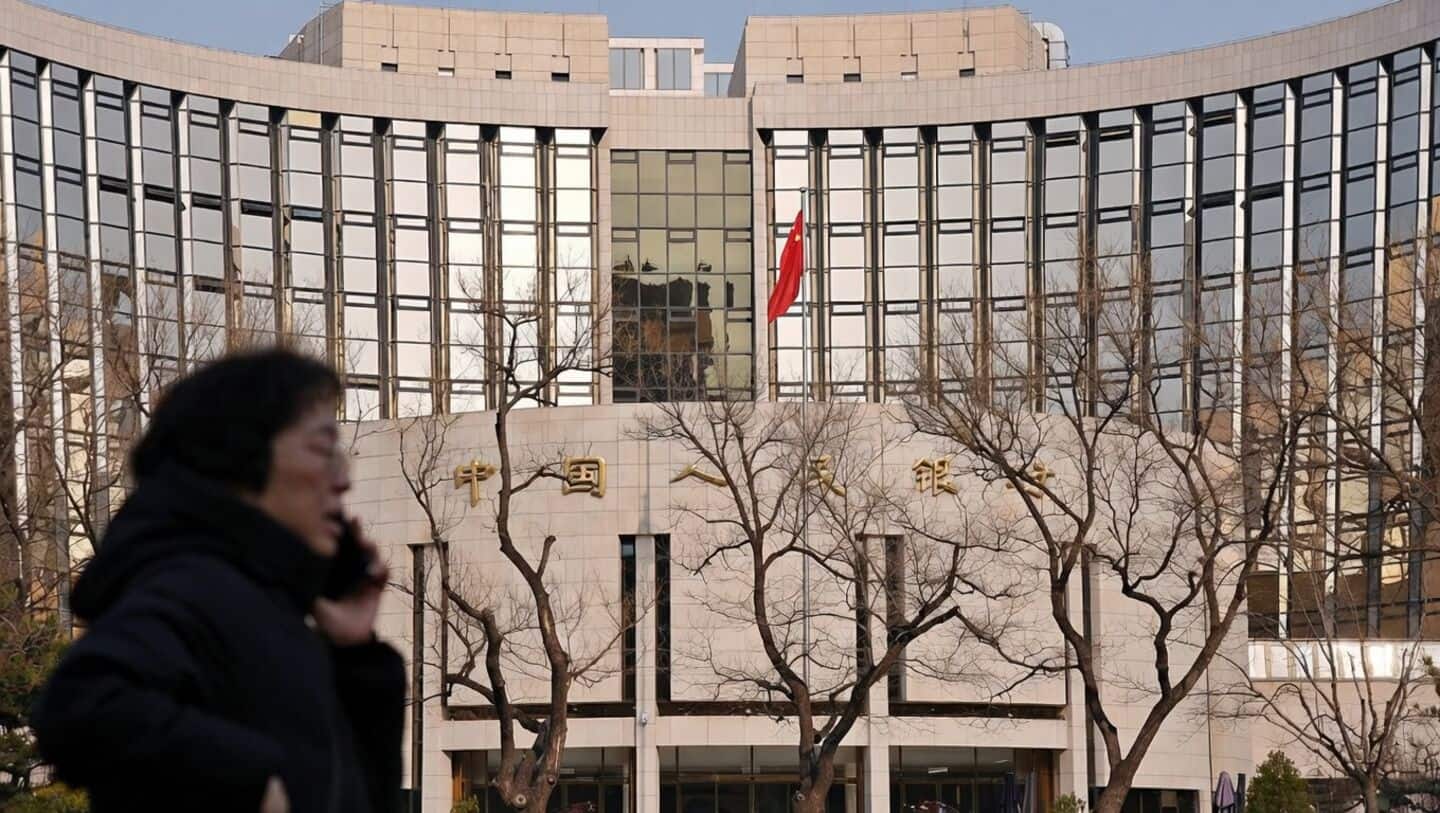
China holds rates steady as it balances growth and risks
What's the story
China has maintained its benchmark lending rates for the 11th consecutive month, a decision that comes as the country grapples with rising geopolitical tensions in West Asia. The People's Bank of China (PBOC) kept the one-year loan prime rate (LPR) unchanged at 3% and held steady the five-year LPR at 3.5%. The move comes as China's economy expanded by 5% in Q1, up from 4.5% in the previous quarter and within its full-year target range of 4.5%-5%.
Economic performance
Positive economic indicators lessen need for stimulus measures
China's factory-gate prices rose for the first time in over three years, increasing by 0.5% YoY in March. This indicates that import-cost pressure is beginning to affect the economy.
Consumer inflation also saw its biggest jump in over three years, rising by 1.3% in February before easing to 1% in March.
These positive indicators have lessened the need for further stimulus measures from policymakers.
Policy approach
'Wait-and-see' approach likely from policymakers
Yu Song, chief China economist at UBS Securities, said policymakers are likely to adopt a "wait-and-see" approach with rising inflation reducing the PBOC's incentive to cut rates or implement major easing in the near term.
He added that "the government may also need time to assess the impact of external uncertainties amid Middle East conflict."
Monetary policy
PBOC calls for deeper international policy coordination to safeguard stability
The PBOC has said it will keep a "supportive" and "moderately loose" monetary stance this year to support growth while keeping its currency stable.
At an IMF meeting in Washington last week, China's central bank governor Pan Gongsheng warned that rising geopolitical tensions, protectionism, and trade barriers have weighed on global growth and fueled financial market volatility.
He called for deeper international policy coordination to safeguard macroeconomic stability.