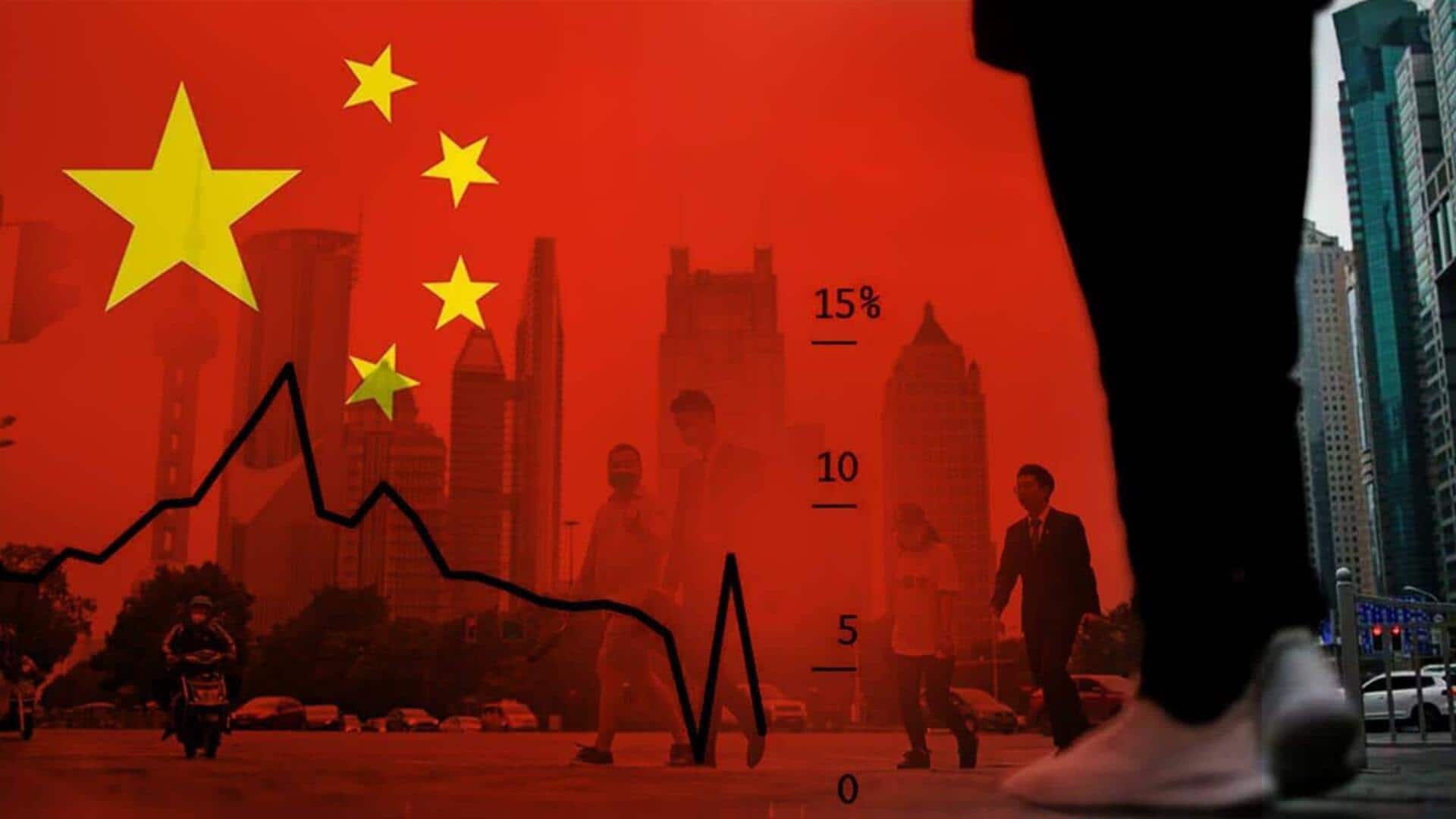
China's retail sales fall for 1st time since 2022
What's the story
China's retail sales have witnessed a decline for the first time in over three years. The National Bureau of Statistics (NBS) reported that retail sales fell by 0.6% year-on-year in May, reversing April's growth of 0.2%. This contraction is worse than economists' expectations of flat growth and marks the first decline since December 2022.
Economic disparity
Diverging economic trends
The latest figures highlight a growing divergence in China's economy.
While strong manufacturing activity and export growth continue to thrive, weak household consumption and a prolonged property sector downturn remain major challenges.
Industrial output rose by 4.5% in May from a year earlier, beating analysts' forecasts of 4.3% growth and accelerating from April's 4.1% expansion.
Trade imbalance
Weakness in consumption
China's exports also surged by 19.4% in May, but this overseas demand hasn't translated into stronger domestic spending.
The weakness in consumption was particularly visible in the automobile sector, where domestic car sales declined for an eighth consecutive month.
Analysts attribute this to soft household confidence, sluggish income growth, and concerns about job security continuing to discourage major purchases.
Market instability
Deterioration in investment activity
Investment activity also deteriorated sharply, with fixed-asset investment falling by 4.1% in the first five months of this year.
This is worse than a 1.6% decline during January-April and missing expectations for a 2% contraction.
The property sector, which has been a major drag on economic growth for several years, showed little sign of stabilization, with property investment declining by 16.2% in the January-May period compared to a 13.7% fall in the first four months of this year.
Economic imbalance
Inflation indicators show imbalances
Inflation indicators also point to continued imbalances in China's economy.
Factory-gate inflation rose to its highest level since July 2022, reflecting stronger industrial activity and rising production costs.
However, consumer inflation remained largely stagnant, indicating that household demand has not kept pace with supply-side growth.
The nationwide survey-based unemployment rate eased marginally to 5.1% in May from April's 5.2%.