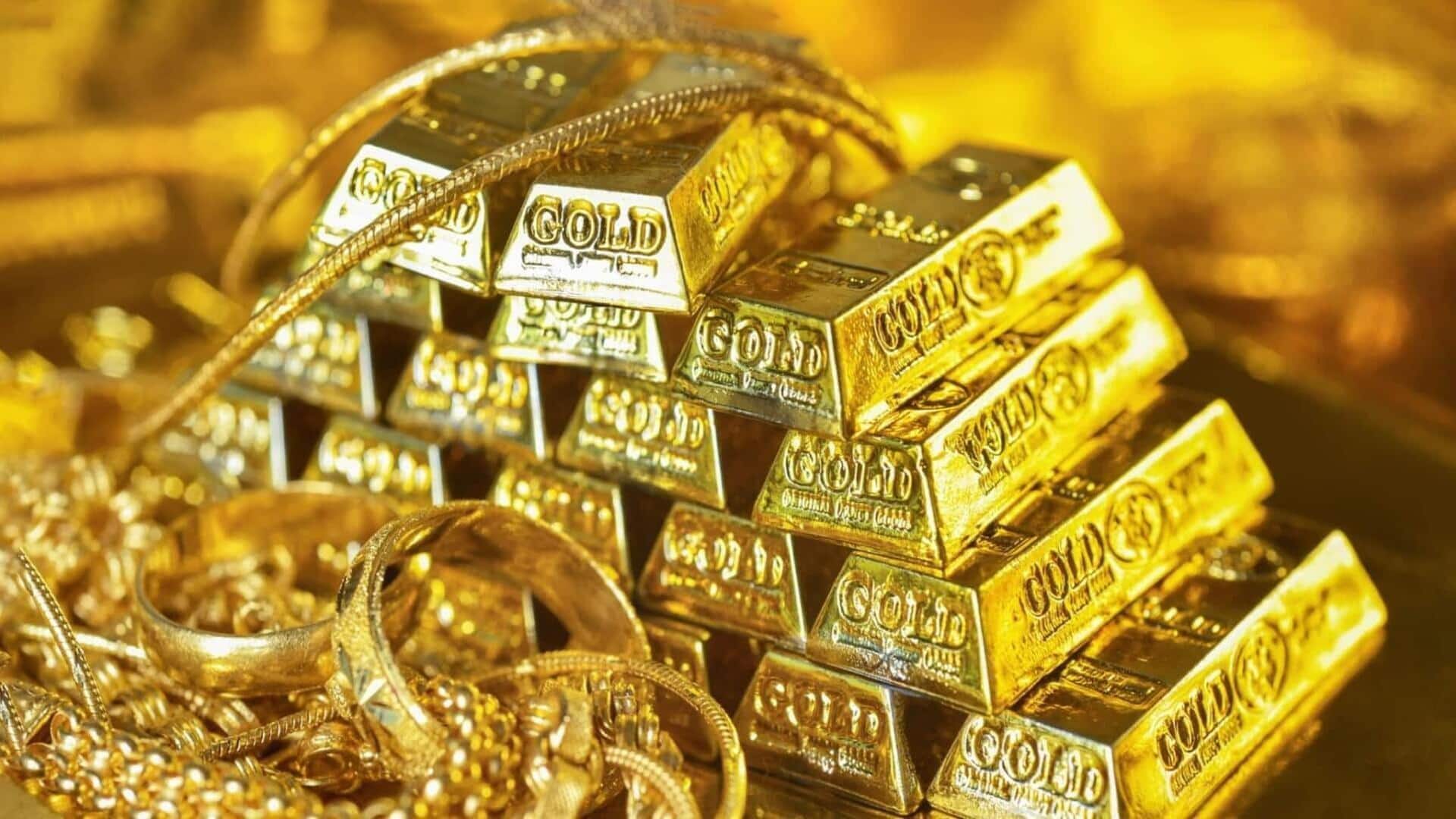
Gold plunges 12% in March, biggest monthly drop since 2013
What's the story
Gold prices witnessed their biggest monthly drop in over a decade, plummeting by 12% in March to $4,608 per ounce. The sharp decline was seen across all major currencies and is the steepest fall since June 2013. According to the World Gold Council (WGC), heavy outflows from global gold ETFs and unwinding of net long positions on COMEX were key contributors to this downturn.
ETF impact
Massive outflows from global gold ETFs
In March, global gold exchange-traded funds (ETFs) witnessed massive outflows worth $12 billion (84 tons).
North America was the biggest contributor to this trend with $14 billion in outflows.
Europe followed closely with minor withdrawals while Asia recorded inflows of $1.9 billion, indicating a dip-buying interest in the region.
Market dynamics
Retail and institutional selling pressure
The WGC report also highlighted how market positioning played a key role in the price correction.
A build-up in retail exposure led to a sharp "flush out" as prices corrected.
COMEX data showed an 18-ton drop in non-reportable (retail-linked) positions and a 22-ton decline in managed money positions, indicating institutional selling.
Advisor actions
Technical breaches and momentum-based selling
The report further noted that Commodity Trading Advisors (CTAs), which had built large bullish positions, accelerated selling after gold broke below its 50-55 day moving average in mid-March.
This technical breach triggered a wave of algorithmic and momentum-based selling.
Broader global market conditions such as rising US bond yields due to near-term inflation concerns also reduced the appeal of non-yielding assets like gold.
Market pressure
Central bank actions and Asian demand dynamics
Central bank actions also added pressure on gold prices.
The Central Bank of the Republic of Turkiye reportedly used around 50 tons of gold as collateral via swaps, fueling market speculation of potential selling.
Despite this sharp correction, analysts say that underlying demand for gold remains intact, particularly in Asia where lower prices triggered fresh buying interest.