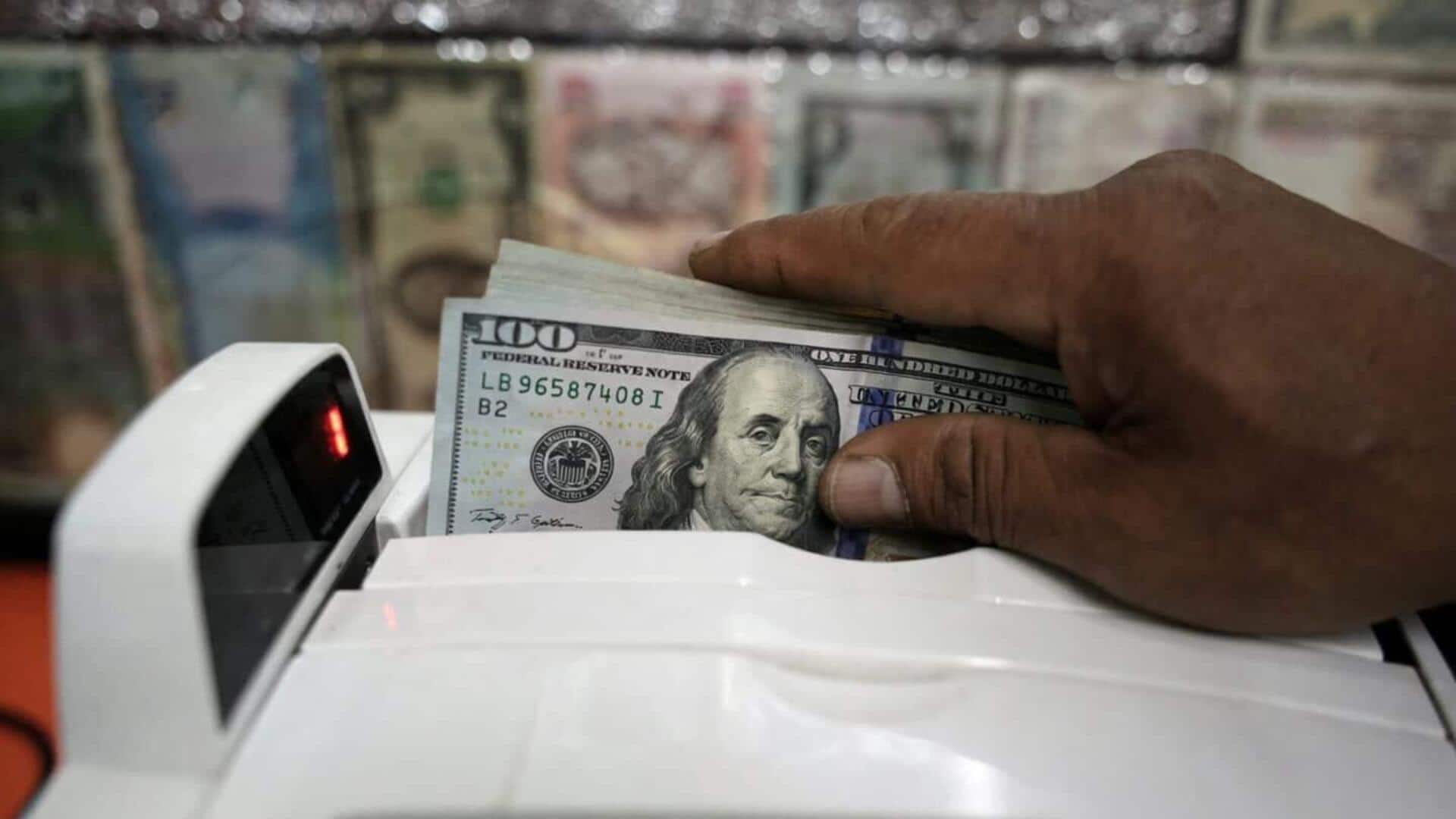
HDFC, ICICI raise dollar deposit rates to attract NRI funds
What's the story
In a bid to draw more dollars amid rising global rates, HDFC Bank and ICICI Bank have revised their Foreign Currency Non-Resident (FCNR) deposit rates. The move comes as part of the banks' strategy to stay competitive in the market and meet strong customer demand. The changes come after the RBI launched a special window in June to boost foreign currency deposits from non-resident Indians (NRIs).
Rate adjustments
Rate hikes by both banks
ICICI Bank has raised its FCNR(B) deposit rate for deposits of $5 million or more to 6.25% from 6%.
HDFC Bank has also increased the rate on its three- to five-year FCNR(B) dollar deposits by 25 basis points, matching ICICI's new rate.
The changes are largely due to market conditions and competition, with banks needing to adjust their rates as overseas rates rise and borrowing becomes costlier.
International influence
Global benchmark rates have risen since RBI operationalized the scheme
Since the RBI operationalized the scheme on June 8, global benchmark rates have risen.
For instance, HDFC Bank raised $750 million by selling five-year bonds to overseas investors on June 16.
The bond was priced at a tight spread of 90 basis points over the five-year US Treasury, which is now trading at 4.45%, up from 4.15% on June 16.
Strategic moves
Data shows strong response to RBI's concessional swap facility
The RBI's special window, which is open for FCNR(B) deposits until September 30, 2026, has been effective in attracting foreign currency deposits from NRIs.
The central bank's latest measures give banks more leeway in mobilizing these deposits by making it easier for lenders to offer higher returns without significantly increasing their hedging costs.
This comes as early data shows a strong response to the RBI's concessional swap facility.
Deposit benefits
FCNR(B) deposits let NRIs hold funds in specified foreign currencies
FCNR(B) deposits let NRIs hold fixed deposits in specified foreign currencies, including the US dollar.
The principal and interest are paid in the same foreign currency, protecting depositors from exchange rate fluctuations.
At the June 2026 MPC meeting, the RBI noted a sharp decline in FCNR(B) deposit inflows. Net inflows fell from over $7 billion in FY25 to just $946 million in FY26, highlighting the need to revive overseas deposit mobilization.