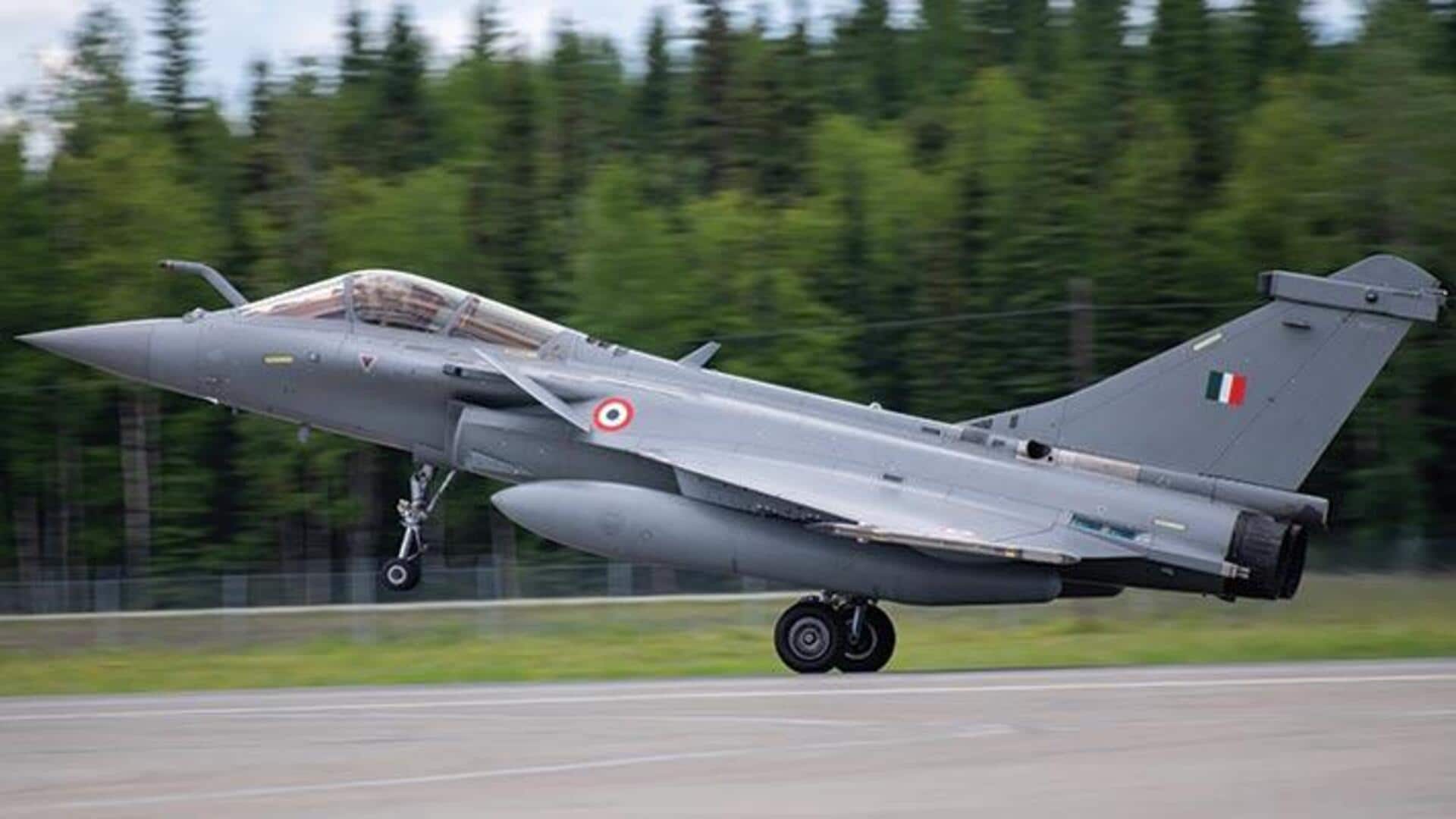
80% of 114 Rafale jets to be made in India
What's the story
India is looking to acquire 114 Rafale fighter jets for the Indian Air Force (IAF), with a major chunk of them, around 80%, to be manufactured in the country, according to The Economic Times. The project will also see some manufacturing facilities being moved from France to India. The move is part of India's effort to boost self-reliance in defense production and reduce dependence on foreign suppliers.
Strategic talks
India-France discussions focus on localization
The Indian government is in talks with French officials to maximize local content in the Rafale deal.
This includes plans for setting up a Maintenance, Repair, and Overhaul (MRO) facility in India to enhance the serviceability of these planes.
The two sides are also negotiating project costs, taking into account an annual inflation rate increase of around 4%.
Export possibilities
Potential for Indian entity in Rafale export orders
With a significant number of Rafale parts and systems to be manufactured in India, there is a possibility that French aerospace company Dassault Aviation could use an Indian entity for export orders.
This could also make Indian facilities a hub for MRO services for countries in the region operating Rafale and other Dassault aircraft.
Aircraft selection
Rafale's high serviceability makes it ideal for IAF
The Rafale has been found to be the best fit for the IAF's fighter aircraft requirements, given its high serviceability rate of around 90%.
This is much higher than any other aircraft in the world, including the American F-35.
The IAF has long been pushing for the acquisition of these jets after they were selected in a multi-vendor tender.
Future induction
IAF's fighter jet force structure and future plans
The IAF's fighter jet force structure will mainly comprise Su-30 MKIs, Rafales, and indigenous fighter jet projects.
India has already ordered 180 LCA Mark 1A jets and plans to induct an indigenous fifth-generation fighter in large numbers after 2035.
This comes as the country continues to face challenges on its two active fronts with Pakistan and China, while Bangladesh is emerging as a new security threat.