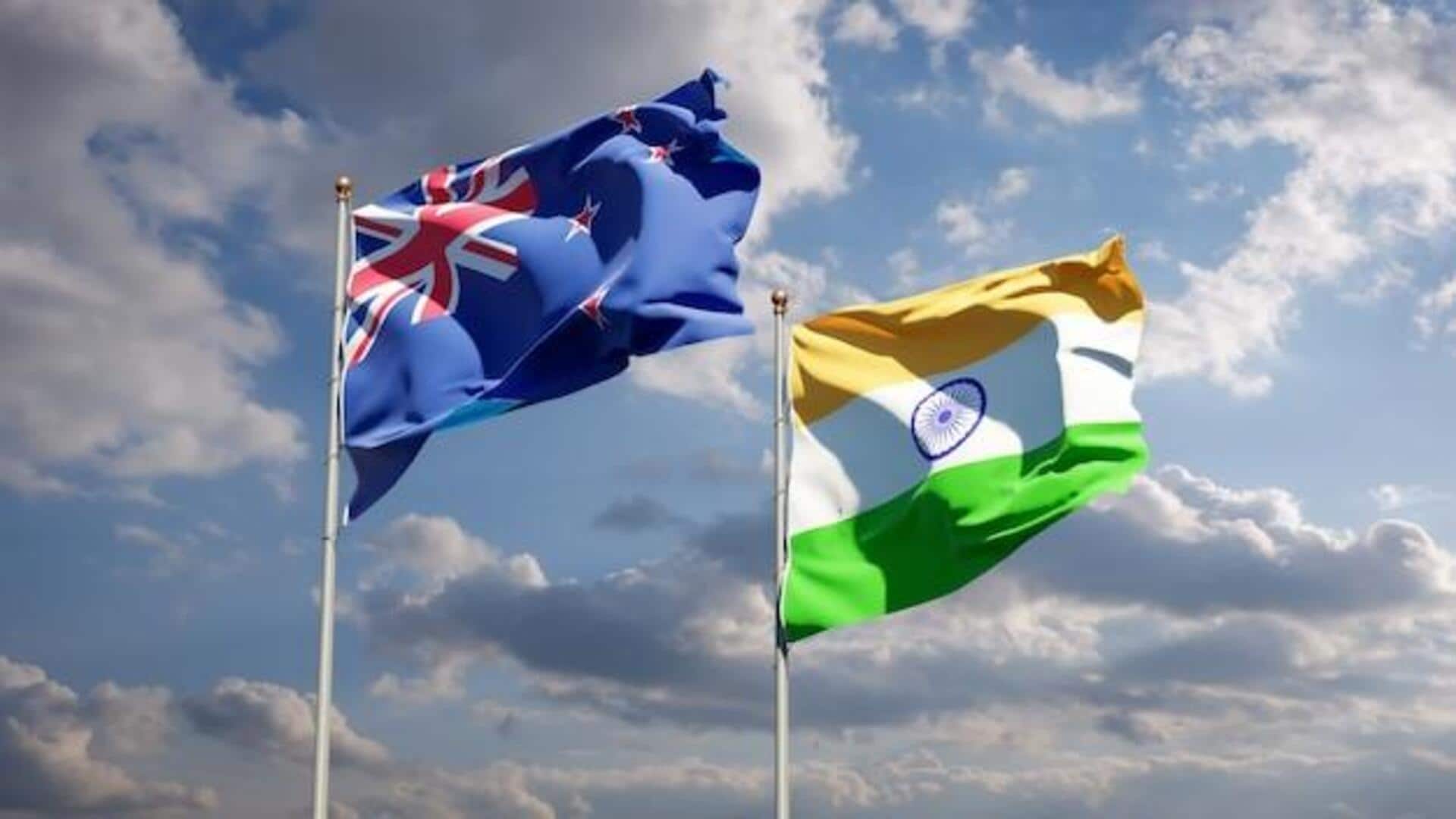
India, New Zealand to sign FTA on April 24
What's the story
India and New Zealand are all set to sign a Free Trade Agreement (FTA) on April 24 in New Delhi. The deal is tipped to provide tariff-free access for Indian goods in the New Zealand market. It is also likely to attract investments worth up to $20 billion over the next 15 years. The two nations had announced the conclusion of negotiations for this trade deal on December 22 last year.
Trade boost
FTA to double bilateral trade in next 5 years
The FTA is aimed at doubling bilateral trade between India and New Zealand to $5 billion in the next five years.
The pact will be signed at Bharat Mandapam, an official told PTI.
Under the deal, India will get zero-duty access for all its exports to New Zealand.
In return, India will cut/eliminate tariffs on 95% of New Zealand's exports covering wool, coal, wood, wine avocados and blueberries among other products.
Sector protection
Duty concessions not given on sensitive items
Despite the tariff concessions, India has not given duty concessions on certain sensitive items. These include dairy products such as milk, cream, whey, yogurt and cheese; onions, sugar, spices, edible oils, and rubber. The move is aimed at protecting domestic farmers and industries.
Access benefits
Visa pathway for Indian professionals
The FTA also gives New Zealand duty-free access to many goods including sheep meat, wool, coal, and most forestry and wood products.
In the services sector, New Zealand will open a temporary visa pathway for Indian professionals in skilled categories.
This scheme will permit up to 5,000 Indians each year to work in New Zealand for up to three years.
Professional coverage
Visa scheme to cover AYUSH practitioners, yoga instructors, chefs
The visa scheme under the FTA will cover a wide range of professions.
These include AYUSH practitioners, yoga instructors, Indian chefs and music teachers, as well as high-demand sectors like IT, engineering, healthcare, education, and construction.
This is expected to improve movement of skilled workers between the two countries.