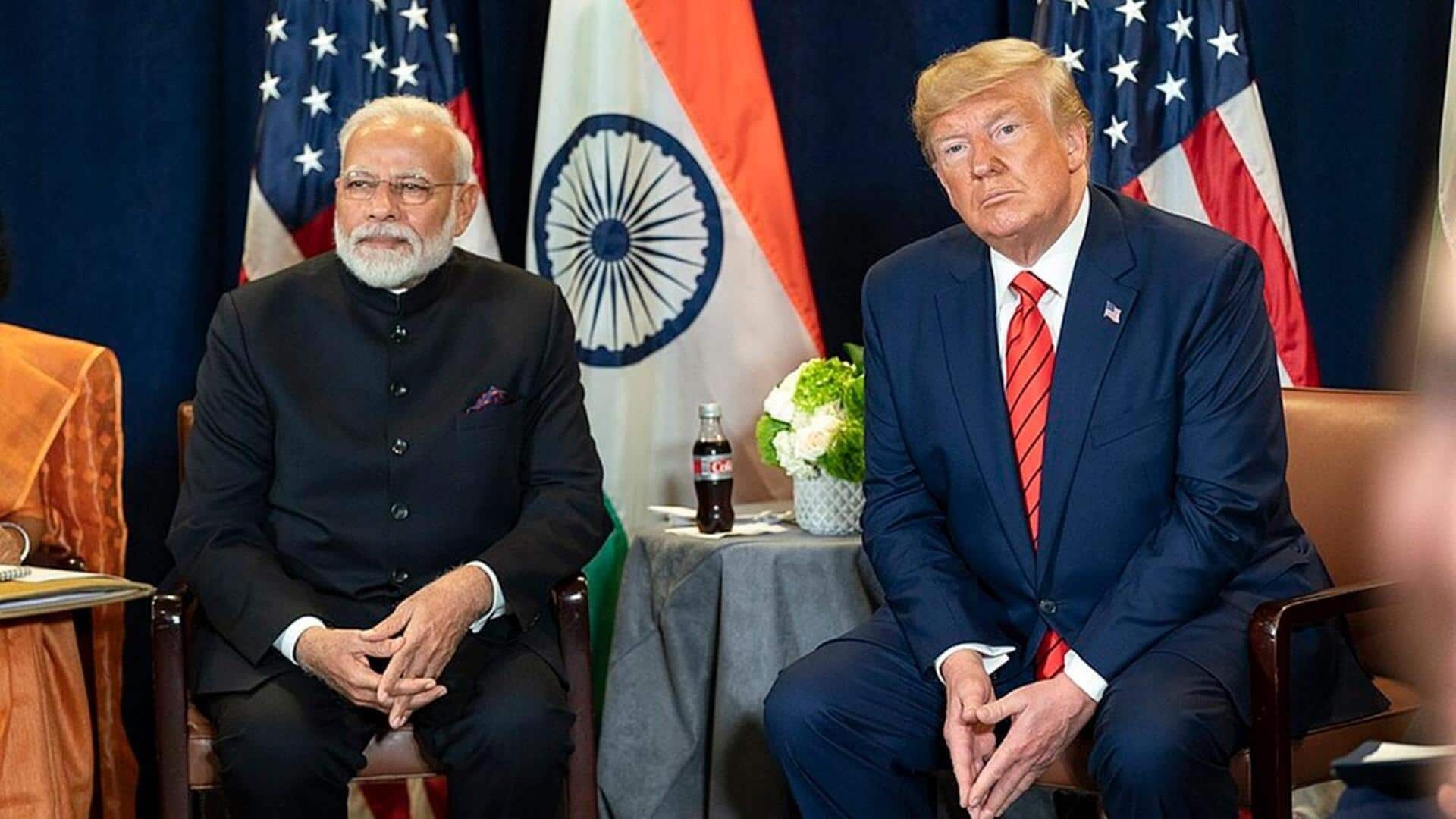
India prepares legal challenge to US trade probe
What's the story
The Indian government and industry representatives from textiles, auto parts, plastics, and solar sectors are set to challenge the US Trade Representative's (USTR) Section 301 investigations. The public hearings start in Washington this week. The hearings are scheduled for April 28-29 on forced labor and May 5-8 on structural excess capacity.
Trade surplus concerns
USTR's investigations initiated in March
The USTR launched the investigations in March 2026, alleging that trade surpluses and insufficient safeguards against forced-labor imports from select countries, including India, harm US commerce by creating artificially low-priced competition and displacing domestic production.
In response to the structural excess capacity claims, India argued that the USTR wrongly associated it with trade surplus.
Overcapacity rebuttal
Indian Steel Association defends steel sector
The Indian Steel Association defended India's steel sector against global overcapacity and forced labor under US standards.
It argued that the sector should be excluded from any remedial measures under Section 301, as India's inclusion would not meet the stated purpose of addressing overcapacity or forced labor, nor be backed by underlying data/evidence.
Labor law defense
Industry bodies argue against forced labor claims
Industry bodies such as the Plastics Export Promotion Council argued that India's domestic laws already prohibit forced labor and its top plastic imports are not on US labor watchlists.
Texprocil and the Indian Solar Manufacturers's Association (ISMA) also defended India's position, saying that the Constitution and corporate regulatory frameworks ensure supply chain transparency.
Sectoral impact
ISMA argues against US's position on solar products
ISMA argued that the Indian solar products sector does not burden or restrict US commerce, and therefore, the application of measures under Section 301 would not be justified.
Despite the usual requirement for Section 301(b) investigations to be completed within 12 months, the USTR hopes to conclude these investigations before the expiration of Section 122 tariffs on July 24.