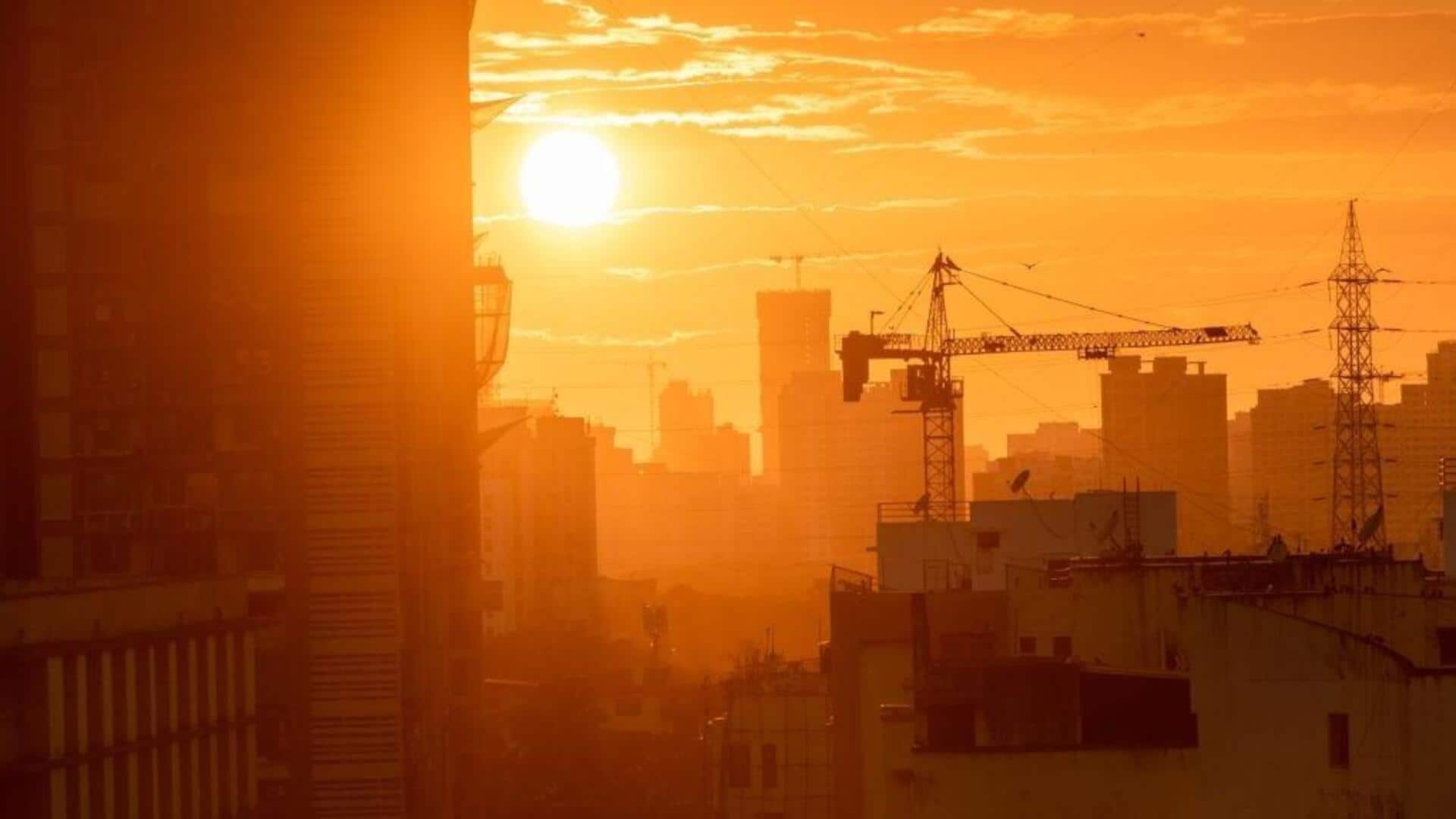
Only 8% of Budget allocated for climate fight
What's the story
India's Union Budget 2026-27 has come under fire for its inadequate response to the growing climate crisis. The Ministry of Environment, Forests and Climate Change (MoEFCC) has been allocated ₹3,759.46 crore for the fiscal year, a mere 8% increase from last year's budget estimate of ₹3,481.61 crore. Experts say it is far too small considering India's escalating climate and ecological challenges.
Allocation details
Focus on institutional capacity, limited immediate climate action emphasis
The 2026-27 budget sees a marginal hike in revenue expenditure, mostly to sustain existing institutions and schemes.
Capital expenditure has been increased from ₹174.39 crore to ₹222.80 crore, hinting at some extra investment in long-term assets like research infrastructure and monitoring facilities.
However, the budget primarily focuses on strengthening regulatory and institutional capacity, with limited emphasis on accelerating immediate climate action.
Funding focus
Increased funding for environmental monitoring and dispute resolution
The budget has increased allocations for attached and subordinate offices such as the Botanical Survey of India, Zoological Survey of India, and National Green Tribunal. This is in line with the growing burden of environmental monitoring and dispute resolution.
The National Green Tribunal gets a major funding boost as environmental litigation rises across the country.
Program spending
Pollution control remains priority, but funding lower than last year
Pollution control continues to dominate program spending, with ₹1,091 crore allocated for 2026-27. This will support pollution control boards and the National Clean Air Programme. However, this is lower than last year's revised estimates of ₹1,300 crore.
The National Mission for a Green India has been allocated ₹212.50 crore, while funding for Project Tiger and Elephant remains unchanged at ₹290 crore each.
Commitment assessment
Extreme heat by 2050
A recent study had warned that the percentage of the world's population experiencing extreme heat could double by 2050.
The report was published in the journal Nature Sustainability and is described as a "wake-up call."
It said, "India, Nigeria, Indonesia, Bangladesh, Pakistan and the Philippines are projected to have the largest populations living under extreme heat, living under more than 3,000 cooling degree days."