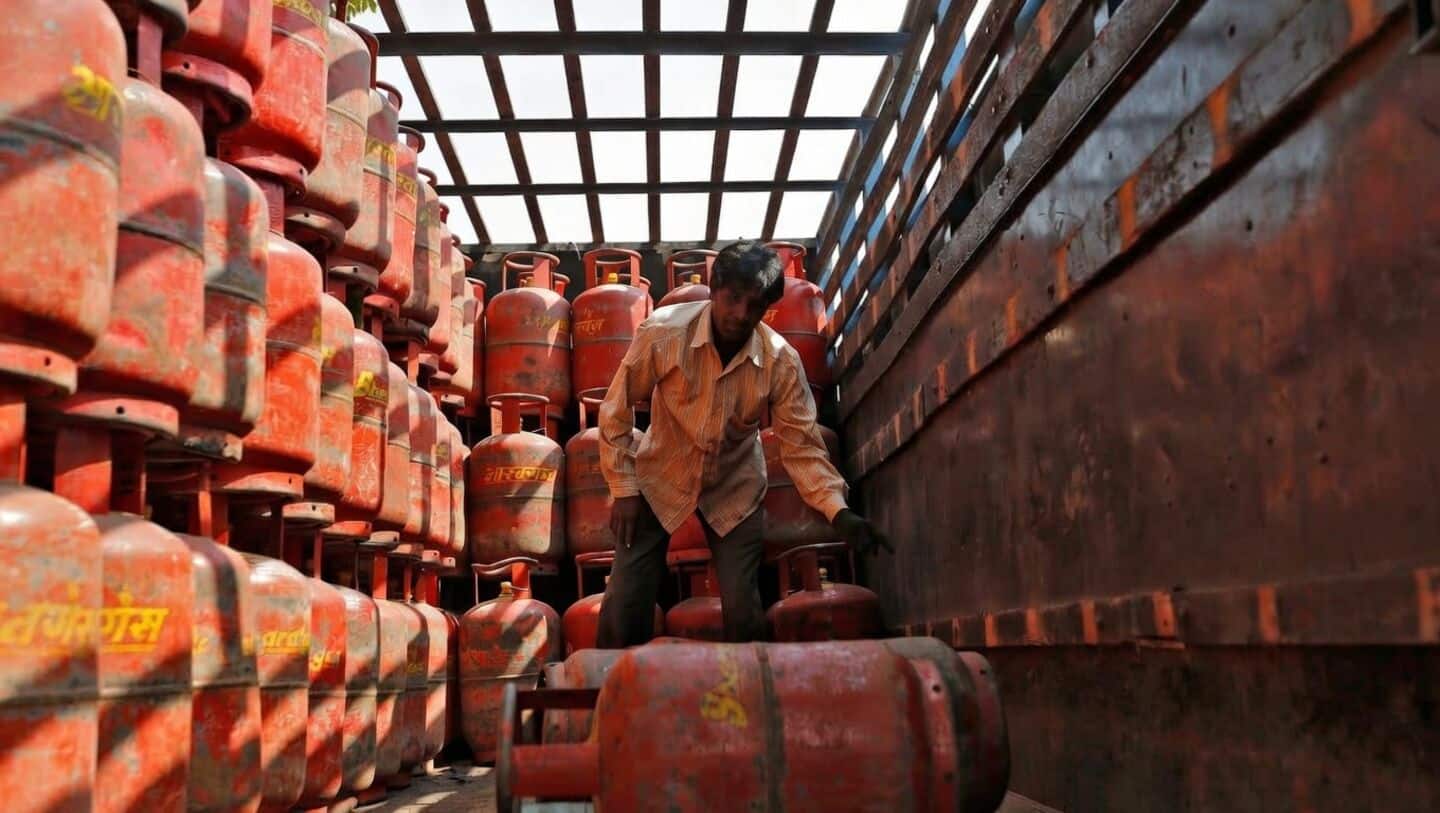
India's LPG crisis may take 4 years to ease: Report
What's the story
India's Liquefied Petroleum Gas (LPG) supply chain disruption could take three to four years to normalize, according to a Moneycontrol report citing a senior government official. The situation is complicated by the ongoing blockade of the Strait of Hormuz and Iranian attacks on regional energy infrastructure. These events have severely disrupted the flow of cooking gas to South Asia, including India.
Recovery concerns
Uncertainty looms over Gulf supplies
The official said, "Your LPG supply might take that long because some very critical supplies are shut down."
However, what 'shut' means is not fully clear—whether entire wells have been exhausted or production has stopped.
Suppliers themselves are saying it will take at least three years.
The uncertainty over the status of key production wells and processing units in the Gulf is a major concern.
Import reliance
India's energy dependence exposes vulnerabilities
India's strategic vulnerability has come to the fore due to its heavy dependence on energy imports.
Nearly 60% of the country's LPG consumption is sourced from overseas, with nearly 90% of these supplies passing through the Strait of Hormuz. This makes it a critical chokepoint for India's LPG supply chain.
To make matters worse, India has limited storage capacity that barely covers 15 days of consumption against an annual demand of 33 million tons.
Impact and response
Price hikes already affecting consumers
The ongoing LPG supply disruption has already started affecting prices. A 14.2kg domestic cylinder has become costlier by ₹60 since mid-March, while commercial cylinders have seen a price hike of ₹115.
In response to the crisis, the government is prioritizing household consumption over industrial use and increasing the gap between cylinder bookings.
Mitigation strategies
Efforts underway to mitigate crisis
Despite the ongoing crisis, efforts to diversify sourcing have reduced dependence on the Gulf from 90% to 55% by late March. However, effective supply disruption is still estimated at 40% to 50%.
The government is focusing on ensuring continuity of household supply while exploring alternative sourcing options to mitigate shortages. These include diversifying import sources, rerouting shipments, increasing domestic output and managing demand.