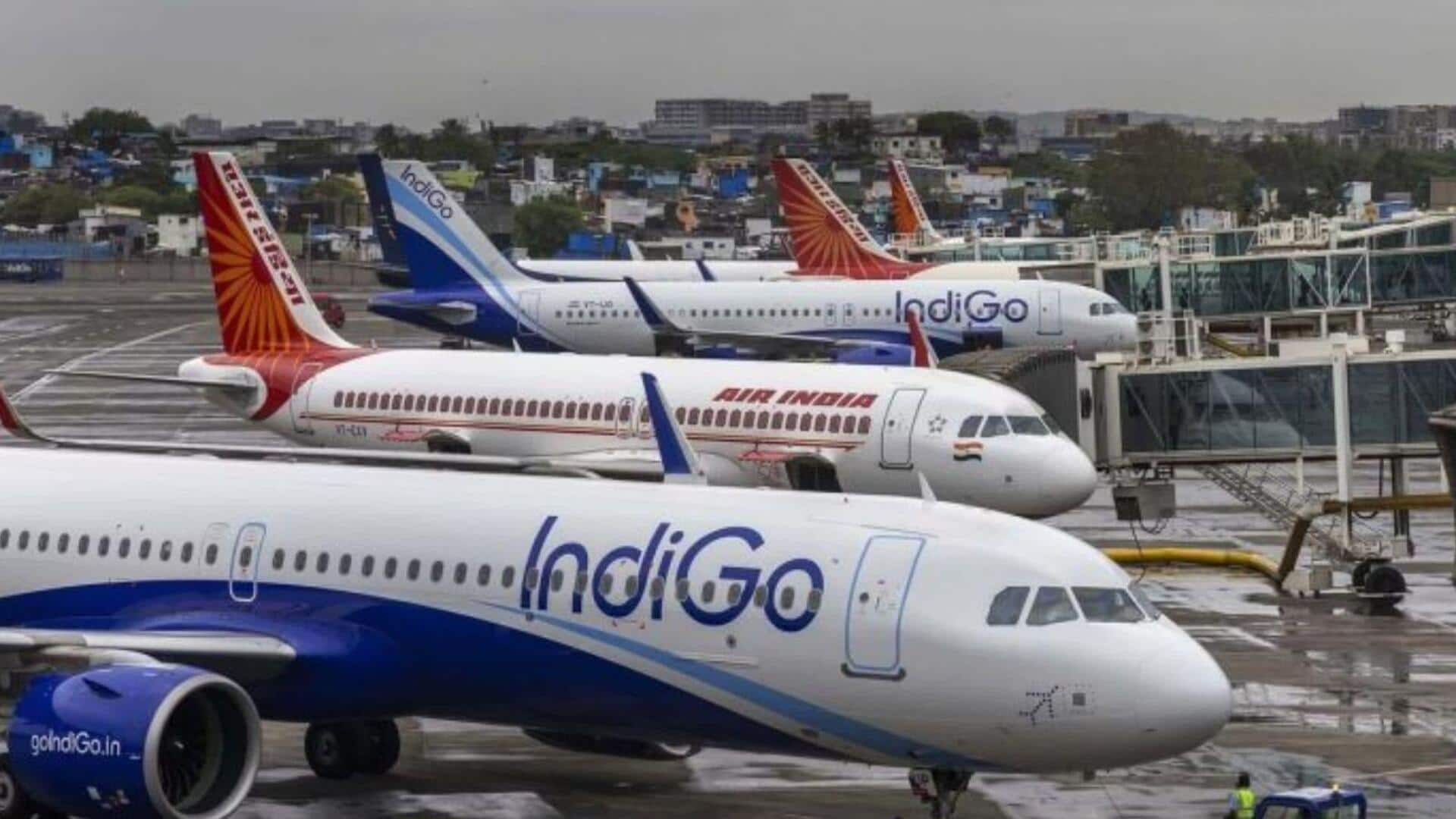
IndiGo, Air India oppose steep charges at new airports
What's the story
India's leading airlines, IndiGo and Air India, have opposed the proposed increase in passenger charges by the country's newest airports. The move comes as a response to Adani-owned Navi Mumbai International Airport Ltd's (NMIAL) plan to hike user development fees (UDF) for domestic departures and arrivals. The proposed hike is 20% in FY28 and 10% annually until FY31, totaling a 45% increase over five years.
Tariff increase
Noida airport's user development fees to increase by 41%
Noida International Airport (NIA), which is set to open on June 15, has also proposed a steep hike in domestic departure UDFs.
The fee would start at ₹653 in FY27 and rise by about 41% by FY30.
International departure charges are also expected to increase by about 45% during the same period.
Arrival charges would go up by around 40%, with an average annual increase of 7-17% across categories.
Disparity
Proposed charges much higher than existing airports
The proposed charges by NMIAL and NIA are much higher than those at several existing airports.
For instance, Delhi airport's current domestic departure UDF for economy fares is ₹129, a fraction of the charge proposed at Navi Mumbai and Noida.
Mumbai's Chhatrapati Shivaji Maharaj International Airport charges a domestic departure fee of ₹175 while Bengaluru and Kolkata airports have tariffs of ₹550 and ₹547, respectively.
Regulatory review
AERA currently reviewing proposed charges
The Airports Economic Regulatory Authority (AERA), which determines airport tariffs, is currently reviewing the proposed charges by NMIAL and NIA for their first five years.
The review process has been ongoing since April with discussions among airport operators, airlines, and other stakeholders including the regulatory authority.
This comes as UDF is included in ticket prices and airlines argue that the proposed hikes could directly affect fares and weaken demand.
Airline concerns
Air India warns of adverse impact on passenger traffic
Air India has expressed that the proposed charges could dampen passenger traffic, especially when airlines are grappling with geopolitical tensions, elevated jet fuel prices, and rising operating costs.
The Tata-owned airline said carriers would prioritize "higher yield routes rather than expanding destinations," warranting a reassessment of Noida airport's traffic projections and tariff assumptions.
IndiGo also stressed on the need for sustainable tariffs, suggesting that escalations in the first control period should not exceed 10% each year.
Tariff defense
NMIAL, NIA defend proposed tariffs
In defense of the proposed tariffs, NMIAL and NIA argued that early users must share part of the cost of developing new aviation infrastructure.
"Early users benefit from fully available infrastructure and therefore cannot be completely insulated from the transitional cost dynamics associated with initial ramp-up," said NMIAL in its submission to AERA.
NIA also acknowledged that geopolitical tensions and high fuel prices may affect traffic growth in the short term but do not materially alter long-term prospects.