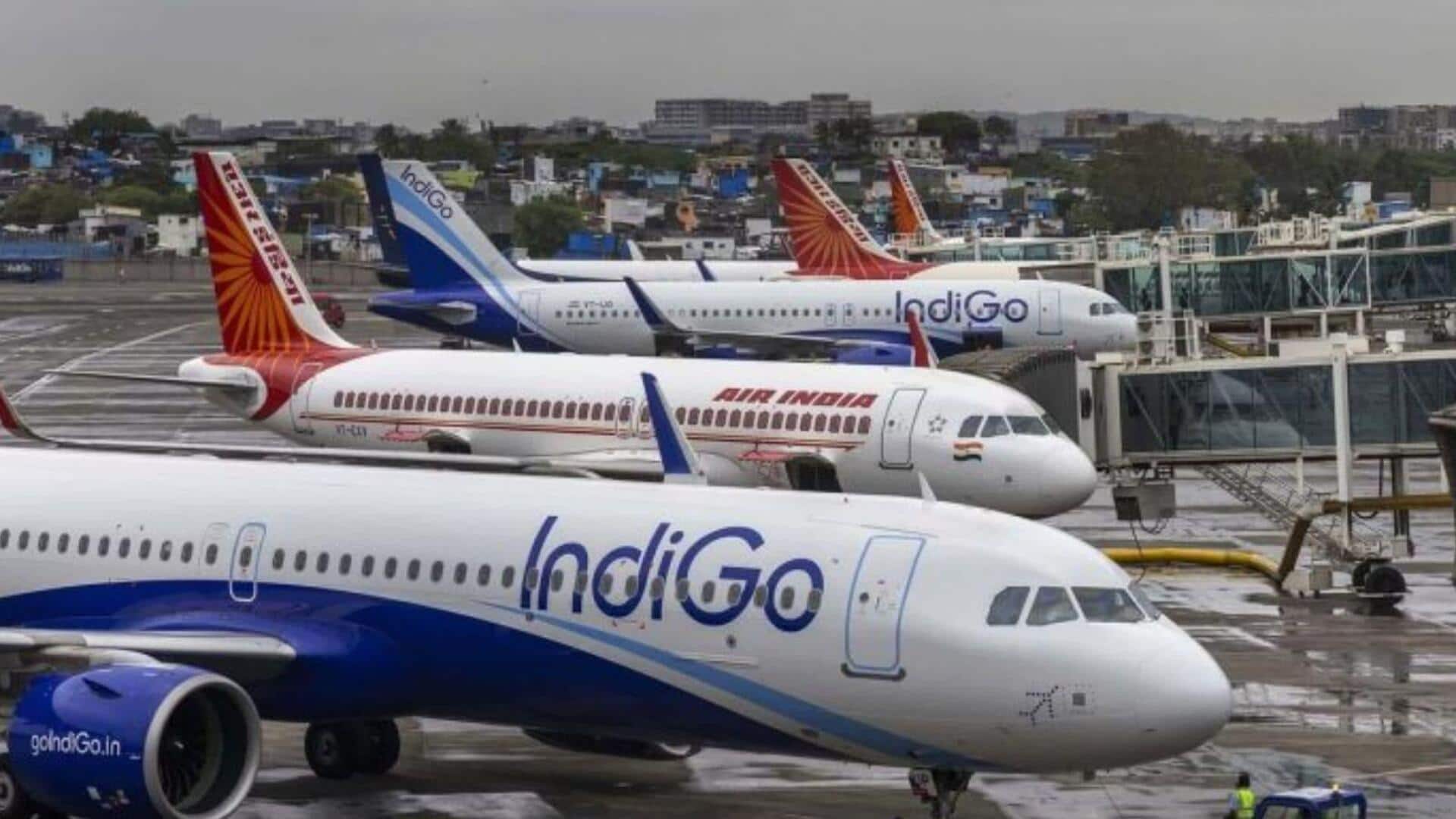
IndiGo, Air India urge government to relax crew fatigue rules
What's the story
India's leading airlines, IndiGo and Air India, have urged the government to reconsider proposed fatigue management rules for cabin crew. The Federation of Indian Airlines (FIA), which represents these carriers, has warned that the new regulations could disrupt flight schedules and limit growth prospects. The pushback comes after IndiGo canceled around 4,500 flights in December due to poor planning for new pilot fatigue management rules.
Regulation details
Proposed rules seek to increase minimum weekly rest period
The proposed cabin crew rules, introduced in October, seek to increase the minimum weekly rest period from 36 hours to 48. They also want to expand work limitations for night operations and mandate single hotel rooms for flight attendants on layovers. While this is not a requirement under international aviation rules, it is common among airlines outside India despite being more costly.
Industry impact
FIA highlights potential negative impacts of new regulations
In its letter to the Directorate General of Civil Aviation (DGCA), FIA expressed concerns that the single-room occupancy rule could strain hotel availability at several domestic and international airports. This could lead to crew being accommodated at far-off or sub-optimal locations. The letter also highlighted that these proposed rules go beyond global norms for managing cabin crew fatigue, such as classifying ultra-long-haul flights as those over 14 hours instead of 16 hours.
Market concerns
Proposed rules could reduce competitiveness of Indian airlines
The FIA also argued that the fatigue rules could "severely" limit long-term growth expansion and reduce the competitiveness of Indian airlines in the global market. The letter was sent to DGCA, but no response has been received from either the regulator or FIA. Notably, there is no fixed timeline for implementing these proposed rules as of now.
Regulatory push
FIA calls for phased introduction of new norms
The FIA is pushing the regulator to relax some of these rules, including reworking stricter night provisions like landing caps to follow fatigue science. They are also advocating for a phased introduction of these new norms. This lobbying effort comes as Air India faces financial losses partly due to an airspace ban imposed by Pakistan and a deadly crash, while IndiGo deals with regulatory scrutiny due to recent cancellations.