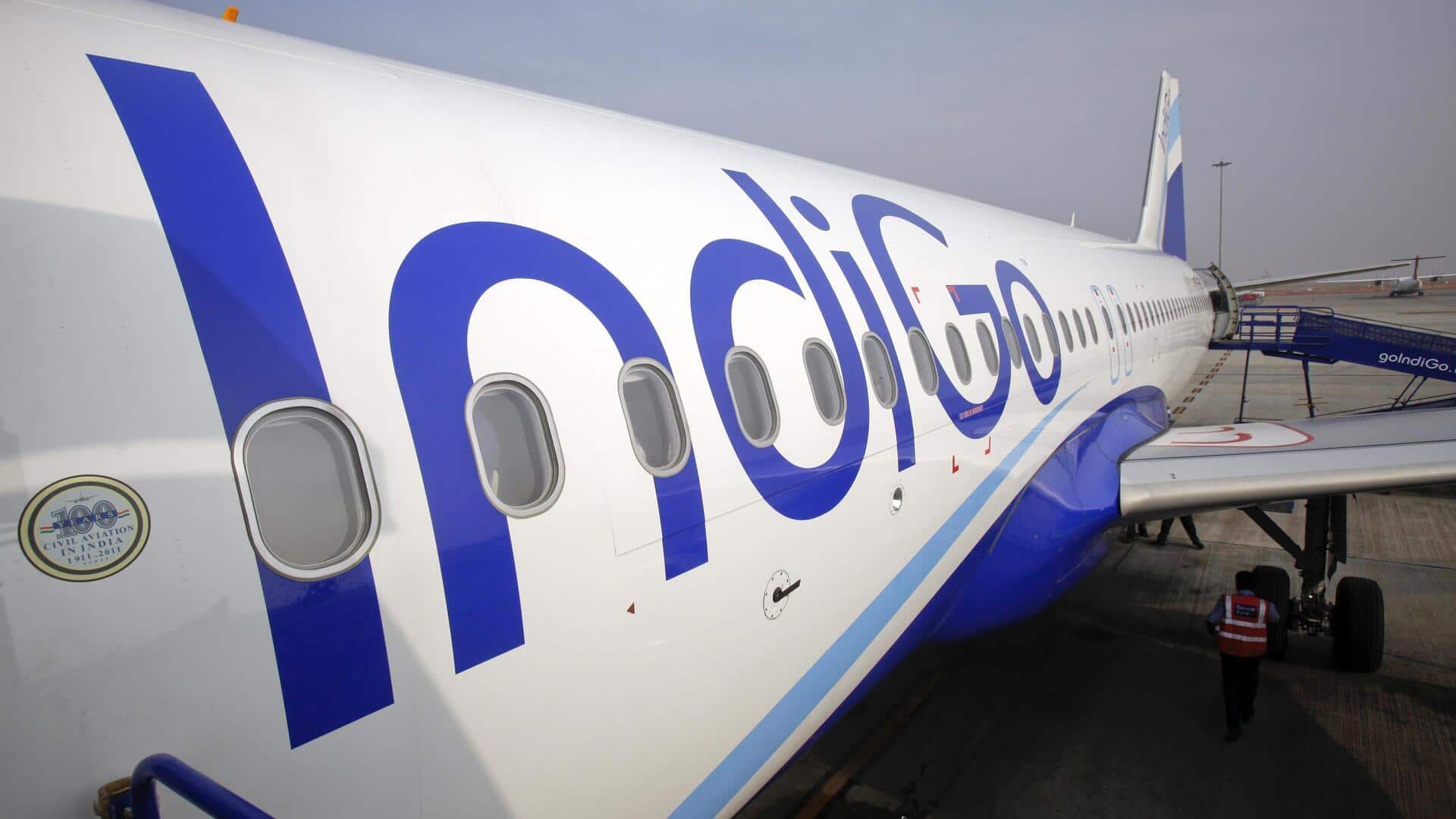
IndiGo crisis: Modi government seeks reconstitution of airline's board
What's the story
The Indian government is considering a reconstitution of the board of InterGlobe Aviation Ltd, the parent company of IndiGo, as per Moneycontrol. This comes after a network disruption incident last week that led to over 3,200 flight cancellations and left thousands of passengers stranded. The airline's governance structure has come under intense scrutiny due to these developments.
Board reconstitution
Government seeks aviation expertise in IndiGo's board
The government is pushing for a reconstitution of IndiGo's board, with an emphasis on bringing in members with extensive technical and operational experience in the aviation sector.
This is due to IndiGo's dominance in the Indian aviation industry, holding a 65% market share.
The idea is to have more people who can question network design, crew utilization, rostering, the aircraft ground time, and regulatory exposure with domain authority.
Board members
Current board composition
IndiGo's current board is led by Vikram Singh Mehta, a non-executive independent director and former chairman of Shell Group in India.
Other members include retired air chief marshal BS Dhanoa, ex-NITI Aayog CEO Amitabh Kant, lawyer Pallavi Shroff, ex-SEBI chairperson M Damodaran, and Anil Parashar.
Notably, the board also has Michael Whitaker and Gregg Saretsky who have backgrounds in aviation sector.
Industry gap
Lack of aviation industry experts on board
The absence of more aviation industry experts on IndiGo's board is being viewed as a gap by industry experts and government officials.
This is in stark contrast to the past when co-founder Rakesh Gangwal, an airline industry veteran, was actively involved in the company's board.
Gangwal had played a key role in shaping IndiGo's operational DNA with his experience at United Airlines and Air France.
Leadership transition
Gangwal's exit and its impact on IndiGo
After Gangwal's exit from IndiGo's board in February 2022, the airline transitioned to a professional-management model.
While this brought greater institutionalization, some argue it also diluted the founder-led operational micromanagement that had earlier acted as an informal shock absorber against regulatory and crew-related disruptions.
The current crisis is the first major system-wide operational stress IndiGo has faced since then.
Shareholding shift
Gangwal's stake reduction
After leaving IndiGo's board, Gangwal started a phased exit from his shareholding via multiple block trades over the years.
As of September 30, he held a 5.86% stake in the company, according to stock exchange data.
With each block trade, he reduced his influence further until he gave up any meaningful ability to shape governance or strategic direction.