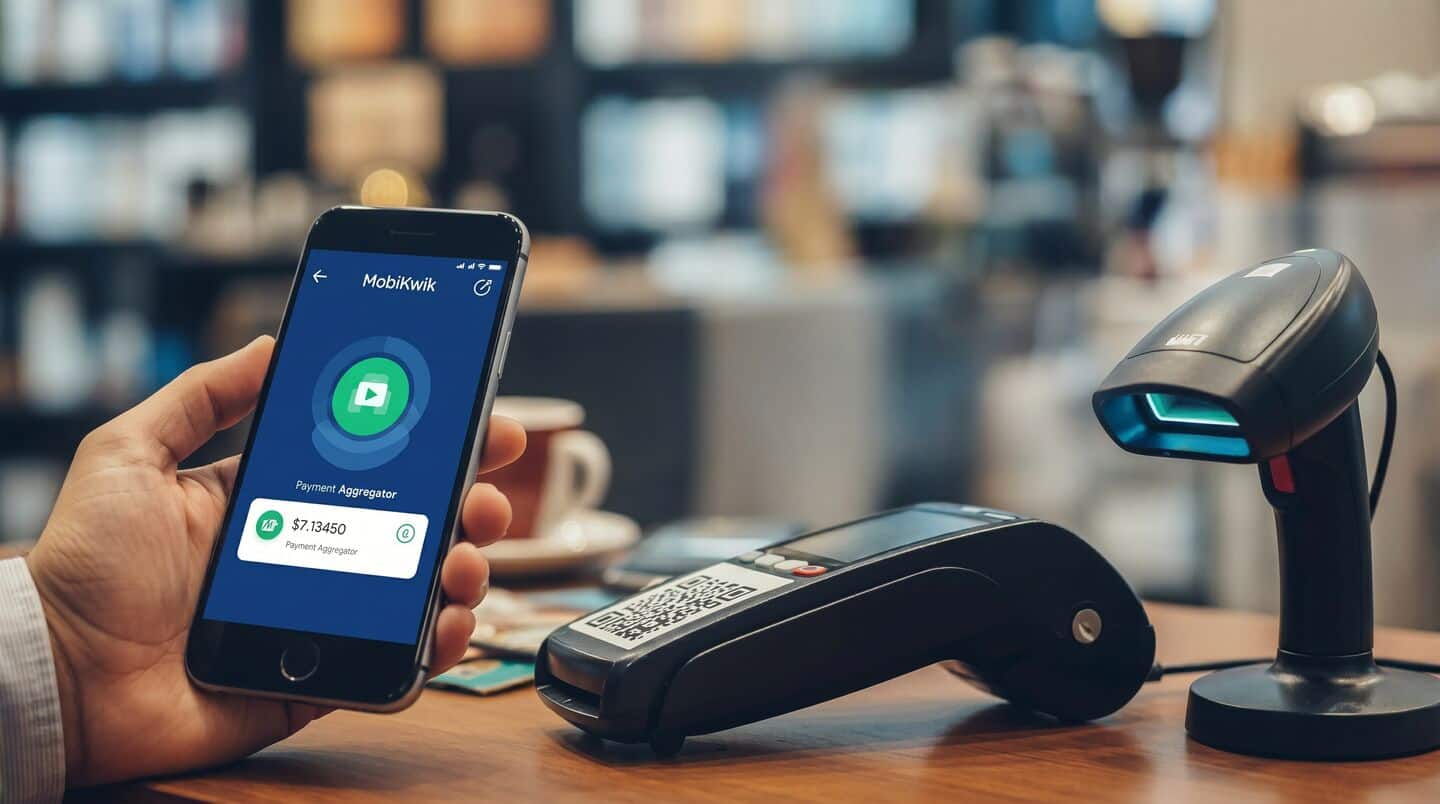
MobiKwik's shares soar 8% as RBI grants payment aggregator license
What's the story
Shares of MobiKwik surged by as much as 8% on Tuesday after the Reserve Bank of India (RBI) granted the company in-principle approval to operate as a Payment Aggregator - Physical (PA-P). The approval was given under the Payment and Settlement Systems Act, 2007. The development will allow MobiKwik to expand its offline merchant payments business across India.
CEO statement
Offline merchant payments driving India's digital economy
Commenting on the RBI's approval, MobiKwik co-founder, MD and CEO Bipin Preet Singh said that "offline merchant payments are emerging as one of the strongest growth drivers within India's digital economy."
He added this is especially true in under-penetrated markets beyond urban India.
Singh further emphasized that this PA-P approval bolsters their capacity to scale merchant payments infrastructure nationwide.
Expansion plans
MobiKwik identifies key focus segments for expansion
MobiKwik, which currently supports a network of 4.9 million merchants through services like UPI QR, Soundbox, and EDC machines, has identified small businesses, oil & gas outlets, and organized retail as key focus segments for the next 18-24 months.
The company plans to ramp up deployments of Soundbox and EDC significantly in these sectors.
Market opportunity
MobiKwik optimistic about monetization opportunities in offline payments
According to industry estimates from Redseer, India's offline merchant payments gross merchandise value opportunity is pegged at $1.8 trillion to $2 trillion by FY28.
MobiKwik believes that offline acquiring offers stronger monetization opportunities through MDR, subscription, and device rental economics as compared to consumer payments.
The company also said that the PA-P license strengthens its ability to build a compliant and scalable offline payment infrastructure in partnership with banks.