US-Iran war could push India's inflation above 5%
What's the story
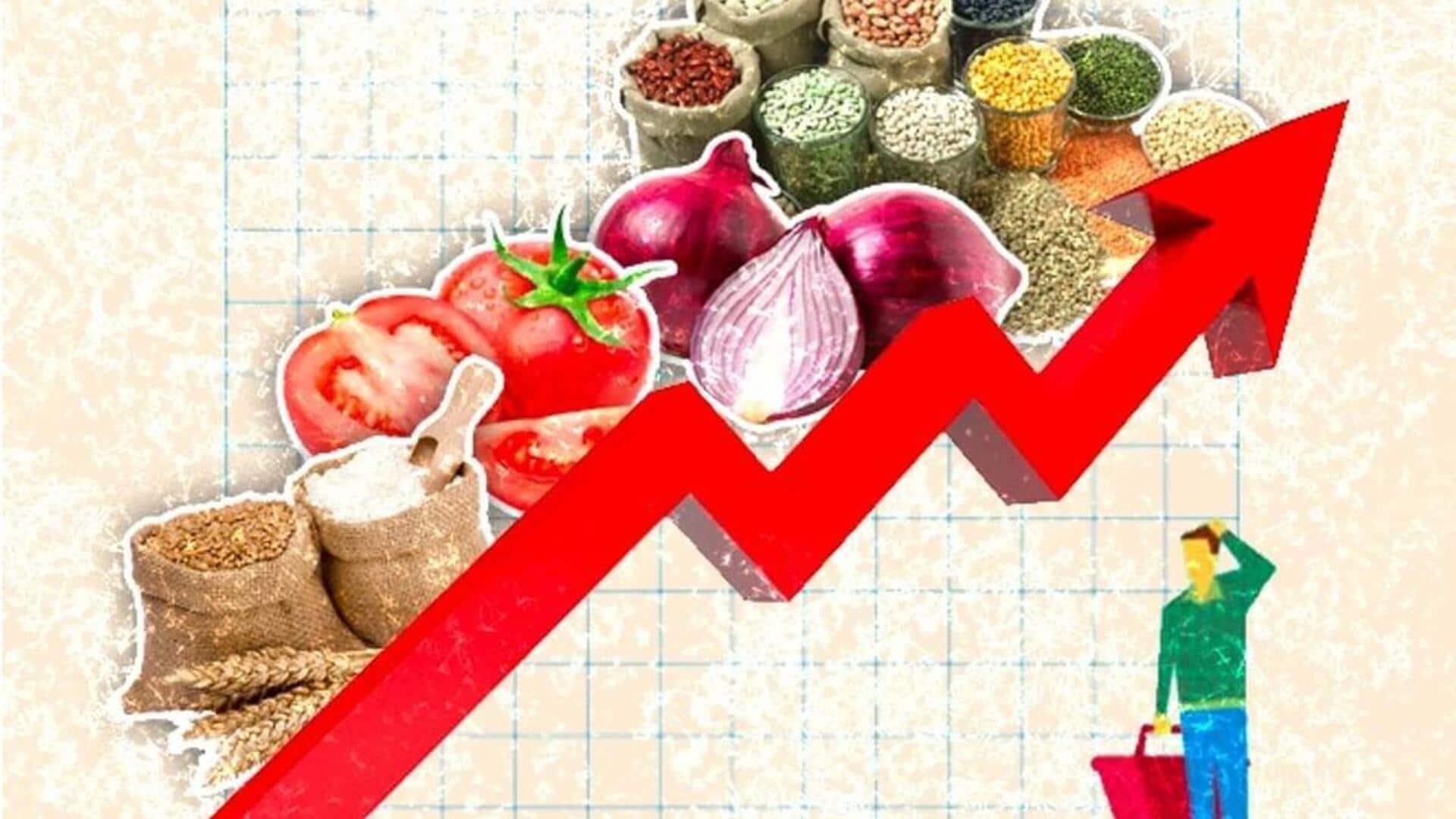
India's retail inflation, which stood at 3.2% in February, could rise sharply if the ongoing US-Iran war continues and higher energy prices start affecting domestic consumers. Economists expect March inflation to remain between 3.2-3.5%, but warn that energy prices—especially cooking gas and crude oil—could start exerting pressure in the coming months. Rajani Sinha, Chief Economist at CareEdge, said if average crude prices stay at or above $100/barrel, CPI inflation could exceed 5% in FY27 from a base case of 4.3%.
Price impact
Prolonged conflict could lead to price pass-through
Sinha further added that the intensity of inflationary pressure will depend on how long crude prices stay elevated.
Oil marketing companies may absorb crude prices up to about $90/barrel, but sustained levels above that could force a price pass-through to consumers.
Economists say that while a continuation for another 1-2 months could be managed through internal buffers and policy measures, a prolonged conflict with crude stabilizing at $100/barrel could see CPI inflation rise by around 100 basis points or 1%.
Forecast adjustment
Other agencies also raise inflation estimates
Nomura has also raised its FY27 inflation forecast to 4.5%, taking into account the impact of LPG price hikes and indirect spillovers through transportation and service costs.
ICRA's Aditi Nayar estimates that a 10% increase in crude oil prices could raise CPI inflation by 40-60 basis points if fuel costs are fully passed on to consumers.
This highlights energy prices as a key risk factor for India's retail inflation.
Inflation impact
Imported inflation well above headline inflation
SBI Research has noted that imported inflation, which constitutes 24.4% of the CPI basket, is currently at 5.7%, well above headline inflation.
Any disruption to shipping through the Strait of Hormuz could further push up prices of crude oil, fertilizers and natural gas.
Despite these risks, most economists believe India's inflation position is stronger than during previous energy shocks due to a more benign inflation backdrop today compared to 2022 when both food and core inflation were high.
Policy meeting
RBI may hold rates in April
The Reserve Bank of India's Monetary Policy Committee will meet in April, with economists expecting the central bank to keep policy rates unchanged while keeping an eye on developments in global energy markets.
Alexandra Hermann from Oxford Economics cautioned that a sharper oil shock could still change the policy outlook.
"In a more severe scenario, where global oil prices average around $140/barrel for two months, monetary policy settings may tighten by June," she said.