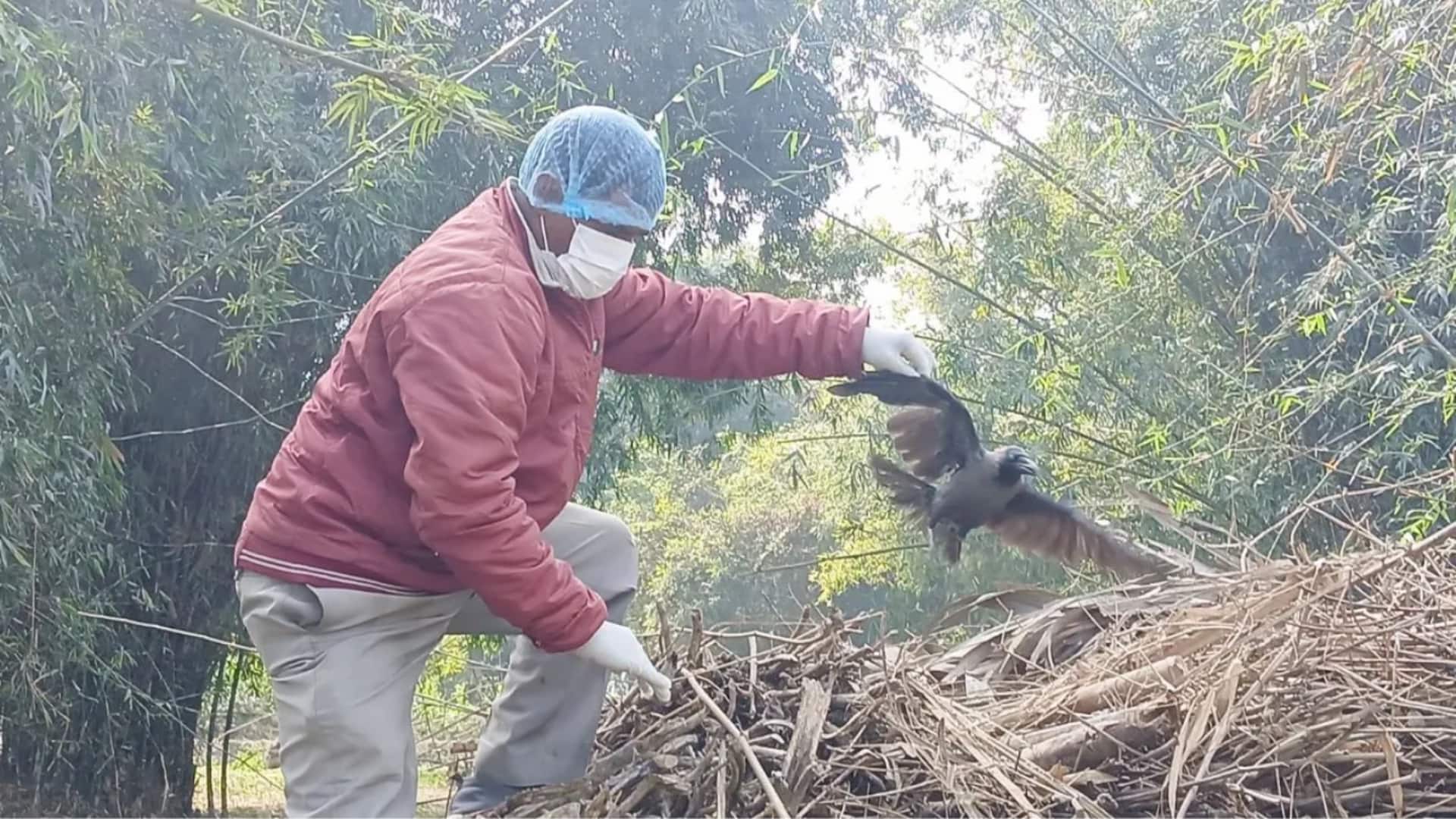
Bihar bird flu alarm: Dead crows test positive; know details
What's the story
Authorities in Darbhanga district of Bihar have confirmed an outbreak of bird flu after a sudden spike in crow deaths. The virus was identified as highly pathogenic avian influenza (HPAI) H5N1. Local officials sent samples from the dead birds to a laboratory in Bhopal for testing. The results confirmed the presence of the HPAI virus, according to a report by NDTV.
Health threat
What is bird flu?
The bird flu virus primarily affects birds but can also infect mammals, including humans.
Human infections are rare but can be severe and life-threatening.
HPAI H5N1 is recognized as a zoonotic disease with the potential for human infection under certain conditions.
In light of this, municipal and veterinary teams have started safe disposal of carcasses and serological testing of nearby poultry farms in Darbhanga district.
Infection spread
How does it spread?
Bird flu spreads through direct contact with infected birds or their secretions and contaminated environments such as cages or soil.
Handling poultry or eggs without proper hygiene can also lead to infection.
Human infections typically occur when enough virus enters the body through the eyes, nose, mouth, or inhalation of viral particles in high-risk settings.
Symptoms
What are the symptoms?
Symptoms of bird flu in humans can vary widely from mild to severe and may appear between two and eight days after exposure.
Common signs include fever, cough or sore throat, shortness of breath, muscle aches, fatigue, and headache.
In severe cases, respiratory distress and multi-organ failure have been reported.
Unlike seasonal flu, bird flu infections can progress rapidly and require urgent medical attention.
Prevention
What precautions should be taken?
Global health agencies recommend several key precautions to reduce the risk of bird flu infection.
These include avoiding direct contact with sick or dead birds, using personal protective equipment (PPE) if contact is unavoidable, and maintaining consistent hygiene by washing hands thoroughly after handling animals or potentially contaminated materials.
Cooking poultry products to safe temperatures and reporting unusual bird deaths to local animal health authorities are also advised.
Treatment
Is there a cure for bird flu?
For confirmed or suspected human bird flu cases, supportive care in a medical setting is essential.
This may include antiviral medications when recommended by health authorities and oxygen therapy for respiratory distress.
There is no single "cure," and treatment focuses on managing symptoms and complications under clinical supervision.
Individuals with underlying health conditions may be at higher risk for severe disease and require close monitoring.