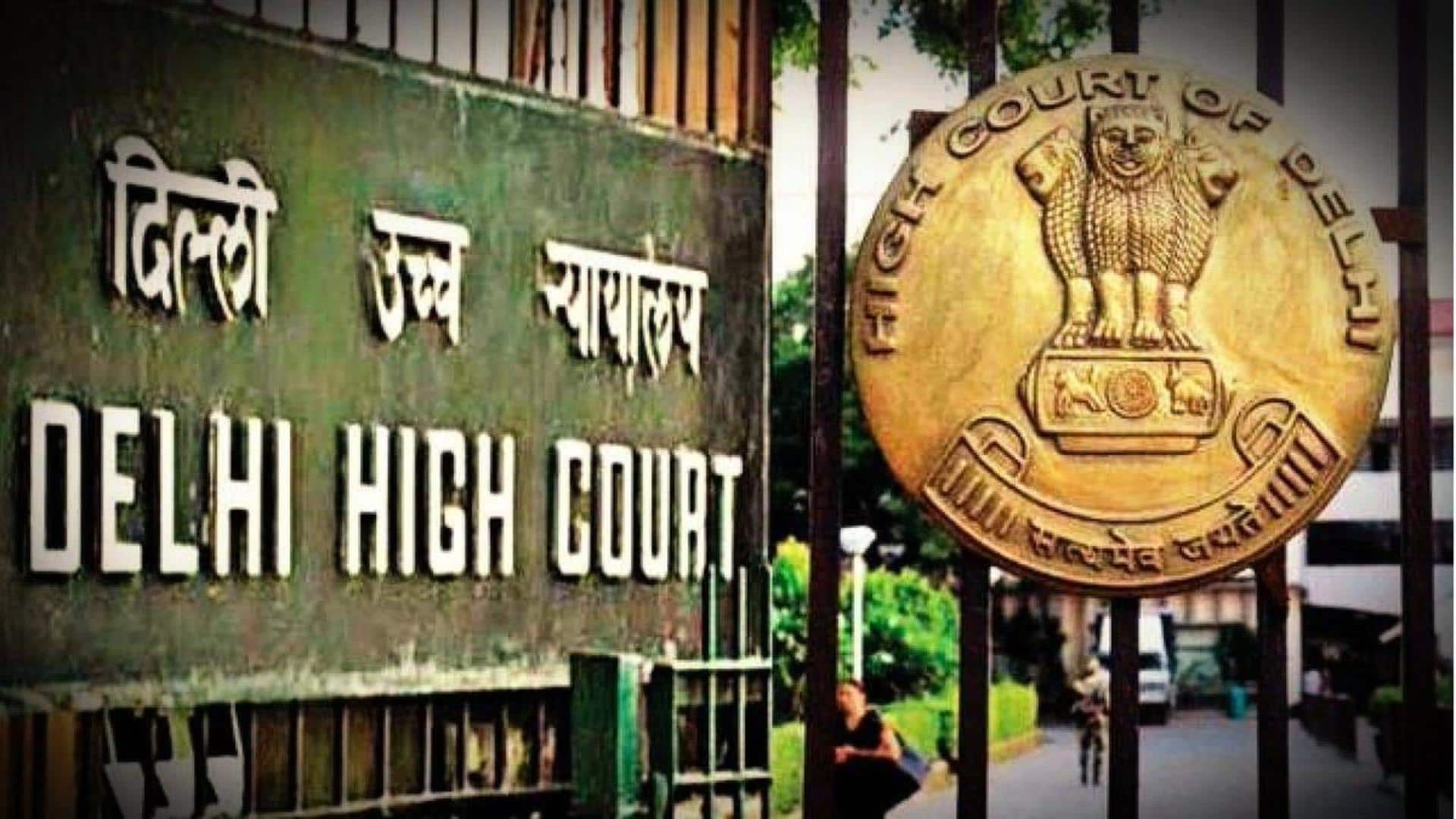
Delhi High Court upholds Centre's temporary ban on Telegram
What's the story
The Delhi High Court has upheld the central government's decision to temporarily ban the messaging platform Telegram ahead of the National Eligibility cum Entrance Test undergraduate (NEET-UG) re-examination on June 21. The ban will remain in place till June 22. Justice Tejas Karia dismissed Telegram's petition against the ban, stating that the government's measures are the least restrictive and that "it cannot be held that the order is disproportionate."
Judge
Government's grounds for ban were sufficient, well-founded: Court
The court determined that the government's grounds for the ban were sufficient, well-founded, and backed by reasons, given the urgent circumstances under which it took the decision. The court also determined that the proper procedure under Section 69A (blocking powers) of the Information Technology Act was followed.
"The orders do not suffer from non-application of mind. We have also held that under IT Act, there is no reason to exclude the platform from the ambit of 'information,'" the court added.
Ban justification
Ban imposed due to alleged use by cheating networks
The government had imposed the ban on Telegram over concerns that it was being misused by organized cheating networks involved in the NEET-UG controversy.
The decision came after the NEET examination was canceled over paper leaks and irregularities.
The Ministry of Electronics and Information Technology (MEITY) invoked Section 69A of the Information Technology Act, 2000, to block access to Telegram till June 22.
Later, it also directed Telegram to disable, till June 30, the message-editing feature for messages already posted.
Court proceedings
Telegram claimed it was unfairly singled out
Telegram had challenged the ban, arguing it was unfairly singled out while other platforms continued to operate, violating Article 14 of the Constitution.
The company claimed it held multiple meetings with government agencies and took down flagged content promptly.
The platform also claimed to have removed over 900 links relating to illegal NEET content and deployed artificial intelligence, machine learning algorithms, and manual moderation to detect infractions.
Examination reschedule
Centre's agruments
Solicitor General Tushar Mehta defended the government's action as "least restrictive" and necessary to curb paper leaks.
In an affidavit opposing Telegram's petition challenging the government's ban, the Centre accused messaging platform Telegram of becoming a "new dark web" for various illegal activities.
It claimed that Telegram is becoming a major hub for distributing leaked exam papers like NEET, child sexual exploitative and abuse material (CSEAM), drug trafficking, terrorism propaganda, and financial fraud.