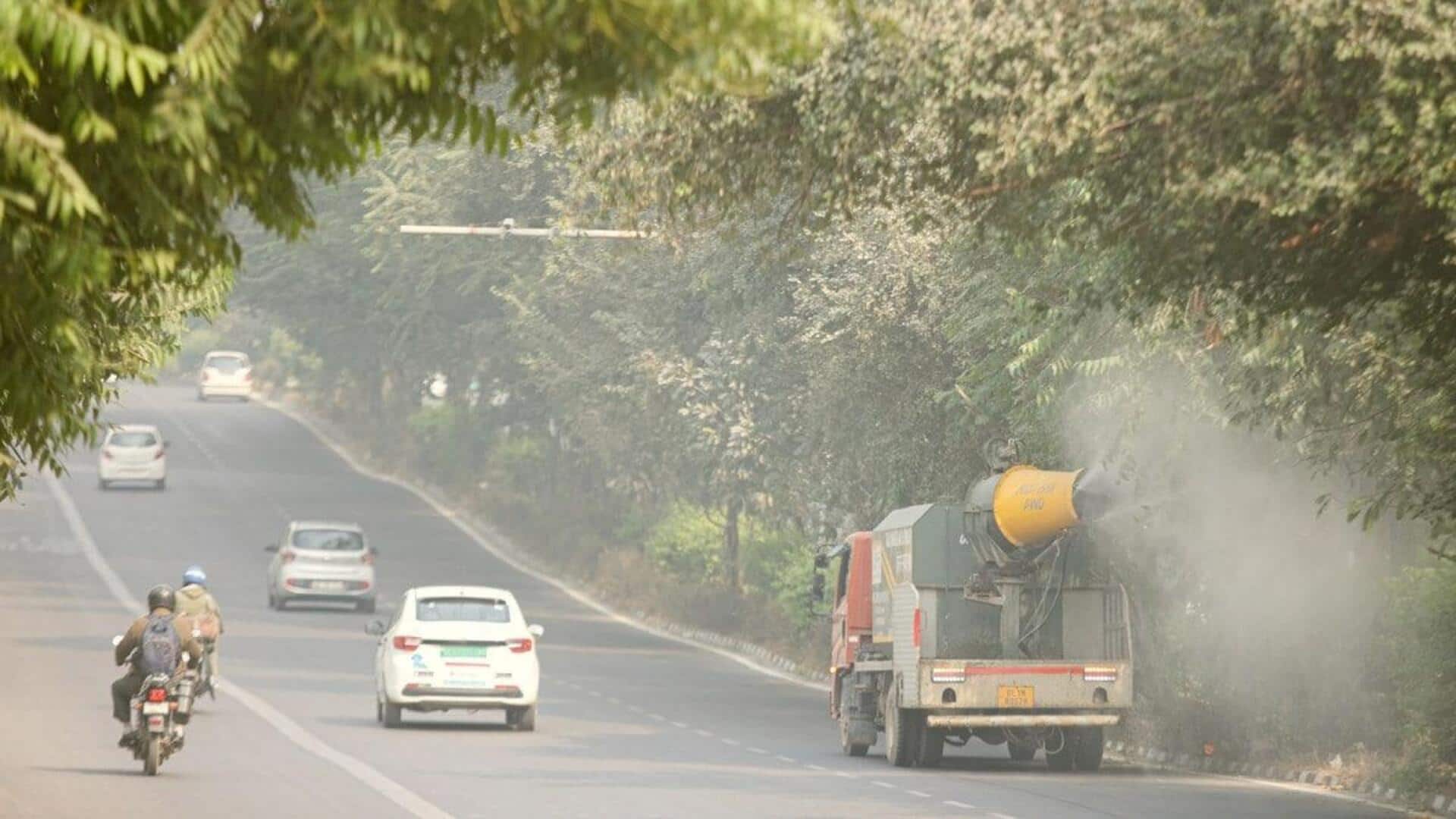
Delhi, Noida spent less than 3rd of clean air fund
What's the story
A study by the Foundation for Responsive Governance (ResGov) has found that Delhi and Noida have failed to fully utilize funds allocated under the National Clean Air Programme (NCAP). The study, titled "Financing Clean Air: What city-level data shows," analyzes NCAP allocations, releases, utilization, and air quality trends in these cities from 2020-21 to 2025-26. It highlights delays in fund disbursement and low utilization rates.
Fund details
Delhi's NCAP allocation and utilization
According to the study, between 2020-21 and 2025-26, Delhi was allocated ₹113 crore, only 54% of the potential amount it could have received.
Of this, ₹81 crore (72%) was released by December 23, 2025. However, only ₹14 crore (12%) was utilized for controlling road dust and construction waste.
The fund was used entirely on road dust and construction and demolition (C&D) waste control.
The fund utilization peaked in 2022-23 at 22% but fell sharply afterward, with 2% utilized in 2024-25.
Fund analysis
Noida's NCAP allocation and air quality trends
Meanwhile, Noida was allocated ₹127 crore under NCAP from 2020-21 to FY 2025-26.
By January 4 this year, ₹56 crore (44%) was released, with ₹30 crore (24%) utilized mainly.
The city's air action plan identifies various pollution sources like construction, industries, garbage burning and agricultural waste, yet most funds were spent on dust control until recently.
PM10 levels in Noida fell by 32% between FY 2017-18 and FY 2024-25 but remained above national and international standards.
Pollution concerns
Delhi's air quality and fund utilization challenges
Delhi's air quality has shown little improvement over the years, with PM10 levels rising from 192 ug/m3 to 213 ug/m3 between 2019-20 and 2024-25.
Annual PM10 levels have consistently exceeded national and World Health Organization standards.
The report also highlights that Delhi's clean air actions still rely on a source apportionment study from 2018, based on data from 2016-2017.
A real-time study submitted in 2023 remains unapproved, leaving planning dependent on outdated data.