'Pronounce bail orders in one day': SC tells high courts
What's the story
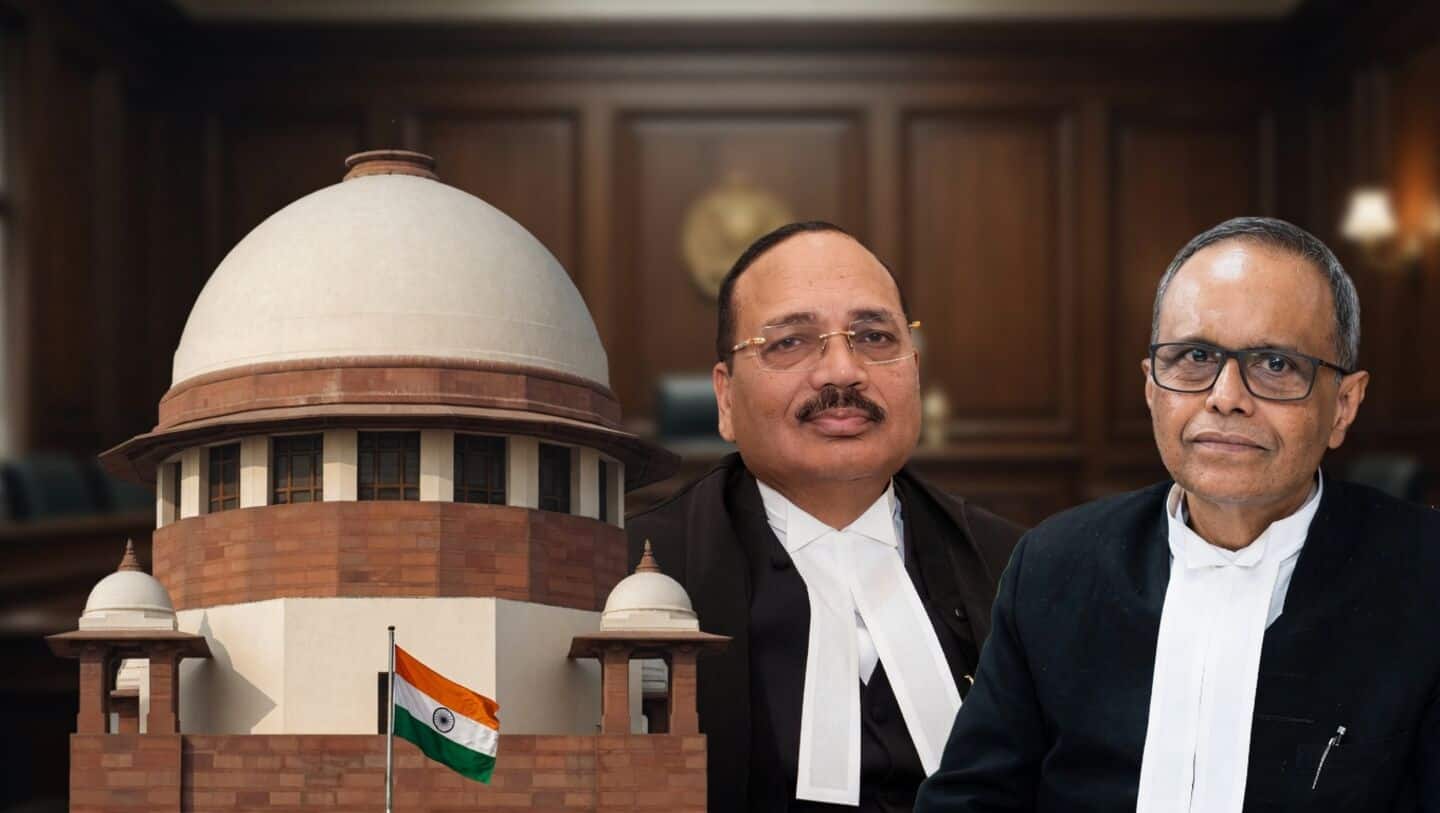
The Supreme Court has issued a set of binding directions to high courts to ensure timely delivery of judgments in reserved matters. A bench comprising Chief Justice Surya Kant and Justice Joymalya Bagchi has set a three-month time limit for delivering such judgments. The court also emphasized that bail applications should be heard and orders pronounced on the same day, with reserved decisions being pronounced and uploaded the next day.
Undertrials
Undertrial inmates must be released on same day as bail
Bail orders must be promptly reported to jail authorities on the same day they are issued. 4
Undertrial inmates must be released on the same day that their bail is granted, or no later than the next day, the top court said.
Furthermore, the trial court shall notify the appropriate High Court of compliance in such cases.
Guidelines
Bench may be changed if judgment not delivered in time
The new guidelines also state that if a reserved judgment isn't delivered within three months, it should be placed before the Chief Justice for further orders.
If not delivered within two more weeks, the case may be assigned to another bench.
Further, if a reasoned judgment is not uploaded within 30 days of pronouncement, the matter can also be assigned to another bench.
Case background
Petition on delayed judgments in criminal appeals
The issue of delayed judgments came to light when a petition was filed against the Jharkhand High Court for not pronouncing judgments in certain criminal appeals.
The petitioners, four convicts from Scheduled Tribes and Other Backward Classes, alleged that their criminal appeals, reserved by the Jharkhand High Court in 2022, remained pending for two to three years without judgment.
They argued that their right to life and personal liberty under Article 21 was violated due to these delays.
Proposed measures
Draft guidelines submitted to address delayed judgments issue
To address this issue, amicus curiae Advocate Fauzia Shakil had submitted draft guidelines.
These included delivering reasoned judgments within three months, displaying details of long-pending reserved judgments on court websites, and prioritizing matters involving personal liberty.
Similar proposals were made for district courts too.
The draft also suggested administrative monitoring by Chief Justices of High Courts and public disclosure of cases with delayed judgments beyond three months.