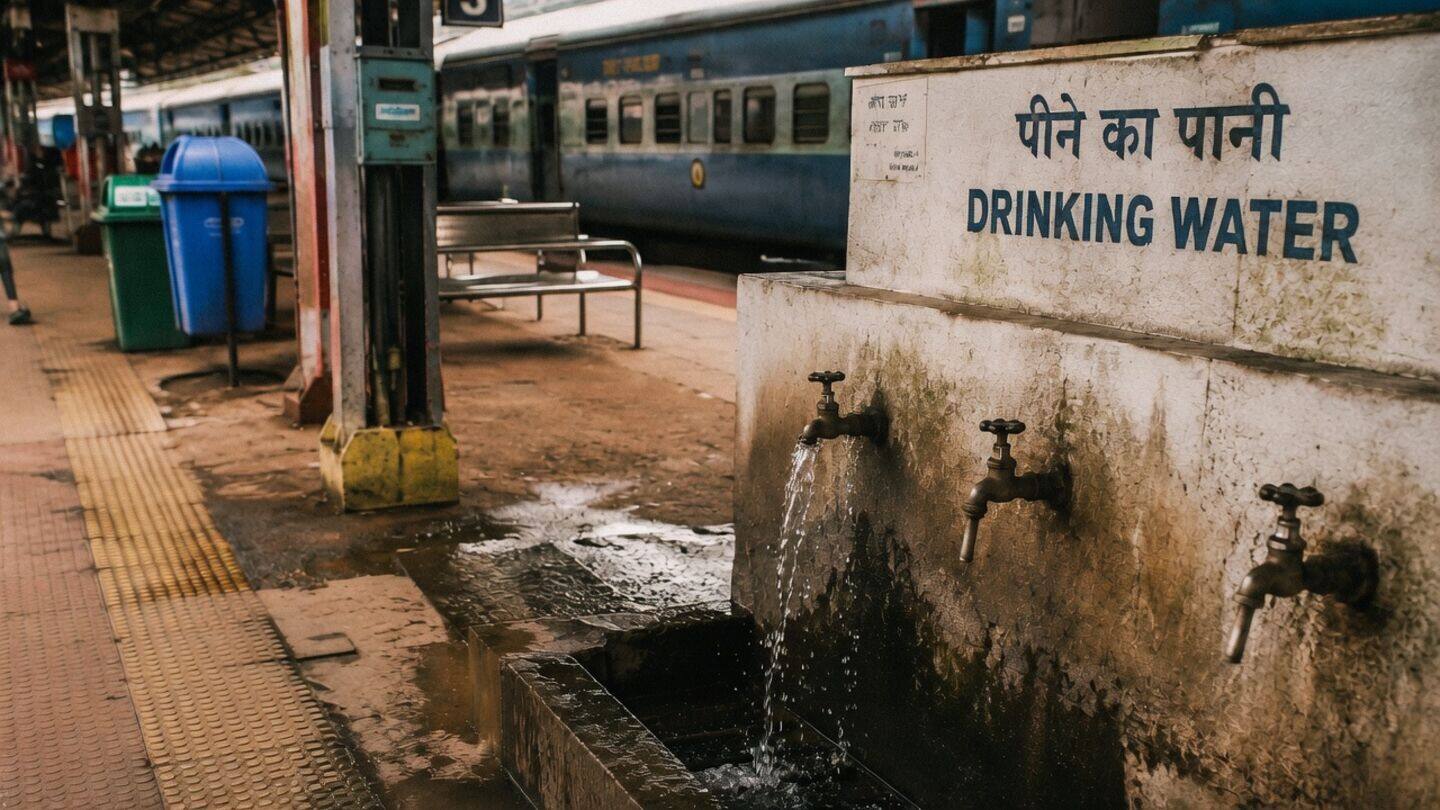
E. coli found in 8 railway station water-coolers, including Mumbai
What's the story
A recent audit by the Comptroller and Auditor General (CAG) has revealed alarming levels of E. coli bacteria, an indicator of fecal contamination, in water coolers at eight Indian railway stations, including major hubs like Mumbai and Hyderabad. The report examined passenger amenities at 512 non-suburban railway stations across the country and discovered fecal contamination in the water supply systems at these locations.
Contamination details
E. coli detected in drinking water at these stations
The audit found E. coli in water cooler samples from Coimbatore and Palakkad Junctions in Southern Railway; Hyderabad in South Central Railway; Chhatrapati Shivaji Maharaj Terminus (CST), Bhiwandi Road, Kalyan and Lonavala in Central Railway; and Madhupur in Eastern Railway.
The presence of E. coli is a serious health concern, as some strains can cause illnesses ranging from diarrhea to more severe health complications.
Amenity shortfalls
Major gaps in basic passenger amenities across stations
The CAG audit also highlighted major gaps in basic passenger amenities across the stations.
It found that over 89% of the stations did not meet Minimum Essential Amenities standards laid down by the Railway Board in April 2018.
Basic facilities like drinking water, waiting halls, seating, toilets and urinals were either unavailable or below prescribed norms at these locations.
Facility deficiencies
NSG-1 stations also lacking in essential facilities
Even major NSG-1 stations such as CST, Howrah, Sealdah, New Delhi and Mumbai Central were found lacking in facilities like seating, sanitation and electronic train information boards.
The audit identified deficiencies in drinking water taps at 12 NSG-1 stations, fans and water coolers at eight each and signage at five.
Action plan
Union Railways Minister orders immediate corrective measures
In light of these shocking findings, Union Railways Minister Ashwini Vaishnaw has ordered immediate corrective measures.
The Railway Ministry plans to install a "tank-to-tap" filtration system at around 20,000 locations across the railway network.
Indian Railways operates 5,908 non-suburban stations and in 2023-24, it operated more than 7,424 non-suburban passenger trains daily, transporting around 292.4 crore passengers during that period.