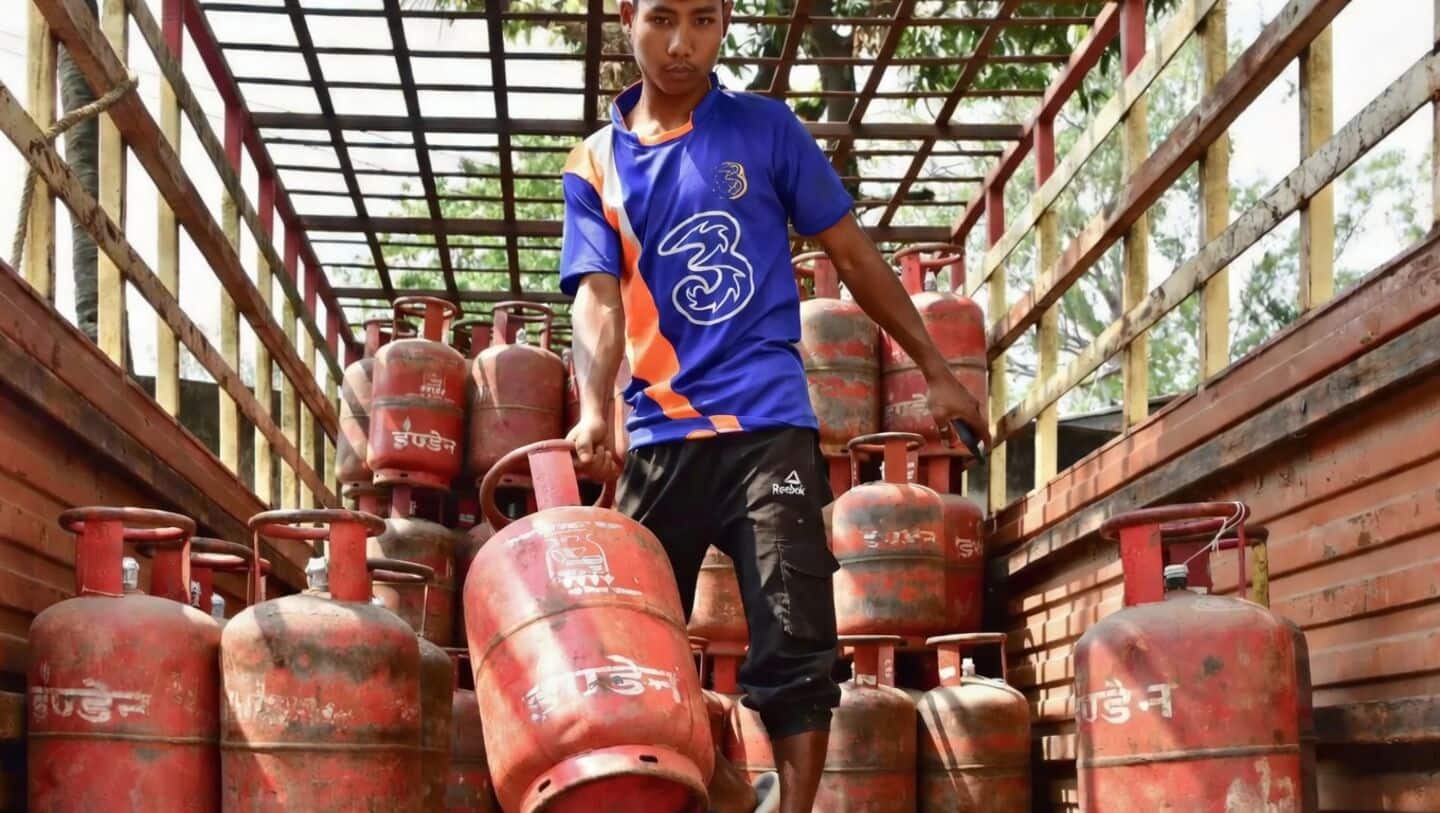
Government increases commercial LPG allocation of states to 70%
What's the story
The central government has announced a 20% increase in the allocation of commercial liquefied petroleum gas (LPG), with a focus on industries like steel, automobile, textile and other labor-intensive industries. "Priority will be given to those industries where piped gas is not a substitute," Union Minister for Petroleum Hardeep Singh Puri said. With this announcement, the total commercial LPG allocation now stands at 70% of pre-crisis levels after initial curtailments due to global disruptions in oil and gas supplies.
Supply disruptions
Initial curtailments and subsequent allocation boost
The ongoing four-week-long conflict in the Middle East has disrupted global oil and gas supplies, especially with the blockade of the Strait of Hormuz by Iran.
In light of these disruptions, the government initially curtailed LPG supplies to commercial establishments such as hotels to prioritize household kitchens.
On March 21, an additional 20% allocation was approved for priority sectors, including restaurants, dhabas, hotels, and industrial canteens, among others.
Twitter Post
Read order here
Union Minister for Petroleum and Natural Gas Hardeep Singh Puri says, "Taking a further step to ease supply of commercial LPG, Government of India has decided to increase the commercial LPG allocation of states to 70%, with 20% allocation given to industries such as steel,… pic.twitter.com/Ts3d0jOwLv
— ANI (@ANI) March 27, 2026
Industry focus
Focus on labor-intensive sectors
The additional allocation now focuses on labor-intensive industries such as steel, automobile, textile, dye chemicals and plastics.
These sectors are crucial as they support other essential industries.
A letter by the Secretary of the Ministry of Petroleum and Natural Gas (MoPNG), Dr. Neeraj Mittal, also said that the government has prioritized process industries or those needing LPG for specialized heating that cannot be replaced by Natural Gas.
Domestic production
Increased domestic production
Meanwhile, India's domestic refinery production has been increased by 40%, with daily LPG output reaching 50 TMT.
This is more than 60% of the requirement against a total daily requirement of around 80 TMT.
Consequently, net daily import requirements have come down to only 30 TMT, meaning India is now producing much more than it needs to import.
LPG imports
One month's supply secured
Official data reveals that 800 TMT of inbound LPG cargoes have been secured and are on their way from the United States, Russia, Australia among other countries.
These shipments are expected to arrive at India's 22 LPG import terminals.
The government has ensured around one month's supply, with more procurement being finalized continuously to meet domestic demands.