How US blockade of Hormuz may hit India's energy security
What's the story
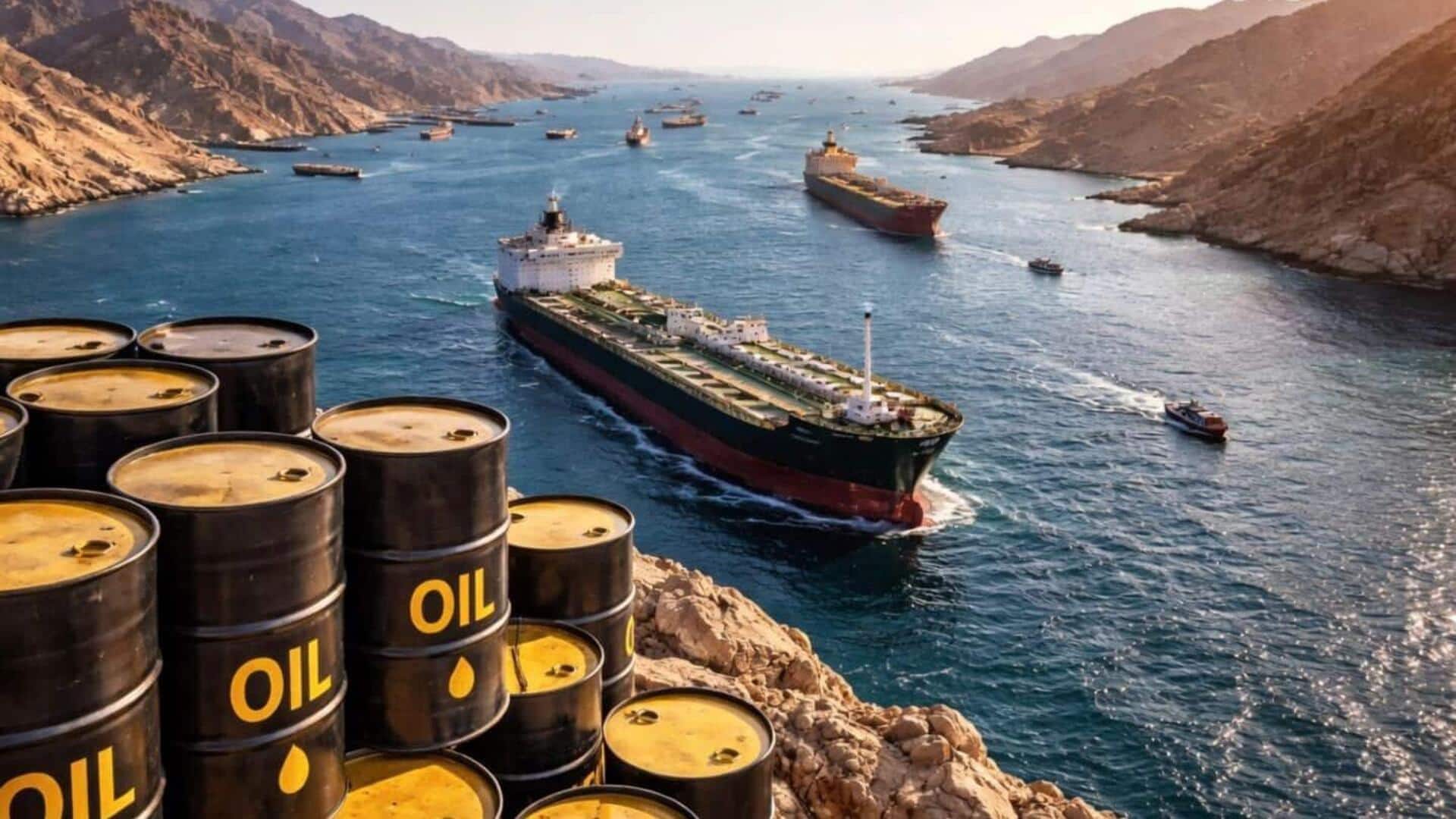
India's energy security is under fresh threat as the United States has started blocking ships from entering or exiting Iranian ports via the Strait of Hormuz. The move comes after peace negotiations with Tehran failed. The blockade is particularly concerning for India, which recently imported its first shipment of Iranian oil in seven years to meet its energy needs amid ongoing conflicts in Iran.
Supply disruption
Expiration of US waiver on Russian crude purchases
The US blockade has come at a time when India is already facing an energy supply crunch.
The expiration of a US waiver on Russian crude purchases on April 11 has further strained India's energy supplies.
This waiver had allowed India to import 1.5 million barrels per day of Russian crude in March, but its lapse now leaves India scrambling for alternative sources.
Import dependency
India's dependence on oil imports
India is the world's third-largest oil importer, meeting over 85% of its crude oil requirements through imports.
The country has already lost around 3 million barrels per day of crude that used to pass through the Strait of Hormuz.
Mukesh Sahdev, chief oil analyst at XAnalysts, said India is facing a growing supply crunch "with the loss of Iranian barrels, plus not getting the Russian barrels."
Reserve vulnerability
Limited oil reserves and economic impact
India's reserves are only enough to cover around 30 days of supply shocks, unlike China which has around 300 days' worth of oil reserves.
The ongoing conflict in West Asia has already started affecting India's economy.
In March, HSBC's flash Purchasing Managers' Index showed a slowdown in private sector activity due to domestic demand and inflationary pressures linked to the conflict.
Economic forecast
Growth forecast at risk
India's finance ministry has warned that its growth forecast for the fiscal year ending March 2027 is at risk due to rising energy costs and supply chain disruptions from the Iran war.
The current situation highlights India's struggle to balance its economic needs with US strategic expectations.
Last year, Washington imposed a 25% tariff on Indian exports over allegations of indirect funding of Russia's war in Ukraine through discounted Russian crude imports.
Strategy constraints
India's precarious balancing act
In a bid to secure a trade deal with the US, India reduced its Russian oil purchases and increased imports from the Middle East.
However, this strategy was disrupted by regional conflicts that affected Middle Eastern supplies.
Samir Kapadia of Vogel Group said Indian policymakers are often caught between balancing expectations from Washington on energy supplies from Russia or Iran.
Government response
Petroleum ministry downplays risks
Despite these challenges, India's Ministry of Petroleum and Natural Gas has sought to downplay immediate risks.
The ministry said that "all refineries were operating at high capacity and that crude inventories were adequate."
However, experts believe that without an extension of the US waiver on Russian crude purchases, oil prices could rise further.