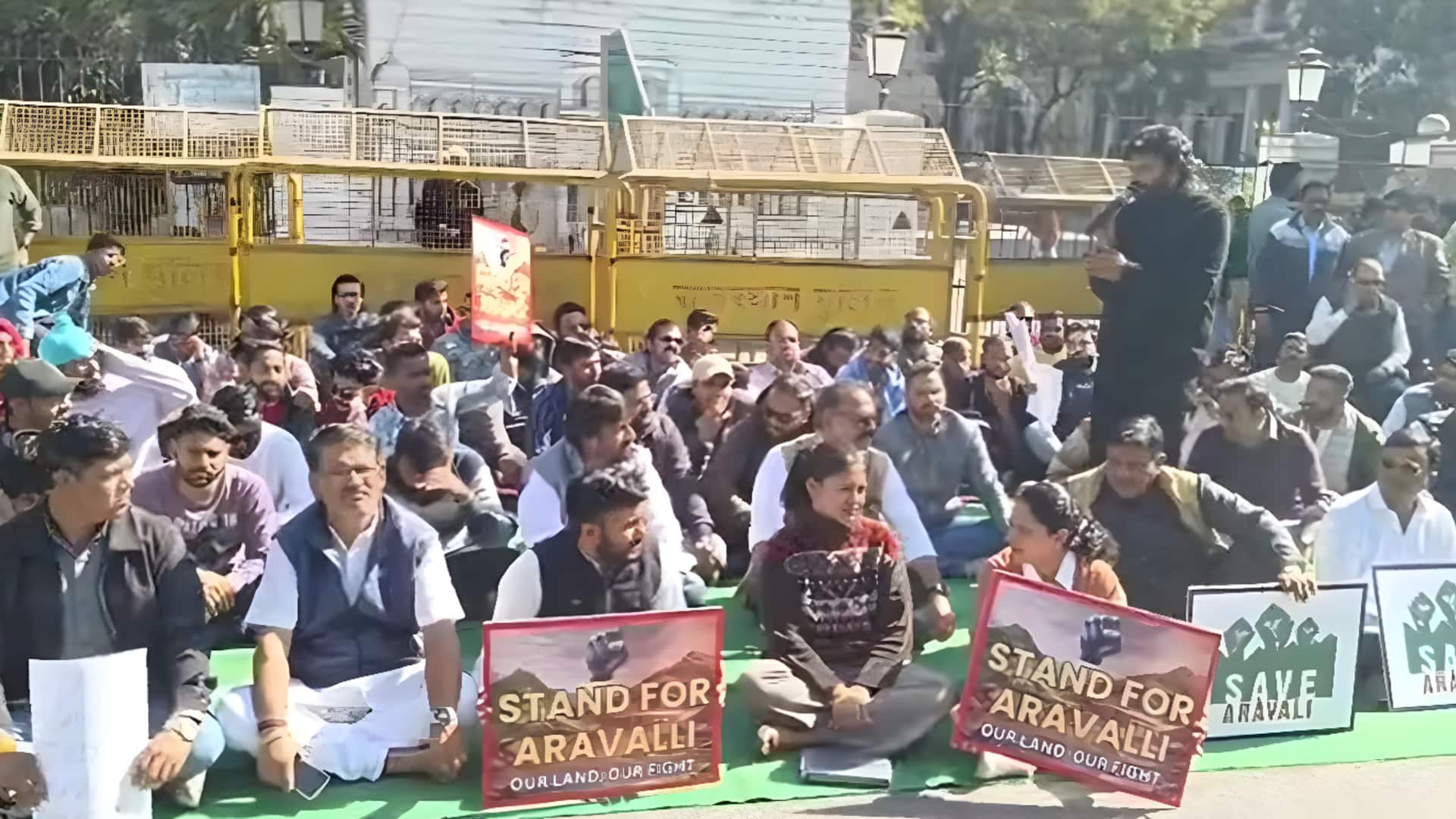
'Taking ecology, economy together': Union Minister denies Aravalli mining misinformation
What's the story
Union Minister Bhupender Yadav has clarified the government's position on mining in the Aravalli range. He said misinformation was being spread about a recent Supreme Court decision regarding the country's oldest mountain range. The minister stressed that the government has always supported conservation efforts under Prime Minister Narendra Modi's leadership. Yadav said that under the new norms, the mountain range remains under able ecological protection, with mining activity only being allowed in a mere "0.19% of the area."
Court's involvement
Supreme Court's role in Aravalli conservation
Yadav said the Supreme Court has set up a technical committee to look into mining-related issues.
He explained the "100-meter" criterion refers to measuring from the top of a hill to its bottom and stressed that no mining is allowed in Delhi-NCR.
The minister also highlighted Paragraph 38 of the judgment, which states that new mining leases will only be granted in cases of critical need.
Ecological importance
Aravalli range's ecological significance emphasized
Yadav also highlighted the Aravalli range's ecological value, which is home to 20 wildlife sanctuaries and four tiger reserves.
He said the Supreme Court decision has cleared false allegations and misinformation on this issue.
The court has also suggested a management plan for scientific management of the Aravallis, supporting government studies and conservation efforts.
Mining concerns
Forest Survey of India flags mining activities
Meanwhile, the Forest Survey of India (FSI) has raised concerns over mining activities on 10,000 hills in the Aravalli range.
The Central Empowered Committee (CEC) asked for a halt to these activities through the Supreme Court.
However, the Centre argued that only formations above 100 meters should be considered part of the Aravallis under the "100-meter hill" principle applied in Rajasthan according to Richard Barfi guideline.