India once part of 'Fragile Five': PM Modi highlights transformation
What's the story
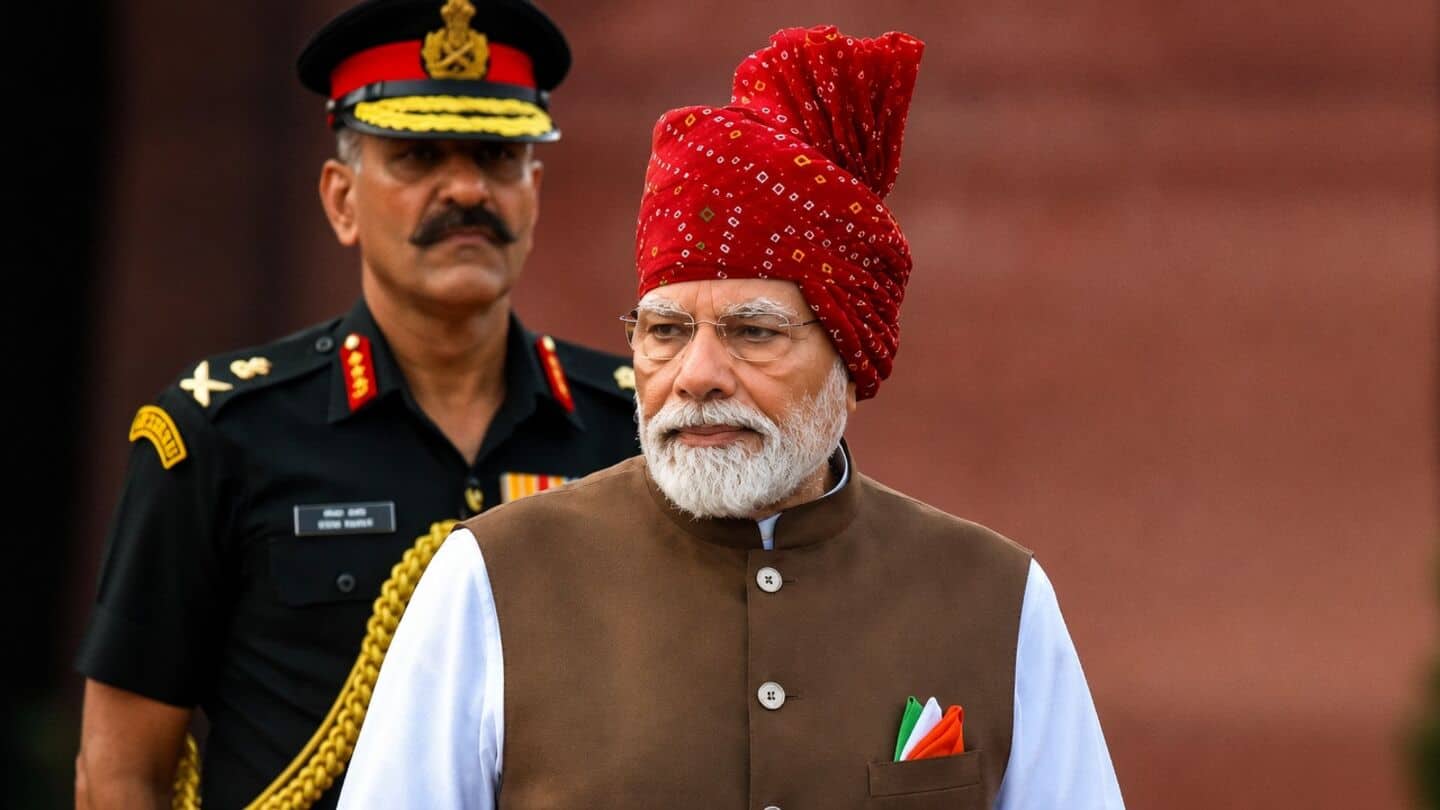
Prime Minister Narendra Modi, during his 80th Independence Day address from the Red Fort, recalled how India was once part of the "Fragile Five" economies. The term was coined by global investment bank Morgan Stanley in 2013 to describe five emerging-market economies that were particularly vulnerable to external financial shocks. The group included Brazil, Indonesia, South Africa, and Turkey along with India.
Economic challenges
Why was India labeled as 'Fragile Five'
At the time of being labeled as "Fragile Five," India was grappling with high inflation, a widening current account deficit, and a depreciating rupee.
The US Federal Reserve's decision to gradually taper its bond-buying program had raised fears of higher interest rates, prompting foreign investors to pull out from emerging markets like India.
Economic recovery
India's turnaround and exit from 'Fragile Five'
By 2014, India had exited the "Fragile Five" group as its external balances improved and foreign exchange reserves strengthened.
The International Monetary Fund (IMF) even noted that India had made the sharpest macroeconomic turnaround among emerging economies.
This turnaround was attributed to measures taken by then Reserve Bank of India Governor Raghuram Rajan and government initiatives to reduce the current account deficit.
Global ranking
India's growth since then
Since then, India has continued to grow and is now the world's fourth-largest economy after the United States, China, and Germany.
The "Fragile Five" label has since been used by Modi and his party to highlight the contrast between India's economic situation during the Congress-led United Progressive Alliance period and its performance after 2014.