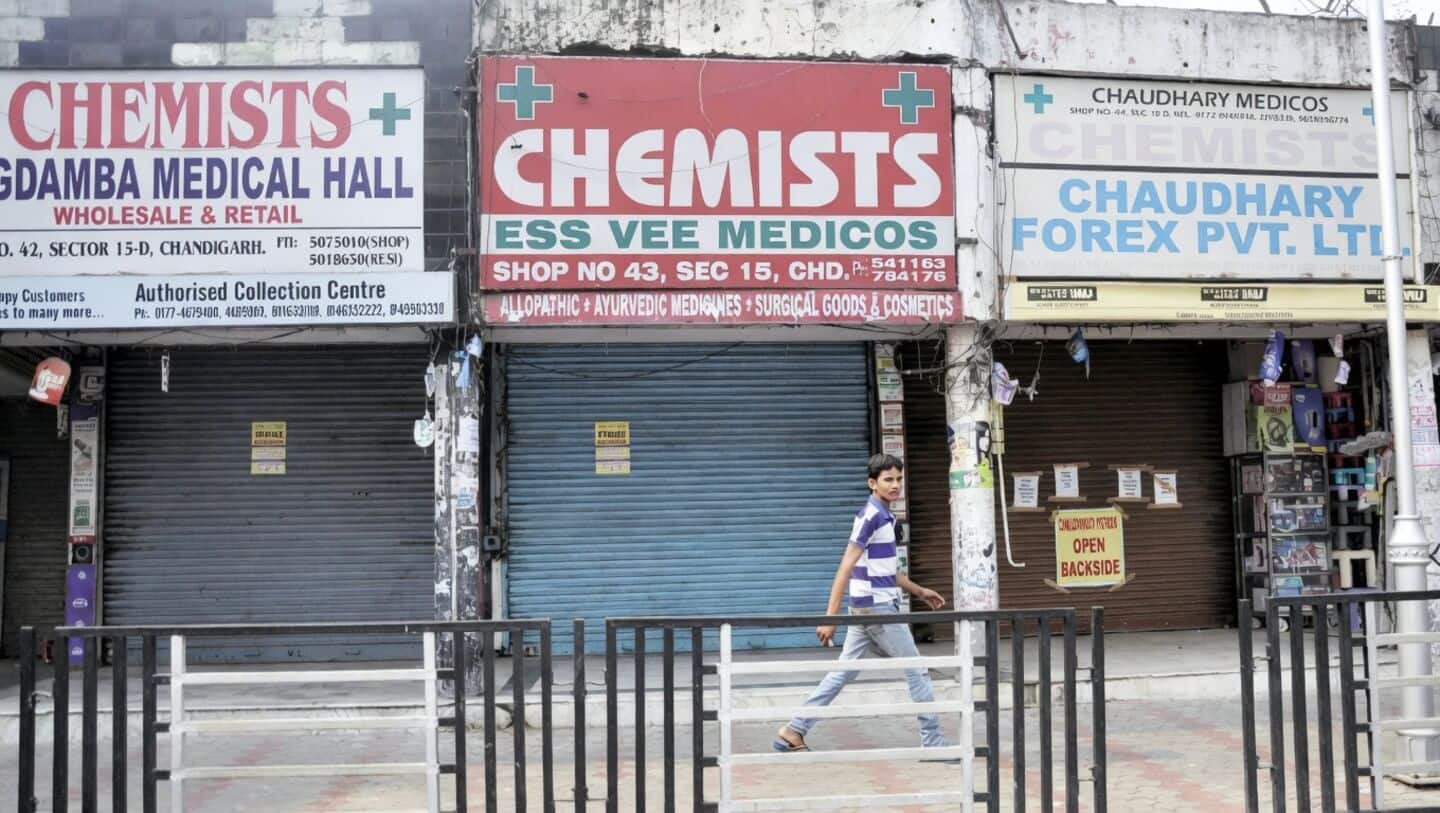
Why chemists are going on nationwide strike on May 20
What's the story
The All-India Organisation of Chemists and Druggists (AIOCD) has called for a nationwide strike on May 20. The protest is likely to disrupt the supply of medicines in many parts of India. The AIOCD, which represents around 12.4 lakh chemists, pharmacists, and drug distributors across the country, intends to highlight regulatory loopholes that have allegedly allowed e-pharmacies and instant medicine delivery platforms to operate without adequate oversight.
Regulatory issues
AIOCD demands withdrawal of 2 notifications
The AIOCD is demanding the withdrawal of two notifications: GSR 220(E) and GSR 817(E).
The association believes these provisions have allowed online pharmacies to operate in a legal gray area without proper regulation.
"There is a growing concern about e-pharmacies and instant delivery apps fulfilling wrong or fake prescriptions... We understand that online pharmacies are here to stay, but they should be regulated as rigorously as the brick-and-mortar ones," Rajiv Singhal, general secretary of AIOCD, told The Indian Express.
Uncertainty persists
GSR 817(E) has been in draft stage for years
GSR 817(E) was introduced eight years ago to regulate e-pharmacies in India. It proposed a registration system for online pharmacies, prescription verification norms, operational safeguards, and penalties for violations.
However, it has never been formally notified or withdrawn.
Singhal said that the GSR 817 E is an eight-year-old draft notification that was never notified or withdrawn: "The review has been going on for years," he reportedly said.
Pandemic provision
GSR 220(E) was an emergency measure during COVID-19
On the other hand, GSR 220(E) was introduced during the COVID-19 pandemic as an emergency measure to allow registered pharmacies to deliver medicines to consumers' doorsteps.
The chemists' association argues that while this measure may have been justified during the pandemic, it is now being misused by e-pharmacies as a loophole to operate without a specific legal framework for online medicine sales.
"This was an emergency measure for the pandemic," Singhal was quoted as saying.
Safety and fairness
Deep discounting and predatory pricing distort market
The AIOCD has also raised concerns over patient safety and market competition.
It alleges that some online platforms dispense medicines against fake or improperly verified prescriptions, including those issued by unregistered practitioners.
The association also argues that deep discounting and predatory pricing by large corporate-backed e-pharmacies distort the market.
According to the AIOCD, discounts sometimes exceeding 50% are not sustainable for smaller brick-and-mortar pharmacies, creating unfair competition.
Ongoing discussions
AIOCD met with apex drug regulator last month
Representatives of the AIOCD met with the apex drug regulator last month but were only assured that the matter would be reviewed. Health ministry officials have said that the issue is under consideration.
However, some state-level pharmacy associations, including those in West Bengal, may not participate in the strike.
The national association disputes this claim and maintains that its protest will be nationwide.
If widely observed, there could be a temporary disruption in medicine availability across India on May 20.