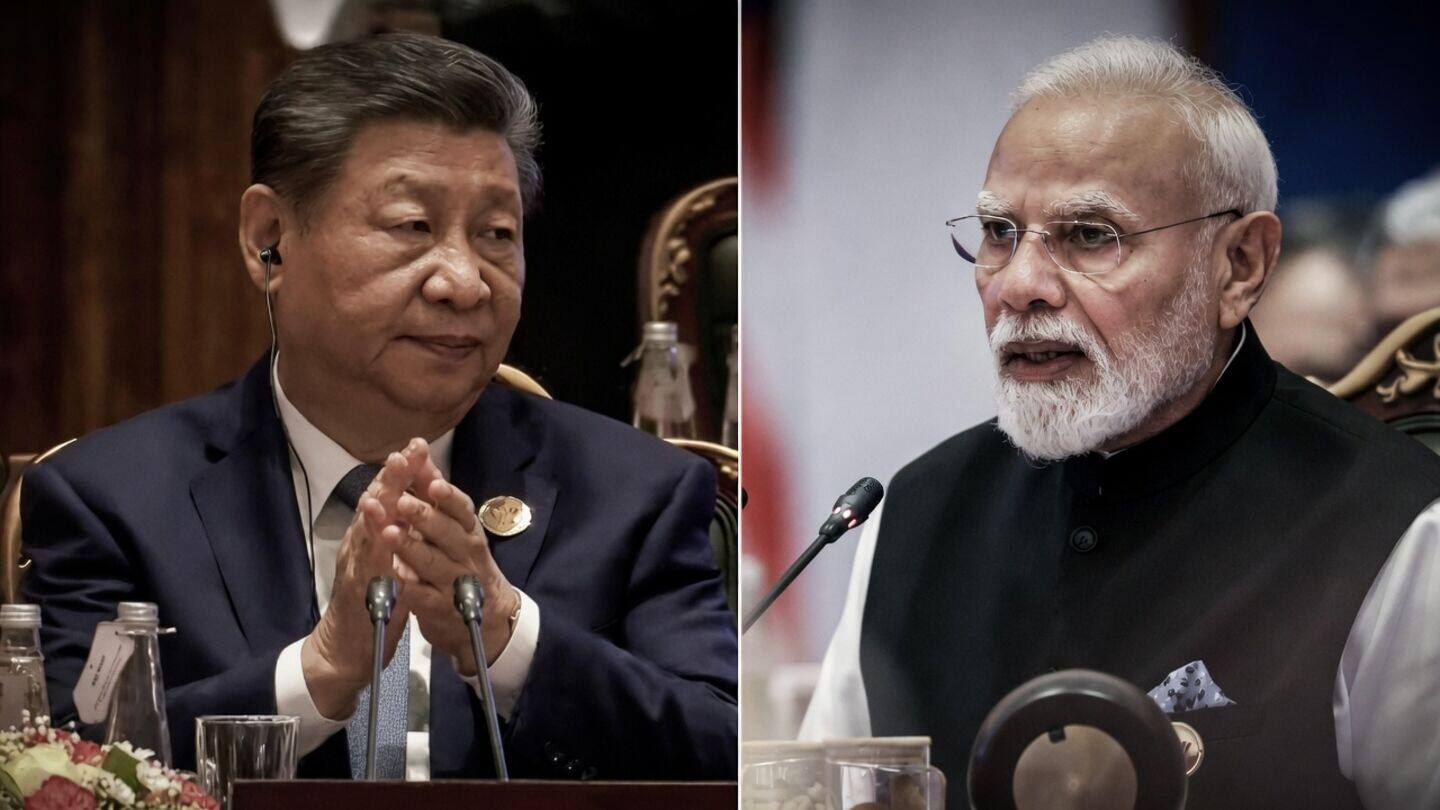
First post-Galwan India talks: Xi, Modi seek cooperation, common progress
What's the story
Chinese President Xi Jinping and Indian Prime Minister Narendra Modi held their first bilateral talks on Indian soil since the 2020 Galwan Valley clash. The meeting took place on the sidelines of the BRICS Summit in New Delhi. During the talks, Xi proposed that India and China could learn from each other's strengths to achieve common development. He also called for collaboration to boost BRICS cooperation.
Border dispute
Talks expected to cover situation along LAC
The meeting comes as both nations look to mend ties after years of strained relations.
The talks are expected to cover the situation along the Line of Actual Control (LAC), the broader boundary dispute, trade, and investment.
Both leaders are also likely to review measures taken to stabilize relations since the military confrontation in eastern Ladakh.
Diplomatic history
First visit by Xi to India in nearly 7 years
This is Xi's first visit to India in nearly seven years. His last visit was in October 2019 for an informal summit with Modi at Mamallapuram near Chennai.
The Galwan Valley clash in June 2020 had severely strained relations between the two countries.
An agreement on patrolling arrangements in October 2024 helped ease the standoff and paved the way for renewed political engagement.
Border tensions
Focus on eastern sector of disputed boundary
The eastern sector of the disputed boundary has been in focus due to recent developments in Arunachal Pradesh.
India rejects China's claim over the state as part of "Zangnan" or southern Tibet.
On September 6, Indian and Chinese commanders held their first Corps Commander-level meeting in the eastern sector at Vacha-Damai Border Personnel Meeting Point, following reports of fresh Chinese military activity and alleged incursions in Arunachal Pradesh's Upper Subansiri district.
Trade relations
China is India's largest goods trading partner
Despite tensions, China continues to be India's largest goods trading partner.
Bilateral trade reached around $151 billion in 2025-26, with India importing about $131 billion worth of goods from China and exporting around $19 billion. This resulted in a trade deficit of roughly $112 billion for India.
New Delhi has sought greater market access and a more balanced economic relationship while trying to reduce dependence on Chinese machinery, electronics, and industrial components.