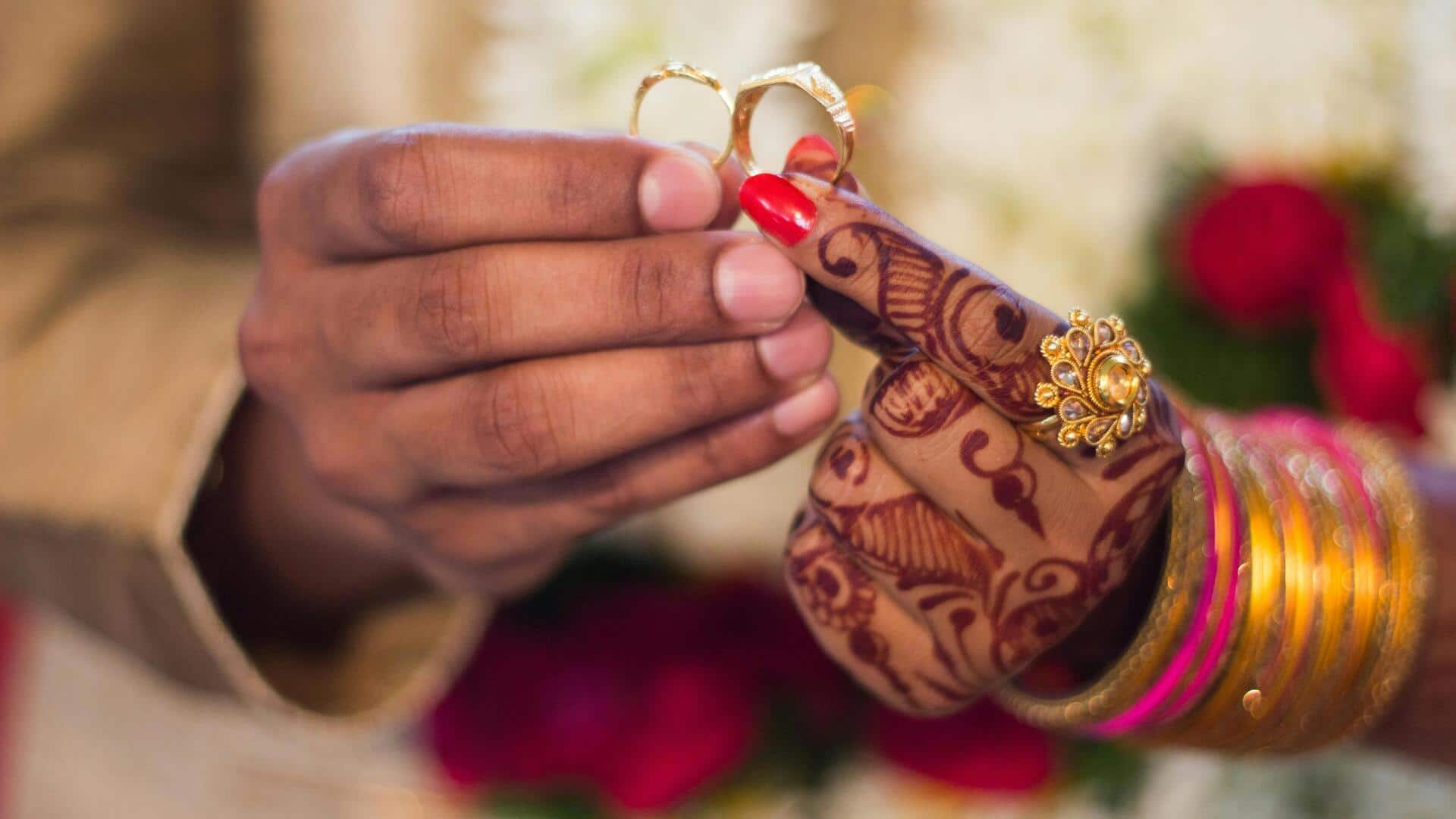
Ring exchange traditions aren't the same globally: Know more
What's the story
Ring exchanges are an integral part of wedding ceremonies across cultures. These traditions are often rooted in history and carry deep symbolism. From simple gestures to elaborate rituals, each culture has its own way of exchanging rings. Here are five unique ring exchange traditions from around the world, each offering a glimpse into the diverse ways couples celebrate their union.
#1
The ring warming ceremony
In some Western weddings, the ring warming ceremony is a beautiful way to involve guests in the ritual.
The couple passes their wedding bands around to each guest, who holds them for a moment and offers their silent blessing or wish.
This tradition adds a personal touch and allows loved ones to participate in the ceremony, even if they are not directly involved in the exchange.
#2
Indian mangalsutra tradition
In Indian weddings, the mangalsutra is an important symbol of marriage. The groom ties this sacred necklace around the bride's neck during the ceremony.
Unlike Western traditions where rings are exchanged between partners, this tradition emphasizes the groom's role in bestowing the mangalsutra as a sign of commitment and protection.
It is a cultural practice that highlights different marital symbols across societies.
#3
Japanese San-San-Kudo ritual
The Japanese san-san-kudo ritual involves three sips from three different cups by each partner and their families.
This act symbolizes the merging of two families into one.
Although rings may not always be exchanged during this ceremony, it emphasizes unity and mutual respect among all parties involved, making it a significant part of Japanese wedding traditions.
#4
Scottish handfasting tradition
Handfasting is an ancient Celtic tradition still practiced in Scotland today.
During this ceremony, couples' hands are tied together with ribbons or cords while making vows to one another—a literal binding of hands representing unity for life.
While not always involving rings specifically as part of its ritualistic elements, handfasting serves as both symbolic commitment and physical connection between partners on their wedding day.
#5
Thai water pouring ceremony
In Thailand's traditional weddings, you will find another unique practice called "Rod Nam Sang," where water is poured over each other's hands instead of exchanging rings directly.
This symbolizes purity and the blessing from elders present at the event.
It highlights cultural differences around the world when it comes to celebrating love through meaningful actions rather than material possessions alone.