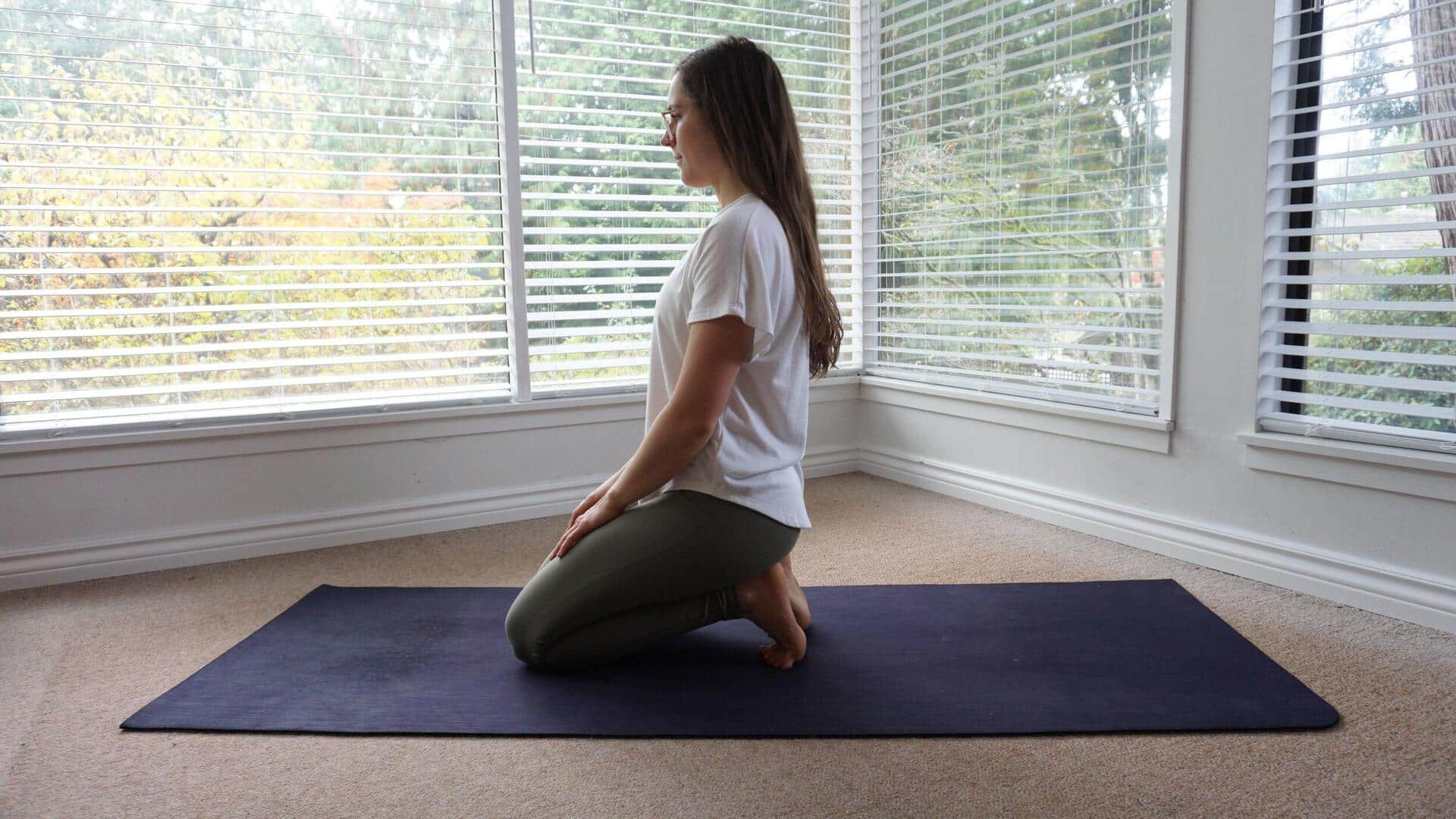
5 floor sitting exercises to boost your well-being
What's the story
Floor sitting exercises can be an effective way to improve flexibility and overall well-being. These exercises, which can be easily done at home, target various muscle groups and enhance mobility. By incorporating these movements into your daily routine, you can experience increased flexibility and reduced tension in the body. Here are five floor sitting exercises that can help you achieve these benefits.
Stretching forward
Seated forward bend
The seated forward bend is a great exercise to stretch the spine and hamstrings. Sit with your legs extended straight in front of you and slowly reach towards your toes while keeping your back straight. This movement helps in lengthening the spine and improving flexibility in the lower back. Hold the position for a few breaths to feel the stretch.
Inner thigh opener
Butterfly stretch
The butterfly stretch is perfect for opening up the hips and inner thighs. Sit with your feet together, allowing your knees to fall outwards like butterfly wings. Hold onto your feet and gently press down on your knees with your elbows for a deeper stretch. This exercise increases hip flexibility and reduces stiffness.
Twisting motion
Seated spinal twist
The seated spinal twist is an excellent way to improve spinal mobility. Sit cross-legged or with one leg extended, then twist your torso towards one side, using your opposite hand on the knee for support. This movement enhances the rotation of the spine, relieving tension in the back muscles.
Spinal flexion/extension
Cat-cow stretch on floor
The cat-cow stretch on the floor promotes spinal flexibility through alternating flexion and extension. Start on all fours with hands under shoulders and knees under hips. Arching your back upwards like a cat, followed by dipping it downwards like a cow, enhances the flexibility of the spine and relieves tension.
Leg extension stretch
Seated hamstring stretch
The seated hamstring stretch targets tight hamstrings by extending one leg while bending over it gently from a seated position. This exercise improves hamstring flexibility when practiced regularly over time without straining other muscle groups unnecessarily during execution.