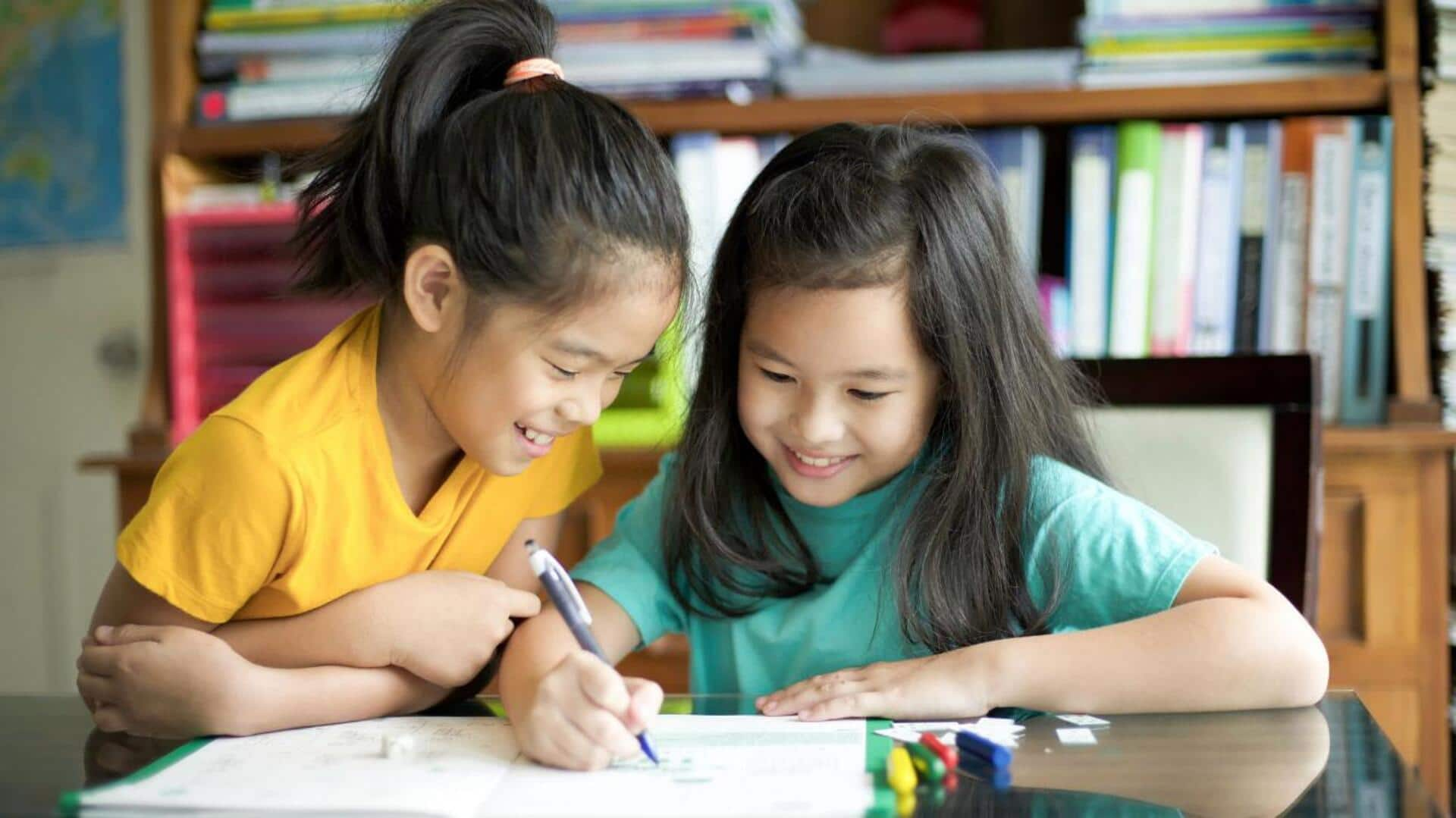
Here's how puzzle solving helps your child
What's the story
Perseverance is an important trait that can help children face challenges and achieve their goals. One of the best ways to instill this quality in kids is through engaging activities that test their problem-solving skills and patience. Puzzles are an amazing tool for this purpose, as they provide a fun yet challenging experience. Here are five fun puzzles that can help enhance perseverance in kids.
Tip 1
Jigsaw puzzles with varying difficulty
Jigsaw puzzles are a classic way to build perseverance. By starting with simpler designs and gradually moving on to more complex ones, kids learn to stick with a task even when it gets tough. This gradual increase in difficulty helps build confidence and resilience, as they see progress over time.
Tip 2
Sudoku for logical thinking
Sudoku puzzles also encourage logical thinking and patience. Since the game requires placing numbers in a grid so that each row, column, and region contains all the digits without repeating, it challenges kids to think critically and methodically. Regular practice can improve their focus and determination.
Tip 3
Crossword puzzles for vocabulary building
Crossword puzzles are a great way to boost vocabulary while also testing problem-solving skills. Kids need to think of words that fit into the given clues and intersect with other words on the grid. This activity not only improves language skills but also teaches them to tackle problems from different angles.
Tip 4
Maze puzzles for spatial awareness
Maze puzzles are also great for improving spatial awareness and perseverance. As kids navigate through mazes, they learn to plan ahead, anticipate obstacles, and adjust their strategies accordingly. This activity encourages them to keep trying different paths until they find the right one.
Tip 5
Logic grid puzzles for critical thinking
Logic grid puzzles are all about critical thinking and deduction skills. These puzzles give you a set of clues and ask you to fill out a grid based on the relationships between different elements. They require careful analysis and patience as children work through each clue methodically.