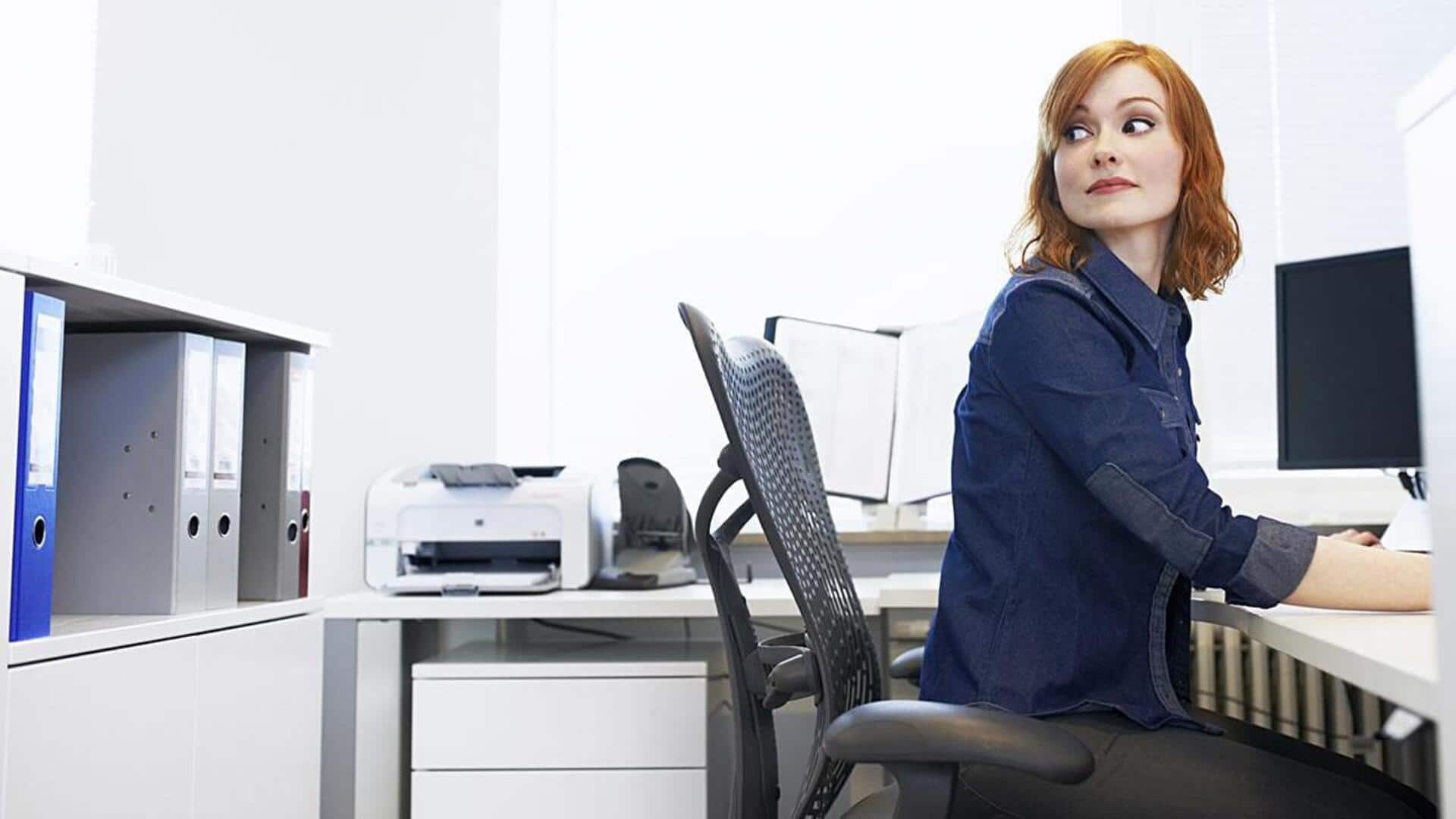
Desk chair scooting: What it is exactly
What's the story
Desk chair scooting is a simple yet effective way to incorporate movement into your day, especially if you spend long hours at a desk. This practice involves using your chair to glide across the floor, engaging various muscle groups and promoting circulation. While it may seem like a trivial activity, desk chair scooting offers several health benefits that can improve your overall well-being. Here are five surprising health benefits of this easy exercise.
#1
Improves circulation and blood flow
Desk chair scooting also improves circulation by stimulating blood flow throughout the body.
The movement engages muscles in the legs and core, which helps pump blood more efficiently.
Improved circulation can lead to better oxygen delivery to cells and tissues, enhancing overall vitality and energy levels.
#2
Strengthens core muscles
Scooting your desk chair also requires you to engage your core muscles for balance and stability.
This subtle exercise helps strengthen abdominal and back muscles over time.
A stronger core supports better posture, reduces lower back pain, and improves overall body alignment.
#3
Increases calorie burn
While desk chair scooting may not be as intense as a workout, it still contributes to calorie burning throughout the day.
The continuous movement keeps your body active, helping you burn more calories than sitting still for extended periods.
Incorporating this practice into your routine can aid weight management efforts.
#4
Reduces stress levels
Physical activity, even in small doses like desk chair scooting, can reduce stress levels by releasing endorphins—the body's natural mood enhancers.
This simple exercise provides a break from mental tasks while promoting relaxation through movement.
Regularly engaging in such activities can contribute to lower anxiety levels over time.
#5
Enhances flexibility and mobility
Desk chair scooting also promotes flexibility by encouraging gentle stretching of leg muscles with each glide across the floor.
This repetitive motion helps maintain joint mobility while preventing stiffness from prolonged sitting.
Over time, enhanced flexibility contributes positively toward functional mobility in daily activities.