5 Indian wedding rituals that are timeless
What's the story
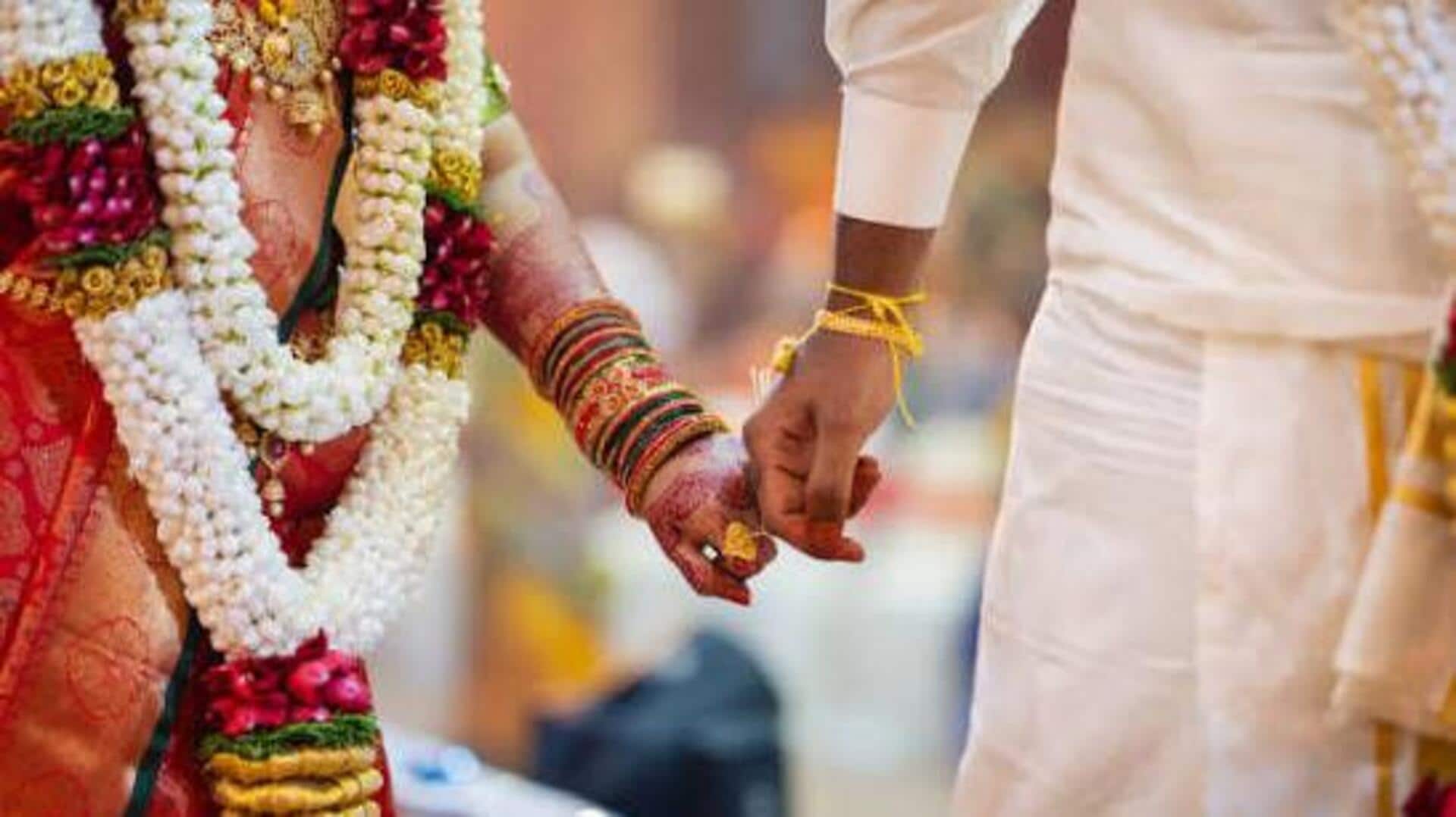
Indian weddings are famous for their rich traditions and colorful ceremonies, which differ from one culture to another. Among them, some rituals have stood the test of time and continue to be an integral part of the wedding celebrations even today. These rituals are not just symbolic but also represent the values and beliefs that have been passed down generations. Here are five timeless Indian wedding rituals that still hold significance today.
Agni Pariksha
The sacred fire ceremony
The sacred fire ceremony, or Agni Pariksha, is an important ritual in many Indian weddings.
The couple takes vows around the holy fire, which is considered a witness to their promises.
This ritual symbolizes purity and commitment, and is an essential part of the wedding ceremony in most cultures.
Symbol of union
The tying of the mangalsutra
The tying of the mangalsutra is an important ritual in Indian weddings.
The groom ties this sacred necklace around the bride's neck as a symbol of their marital bond.
The mangalsutra is considered a protective charm for the couple's relationship and signifies their union in front of family and friends.
Saptapadi
The seven vows
Saptapadi, or the seven vows, is an important ritual in Indian weddings.
The couple takes seven steps together, each step representing a vow they make to each other.
These vows cover aspects like love, respect, support, and fidelity.
This ritual emphasizes the importance of partnership in marriage.
Symbolic marking
The sindoor ritual
The sindoor ritual involves the groom applying sindoor (vermilion) on the bride's forehead.
This act symbolizes her status as a married woman and signifies prosperity and well-being for both partners.
It is a simple, yet powerful gesture that holds deep cultural significance.
Social gathering
The reception celebration
The reception celebration marks the end of wedding rituals but also serves as a social gathering for family members from both sides to come together in joy and celebration.
It provides an opportunity for relatives and friends to meet each other while enjoying music, dance performances, or traditional cuisine from different regions across India.