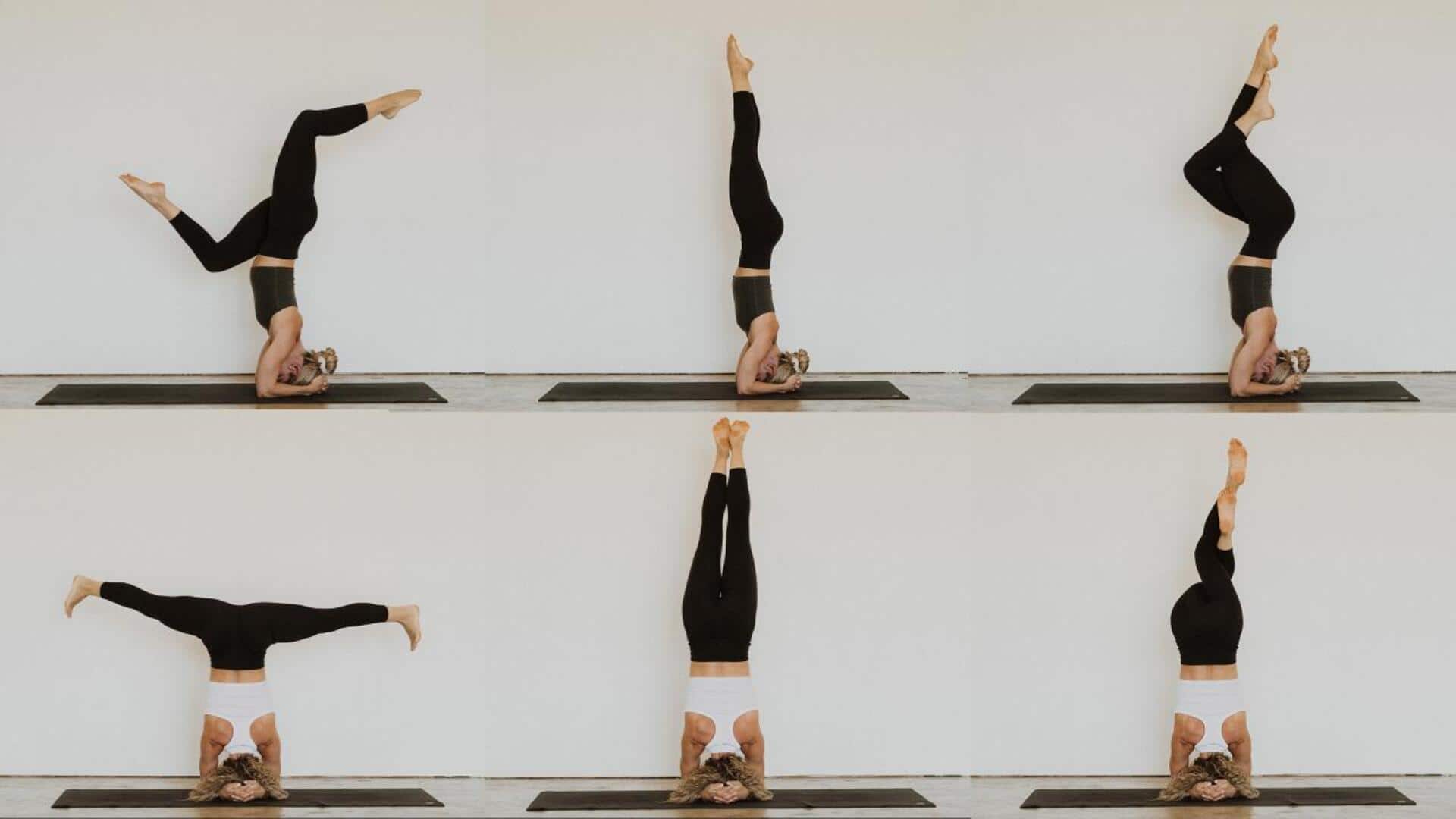
5 tips to ace headstand balancing
What's the story
Practicing headstands can be an exhilarating way to elevate your fitness and balance. Not only do they strengthen your core, but they also improve your overall body coordination. However, getting the headstand right requires practice and precision. Here are five tips to help you master this challenging pose, focusing on the essential techniques and precautions to ensure a safe and effective practice.
Tip 1
Strengthen your core muscles
Building a strong core is essential for balancing in a headstand.
Include exercises like planks, crunches, and leg raises in your routine to strengthen your abdominal muscles.
A strong core will help you maintain stability and control while performing the pose.
Gradually increase the intensity and duration of these exercises to see improvements over time.
Tip 2
Focus on proper alignment
Proper alignment is key to balancing in a headstand.
Start by placing your head on the ground, with your hands supporting the back of your head.
Ensure that your neck is neutral and not bearing any weight.
Keep your body straight from head to toe, engaging your legs and glutes for added support.
Tip 3
Use wall support initially
Using a wall as support can be extremely helpful for beginners learning to balance in a headstand.
Practice kicking up gently against the wall until you develop enough strength and confidence to do it independently.
This method gives mental assurance, while letting you focus on perfecting form without fear of falling.
Tip 4
Breathe steadily throughout practice
Steady breathing is essential when performing a headstand, as it keeps you relaxed and focused.
Inhale deeply through your nose before kicking up into position, then exhale slowly as you stabilize yourself upside down.
Maintain this rhythmic breathing pattern throughout each practice session for optimal results.
Tip 5
Gradually increase practice time
Start with short durations when first attempting headstands, gradually increasing the time as your comfort level grows with each session.
Aim initially for 15 seconds per attempt, then slowly extend this duration over weeks or months, depending on individual progress rates.
Consistency remains key, ensuring regular practice sessions are maintained consistently.