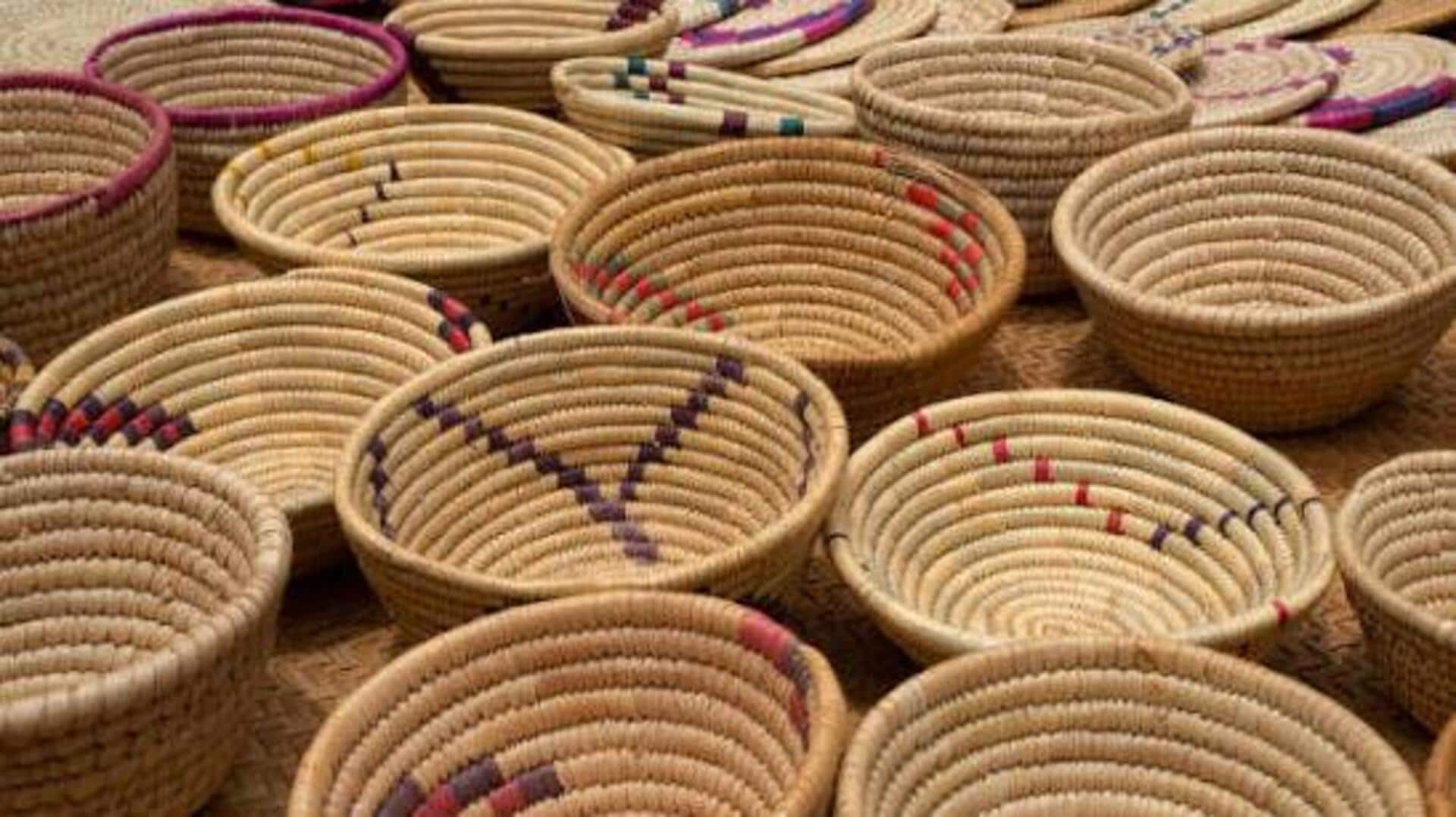
How to make a traditional Yoruba basket
What's the story
Yoruba basketry is an age-old craft that requires skill and patience. The baskets are not only functional but also a piece of art, showcasing the rich cultural heritage of the Yoruba people. To master this craft, one must focus on strength and durability. Here are five practical tips to help you create strong Yoruba basketry, ensuring your baskets stand the test of time while retaining their beauty.
Tip 1
Choose quality materials
Selecting the right materials is critical for making durable baskets.
Use strong, flexible fibers like raffia or palm leaves, which are common in Yoruba basketry.
These materials are not only durable but also flexible enough to weave intricate designs without breaking.
Make sure the fibers are clean and free from defects before you start weaving.
Tip 2
Master basic weaving techniques
Understanding basic weaving techniques is essential for creating strong baskets.
Start with simple patterns before moving on to more complex designs.
Practice consistently to improve your skills, and ensure that each stitch is tight and secure.
A solid foundation in basic techniques will make it easier to add complexity without compromising strength.
Tip 3
Maintain consistent tension
Consistent tension while weaving is key to making strong baskets.
If you pull the fibers too tight, the basket will lose shape. If you do not pull them tight enough, the basket will fall apart.
Practice keeping an even tension throughout the process so that the structure remains intact, and the design is uniform.
Tip 4
Reinforce edges and bases
Reinforcing edges and bases of your basket can add to its strength.
Use extra layers of material at these points where stress is highest. This way, you can prevent wear and tear over time.
Pay special attention to these areas during the construction phase, and make sure they are well-supported before finishing your piece.
Tip 5
Allow natural drying time
After completing your basket, allow it to dry naturally instead of using artificial heat sources, like hairdryers or radiators.
These can damage delicate fibers over time.
Natural drying helps preserve flexibility within each strand while ensuring overall integrity remains intact throughout its lifespan, without compromising quality craftsmanship standards associated with traditional Yoruba practices.