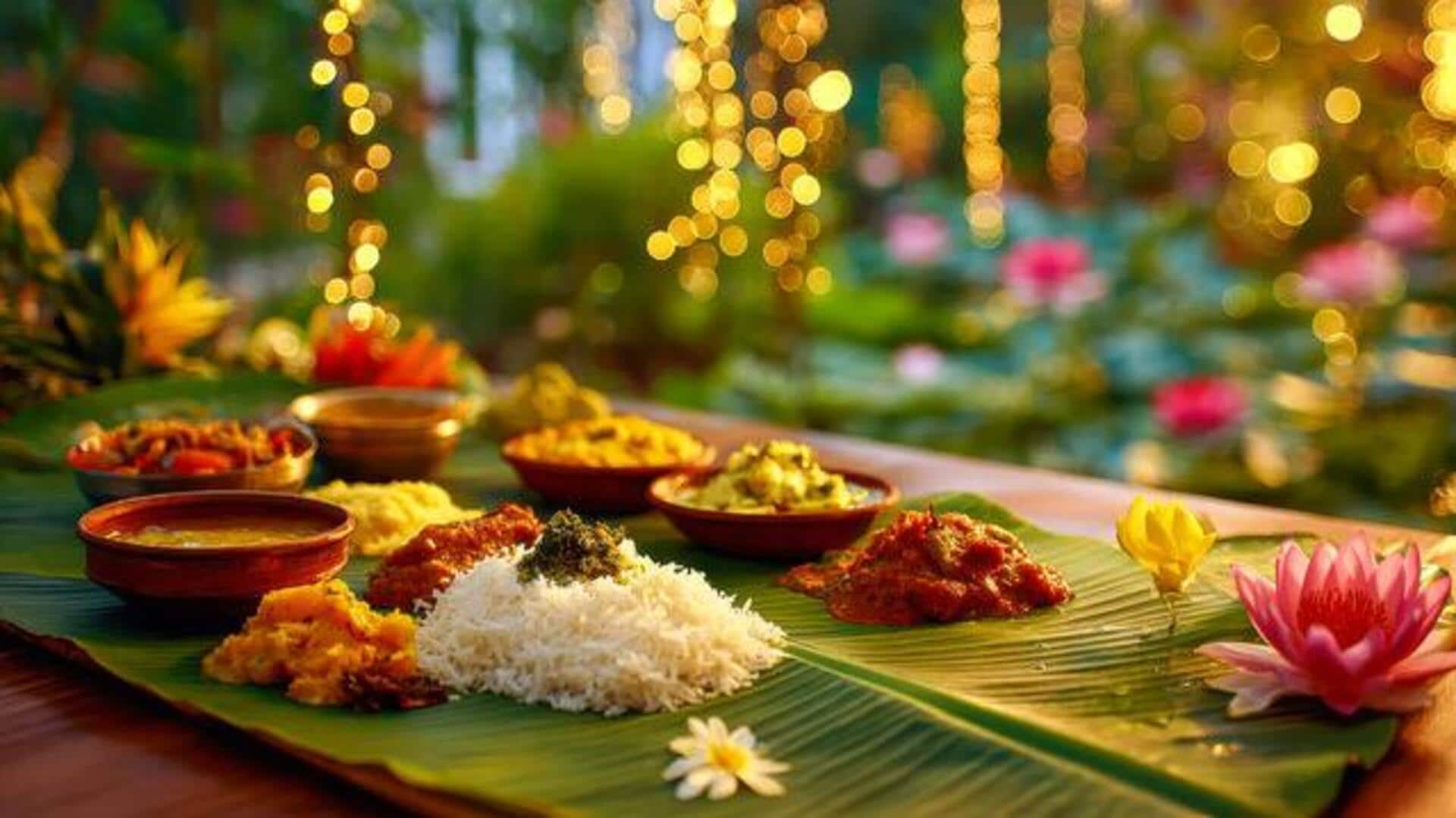
5 traditional Ugadi dishes you must try
What's the story
Ugadi is a time when families come together to celebrate the New Year with joy, traditions, and delicious food. In many homes across Andhra Pradesh, Telangana, and Karnataka, the day begins with preparing special dishes passed down through generations. Here are five traditional Ugadi foods that are not only delicious but also symbolize prosperity, balance, and new beginnings.
#1
Ugadi Pachadi
Ugadi Pachadi is the most important dish prepared during Ugadi.
It combines six ingredients, neem flowers, jaggery, tamarind, raw mango, salt, and chili.
Each flavor represents a different emotion of life, such as happiness, sadness, anger, and surprise.
The dish reminds people to accept every experience in the coming year with balance and wisdom.
#2
Pulihora
Pulihora, also known as tamarind rice, is a popular festive dish made with rice, tamarind pulp, peanuts, and spices.
Its tangy and flavorful taste makes it a favorite during celebrations.
Pulihora is often prepared as an offering during prayers and later shared with family and guests as part of the festive meal.
#3
Bobbatlu
Bobbatlu, also known as holige in Karnataka, is a sweet flatbread filled with a mixture of jaggery and lentils.
Soft and rich in flavor, it is one of the most loved desserts prepared during Ugadi.
Families often make it in large batches and share it with relatives and neighbors.
#4
Mango rice
Mango rice is another festive favorite prepared using grated raw mango, rice, mustard seeds, and curry leaves.
The tangy flavor of raw mango adds a refreshing taste to the dish.
Since Ugadi falls in the spring season when mangoes start appearing, this dish perfectly represents the seasonal freshness of the festival.
#5
Payasam
Payasam is a traditional sweet pudding made with milk, rice or vermicelli, jaggery or sugar, and flavored with cardamom and nuts.
It is often served at the end of the festive meal as a symbol of sweetness and prosperity.
Payasam adds a comforting and celebratory touch to the Ugadi feast.