5 things that make the Japanese kimono so special
What's the story
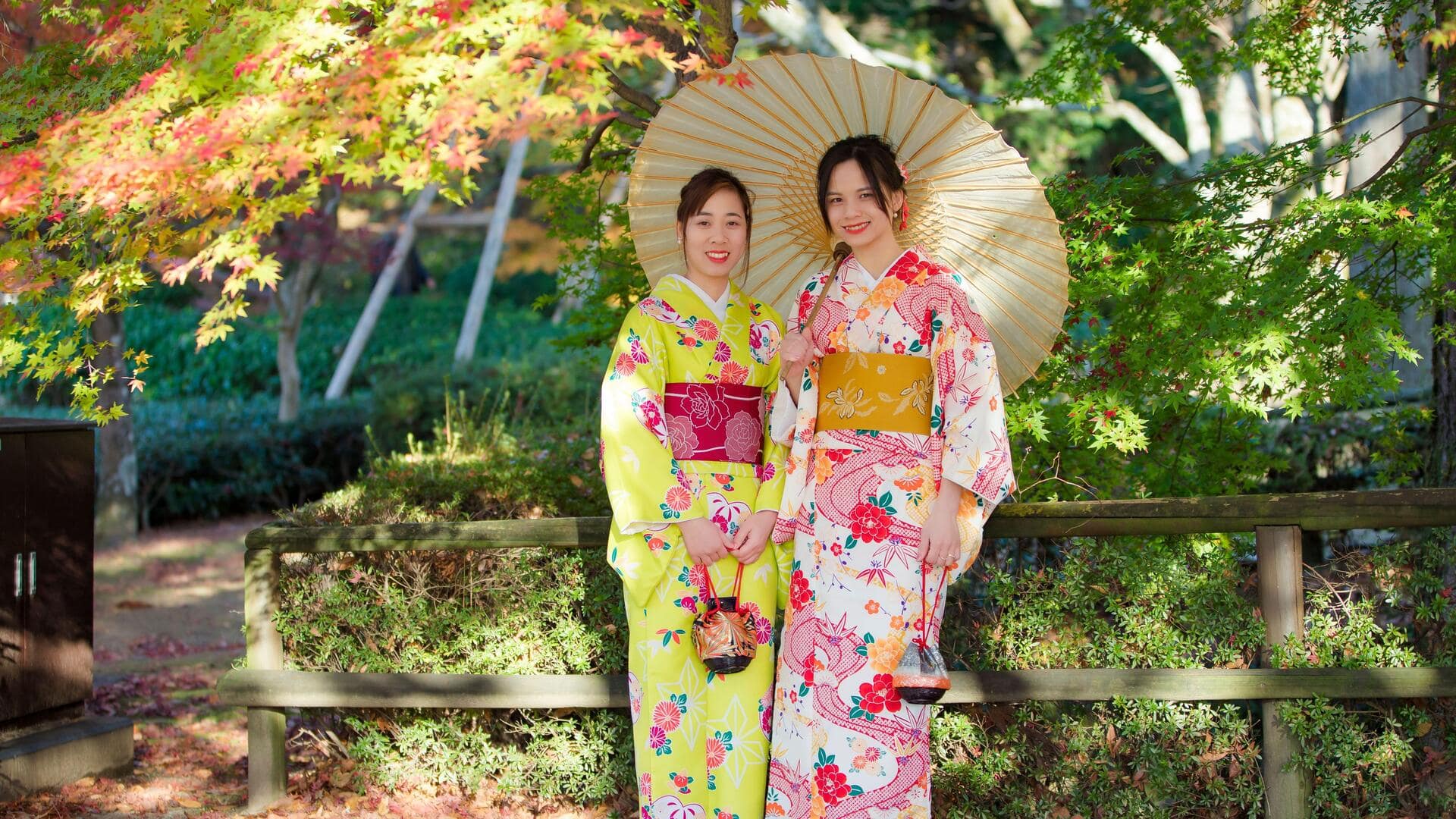
The kimono, a traditional Japanese garment, is steeped in cultural significance and history. While many are familiar with its basic wear, there are several unique traditions associated with kimono wearing that are lesser known. These customs vary by region and occasion, each adding a layer of meaning to the art of kimono dressing. Here are five intriguing traditions that highlight the diversity and richness of Japanese culture.
#1
The art of obi tying
The obi, a wide belt worn with kimonos, is tied in various styles depending on the occasion and the wearer's age.
For formal events, the otaiko knot is commonly used. Younger women may opt for more playful knots like the bunko or taiko.
Each style not only serves a functional purpose but also reflects personal and social identity.
#2
Seasonal kimono choices
In Japan, the choice of kimono fabric and color is heavily influenced by the seasons.
Summer kimonos are typically made from lightweight fabrics like cotton or linen to provide relief from the heat.
Winter ones are made from heavier fabrics like wool or silk blends.
Spring might see pastel colors, while autumn could favor deeper hues like burgundy or navy.
#3
The significance of Haneri
A haneri is a decorative collar worn under the main collar of a kimono. It can be changed out depending on the occasion or mood.
Traditionally, red haneri indicates celebration, while white signifies mourning.
This small detail allows for personal expression within traditional constraints.
#4
Regional variations in kimono styles
Japan's diverse regions have their own unique kimono styles, which are often dictated by local customs and climates.
For example, in Okinawa, the light and colorful bingata kimonos are popular, while in Kyoto, the intricately designed yuzen-dyed ones are favored.
These regional differences highlight how culture and environment shape traditional attire.
#5
Proper footwear choices
Footwear is an integral part of kimono-wearing etiquette.
Zori sandals are commonly worn with casual kimonos, while geta clogs are reserved for more formal occasions or festivals.
The choice between these options depends on factors such as comfort level, weather conditions, and event type.