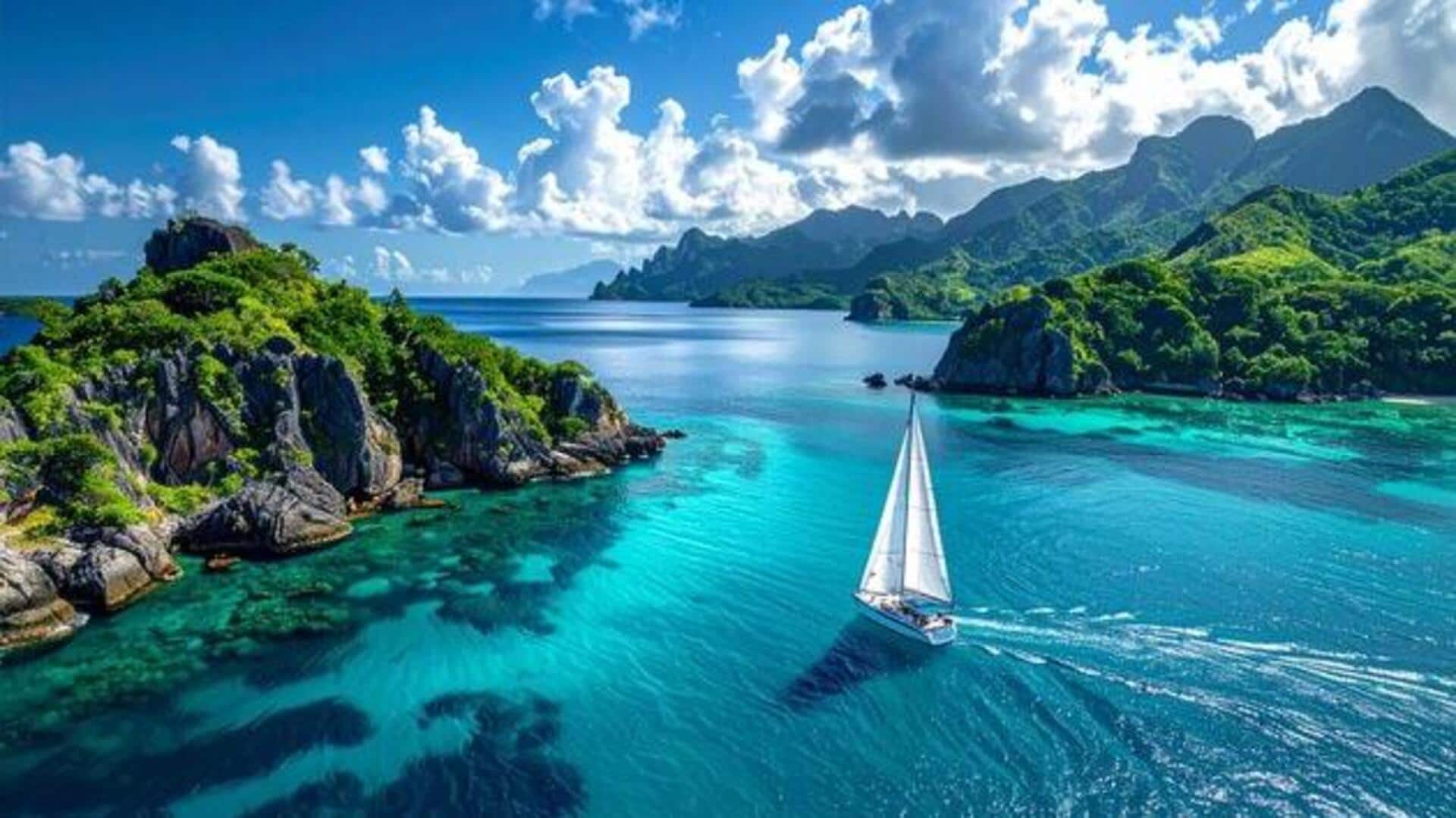
Sailing in Tanzania: A paradise of turquoise waters
What's the story
Tanzania's pristine waters provide the perfect setting for an unforgettable sailing adventure. With its diverse marine life and stunning landscapes, the region is a sailor's paradise. Whether you are a seasoned sailor or a beginner looking for an adventure, Tanzania's waters have something to offer everyone. From exploring hidden coves to enjoying breathtaking sunsets, sailing in Tanzania promises an experience like no other.
#1
Discovering Zanzibar's hidden gems
Zanzibar, an archipelago off Tanzania's coast, is famous for its beautiful beaches and rich culture.
Sailors can explore the island's hidden gems by visiting secluded beaches and crystal-clear lagoons.
The best part? These areas are often less crowded than the popular tourist spots, giving you a more intimate experience with nature.
You can also snorkel or dive in these pristine waters to witness vibrant coral reefs and diverse marine life.
#2
Navigating through Mnemba Atoll
Mnemba Atoll is a popular spot among sailors for its stunning beauty and rich biodiversity.
Located near Zanzibar, this private island is surrounded by turquoise waters teeming with fish species.
Sailors can anchor off the coast and enjoy activities like snorkeling, or simply relax on the deck while taking in panoramic views of the Indian Ocean.
#3
Exploring Pemba Island's coastline
Known for its lush greenery and dramatic cliffs, Pemba Island makes for an ideal sailing destination.
The island's coastline is dotted with picturesque bays, which are perfect for anchoring overnight.
Sailors can explore local villages or hike through dense forests to discover waterfalls and other natural wonders hidden from plain sight.
Tip 1
Tips for safe sailing in Tanzanian waters
Before setting out on your sailing adventure in Tanzania, it is important to keep safety in mind.
Always check weather conditions before leaving port, as sudden changes can affect your journey.
Ensure that your boat has all necessary safety equipment, including life jackets and flares, in case of emergencies.
Familiarize yourself with local navigation charts to avoid hazards like reefs or shallow areas.