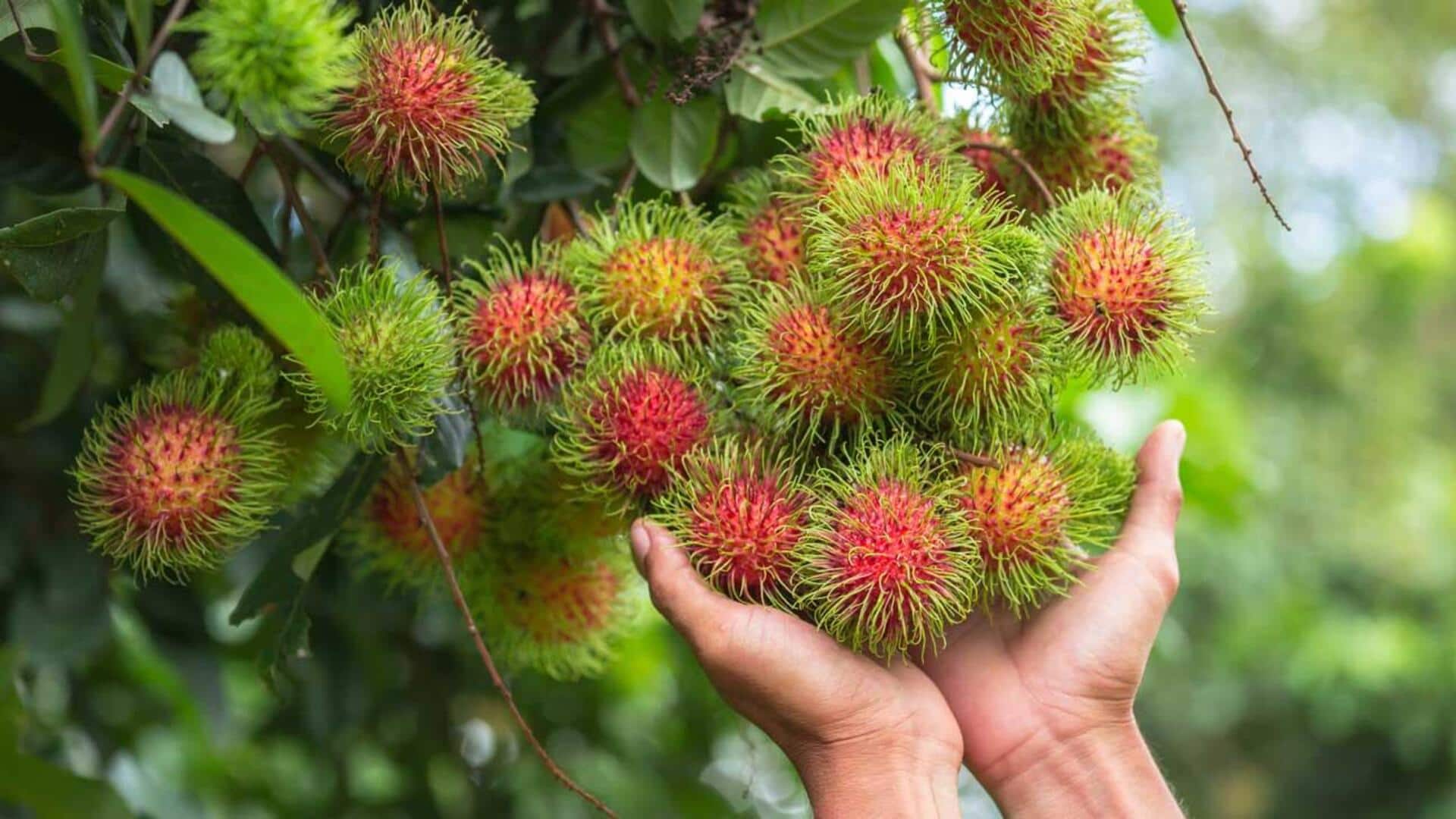
Amla v/s rambutan: Which one to choose?
What's the story
Amla and rambutan are two exotic fruits making headlines for their nutritional benefits. Both fruits are packed with vitamins and minerals that can contribute to a healthy diet. While amla or Indian gooseberry is famous for its vitamin C content, rambutan is known for its juicy texture and nutrient profile. Here's a look at the nutritional value of these fruits and how they can be added to your diet.
#1
Vitamin C powerhouse: Amla's benefits
Amla is famous for its high vitamin C content. It has almost 20 times the vitamin C of an orange per 100 grams.
This vitamin is important for boosting the immune system, skin health, and antioxidant protection.
Adding amla to your diet can help you meet your daily vitamin C requirements easily.
#2
Rambutan's unique nutrient profile
Rambutan is also a nutrient-rich fruit, but it offers a different set of benefits than amla.
It is a good source of iron, which is essential for making red blood cells and transporting oxygen in the body.
Rambutan also has small amounts of vitamin A and vitamin C, contributing to overall health.
#3
Antioxidant properties in focus
Both amla and rambutan have antioxidant properties that help fight oxidative stress in the body.
Amla's antioxidants are mainly due to its high vitamin C content, while rambutan has other antioxidants, such as flavonoids.
These compounds help protect cells from damage by free radicals.
Tip 1
Incorporating these fruits into your diet
Incorporating amla or rambutan into your diet can be easy and rewarding.
Amla can be consumed fresh or added to smoothies or salads for an extra nutrient boost.
Rambutan can be eaten as a snack or added to fruit salads for texture and sweetness.
Experimenting with these fruits can help you discover new flavors while reaping their nutritional benefits.