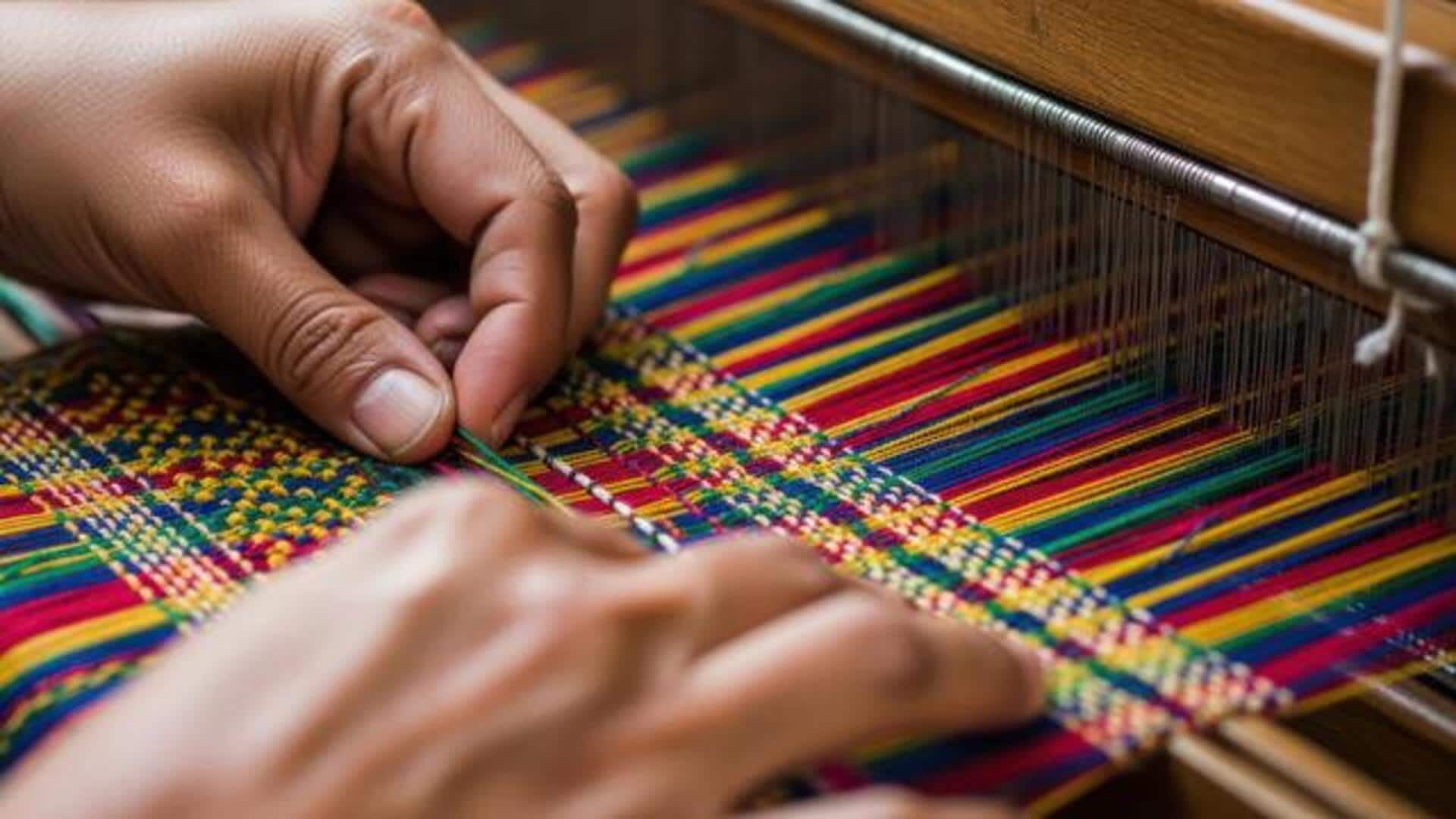
Ashanti weaving: All about this timeless craft
What's the story
Ashanti weaving is a traditional craft from Ghana's Ashanti region, famous for its intricate patterns and vibrant colors. The art has been passed down through generations, preserving cultural heritage and showcasing the creativity of the artisans. Today, modern designs are being incorporated into this age-old craft, offering a fresh take while honoring its roots. This article delves into the evolution of Ashanti weaving, highlighting contemporary influences that have transformed this timeless art form.
#1
The evolution of Ashanti weaving
Traditionally, Ashanti weaving was all about creating kente cloth with symbolic patterns.
Over the years, weavers have started experimenting with new designs and techniques.
This evolution has led to the incorporation of geometric shapes and bold colors that appeal to a wider audience.
While these modern twists pay homage to traditional motifs, they also reflect current fashion trends and consumer preferences.
#2
Influence of global fashion trends
Global fashion trends have also influenced Ashanti weaving techniques.
Designers around the world have started incorporating kente cloth into their collections, further popularizing the art form.
The exposure to international markets has encouraged weavers to innovate and adapt their creations for global appeal.
As a result, we see an amalgamation of traditional craftsmanship with contemporary style elements.
#3
Use of sustainable materials
In recent years, there has been a growing emphasis on sustainability in the textile industry, and Ashanti weavers are no exception.
Many artisans now use eco-friendly materials like organic cotton and bamboo fibers in their creations.
Not only does this shift promote environmental responsibility, but it also adds an element of uniqueness to each piece, as these materials offer different textures and colors.
#4
Digital platforms for wider reach
Digital platforms have revolutionized how Ashanti weaving is showcased and sold across the globe.
Artisans now leverage social media platforms to display their work to a larger audience without the need for intermediaries, like galleries or boutiques.
This direct access to consumers not only increases sales but also raises awareness about this cultural heritage craft among diverse demographics worldwide.