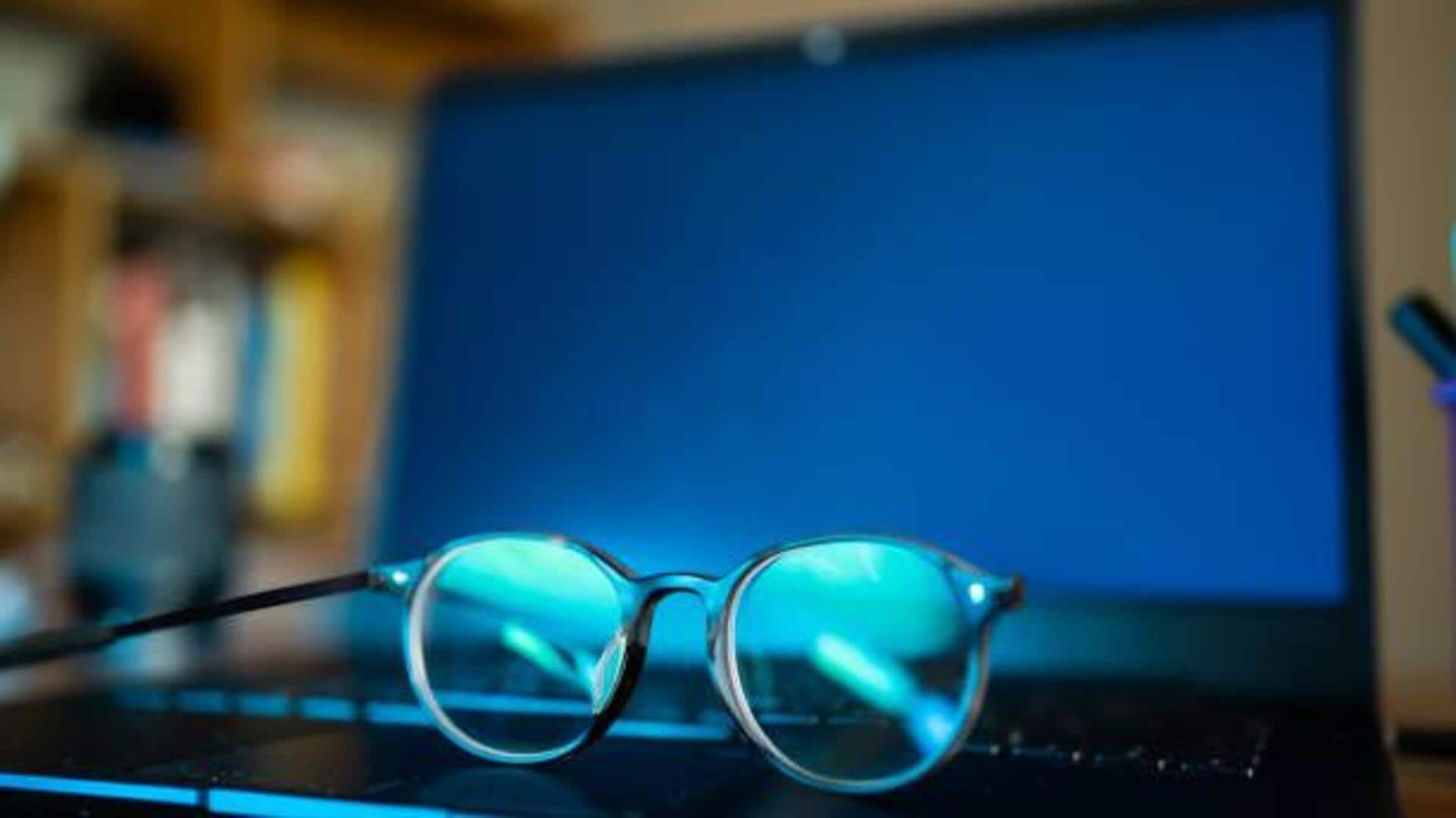
Blue light glasses: Overrated or helpful?
What's the story
Blue light glasses have become a popular accessory, especially among those who spend long hours in front of screens. The glasses are said to block blue light emitted by digital devices, reducing eye strain and improving sleep quality. However, the actual benefits of blue light glasses remain a topic of debate. Here's a look at whether these glasses are really helpful or just a marketing gimmick.
#1
Understanding blue light exposure
Blue light is a high-energy visible light emitted from screens of computers, smartphones, and LED lights.
It is said to affect our circadian rhythms and may cause digital eye strain.
Prolonged exposure to blue light can lead to discomfort, making people seek solutions like blue light glasses.
Knowing how blue light affects us is important to understand the potential benefits of these glasses.
#2
Claims vs. evidence
The claims of blue light glasses reducing eye strain and improving sleep have not been strongly backed by scientific evidence.
While some studies indicate a slight reduction in discomfort from prolonged screen use, others find no significant difference in sleep quality or eye health with their use.
It is important to look at the evidence before investing in these glasses.
#3
Alternatives to blue light glasses
If you are looking to reduce digital eye strain or improve sleep without blue light glasses, there are other options.
Taking regular breaks from screens using the 20-20-20 rule can help reduce eye fatigue, look at something 20 feet away for 20 seconds every 20 minutes.
Adjusting screen settings for lower brightness or using apps that filter blue light during evening hours can also help.
Tip 1
Cost considerations
Blue light glasses come at various price points, from affordable options to high-end ones costing hundreds of dollars.
However, given the lack of strong evidence supporting their effectiveness, it may not be worth investing heavily in them without further research backing their benefits.
Exploring cost-effective alternatives first could be more beneficial for those looking to reduce digital eye strain or improve sleep quality.