When the bride enters: Unique processions from across the world
What's the story
Wedding processions are a beautiful blend of culture, history, and personal touch. From the bride's entry to the ceremony, every tradition has its own significance and charm. Across the globe, different cultures have their own unique ways of making the bride's entry memorable. Here are five fascinating wedding procession traditions that highlight the diversity and richness of matrimonial ceremonies around the world.
Indian tradition
Indian baraat procession
In Indian weddings, the baraat is a lively procession where the groom arrives at the bride's venue with family and friends.
This tradition is marked by music, dancing, and sometimes even horse or elephant rides.
The baraat symbolizes joy and celebration as they make their way to welcome the bride.
The event can last for hours with festivities that set an energetic tone for the ceremony.
Scottish tradition
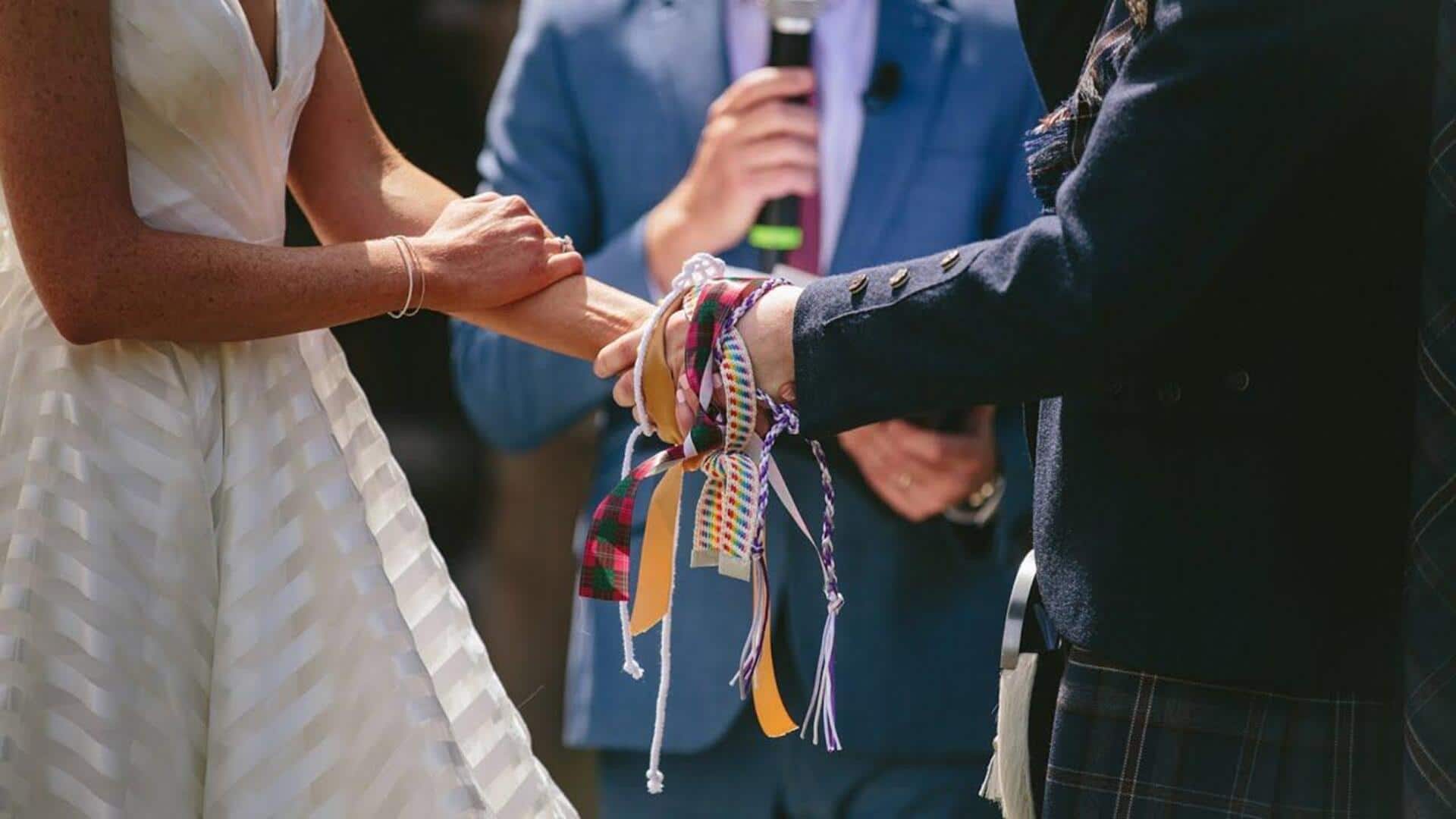
Scottish handfasting ceremony
In Scotland, handfasting is an ancient custom where couples tie their hands together with ribbons during the wedding ceremony. This symbolizes binding their lives together.
The tradition dates back to medieval times and is often included in modern weddings as a way to honor heritage while adding a unique touch to the event.
It represents unity and commitment between partners.
Japanese tradition
Japanese San-San-Kudo ritual
The Japanese san-san-kudo ritual involves the bride and groom taking three sips each from three cups.
The act is performed in front of family members who also participate by taking turns sipping from each cup.
This tradition symbolizes the binding of two families as well as the couple's union.
Chinese tradition
Chinese door games tradition
Before entering her home on the wedding day, a Chinese bride may have to go through "door games."
These are fun challenges set by her friends or family members on the groom's party.
They can include answering questions or completing tasks like singing songs or reciting poems about love.
The playful ordeal symbolizes proving worthiness before entering into married life together.
Mexican tradition
Mexican lasso ceremony
The Mexican lasso ceremony has a rope or rosary shaped like a figure-eight placed over newlyweds' shoulders after exchanging vows.
It signifies eternal love without beginning or end points, just like the infinity symbol itself.
It also shows protection against outside forces trying to break apart the union formed today.
The act is usually performed right after saying "I do," making it a perfect time to reflect on what just happened.